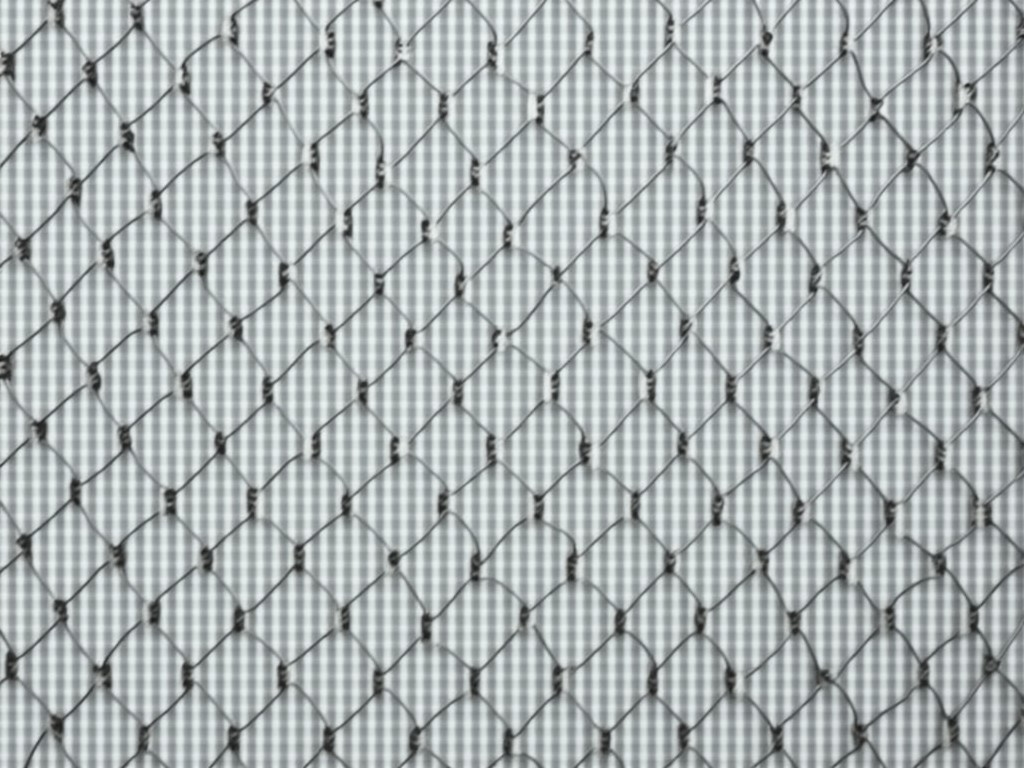
China Stainless Steel Barbed Wire Manufacturer
This page details the engineering characteristics of stainless steel barbed wire produced for industrial perimeter security, livestock containment, and high‑corrosion environments. Information
Request a QuoteStainless Steel Barbed Wire – Technical Overview
This page details the engineering characteristics of stainless steel barbed wire produced for industrial perimeter security, livestock containment, and high‑corrosion environments. Information focuses on material grades, mechanical properties, production methods, and verifiable quality practices to support informed procurement decisions.
Material Composition and Properties
The wire is manufactured from austenitic stainless steels, primarily AISI 304 (18 % Cr, 8 % Ni) and AISI 316 (16‑18 % Cr, 10‑14 % Ni, 2‑3 % Mo). These grades provide a minimum yield strength of 210 MPa for 304 and 240 MPa for 316, with typical tensile strengths ranging from 520‑750 MPa depending on cold‑work level. The addition of molybdenum in 316 enhances resistance to pitting and crevice corrosion in chloride‑rich settings such as coastal or industrial chemical zones.
Surface finish is typically a bright annealed condition, achieving a roughness average (Ra) below 0.8 µm, which reduces friction during installation and limits sites for corrosion initiation. The wire diameter ranges from 1.2 mm to 3.0 mm, selected based on required breaking load and handling constraints.
Manufacturing Process
Production begins with cold drawing of stainless steel rod to the target diameter, achieving a work‑hardened microstructure that raises tensile strength. The drawn wire is then fed into a barb‑forming machine where helical barbs are pressed at controlled intervals; barb height and pitch are set via tooling to meet dimensional tolerances of ±0.2 mm. Finally, two or more strands are twisted together in a double‑helix configuration to lock the barbs in place, followed by a stress‑relief anneal at 420‑460 °C for 30 minutes to reduce residual stresses while preserving corrosion resistance.
Typical Specifications
| Parameter | 304 Grade | 316 Grade | Unit |
|---|---|---|---|
| Wire Diameter | 1.2 – 3.0 | 1.2 – 3.0 | mm |
| Barb Length | 12 – 20 | 12 – 20 | mm |
| Barb Spacing | 75 – 150 | 75 – 150 | mm |
| Tensile Strength (min) | 520 | 550 | MPa |
| Elongation at Break | 15 – 25 | 12 – 20 | % |
| Coating (optional) | PVC, PE, or Zinc‑Aluminum | PVC, PE, or Zinc‑Aluminum | – |
Design Variations
- Barb spacing adjustable from 50 mm to 200 mm to suit specific threat levels.
- Barb profile options include conventional sharp‑cut, rounded safety, and reversed‑twist for reduced snagging.
- Wire diameter can be increased in steps of 0.2 mm to raise breaking load without changing barb geometry.
- Coil lengths range from 25 m to 500 m per reel, with custom lengths available on request.
Applications in Industrial Settings
In perimeter security, the wire’s high tensile strength and corrosion resistance maintain barrier integrity under constant tension and exposure to weather, reducing the need for frequent replacement. For livestock containment, the smooth stainless surface minimizes animal injury compared with galvanized alternatives, while the barb spacing discourages escape attempts. In chemical processing zones, 316 grade resists chloride‑induced pitting, allowing the wire to function as a protective splash guard around valves and piping without degrading over years of service.
Quality Control and Testing
Each production lot undergoes dimensional verification using laser micrometers (±0.01 mm accuracy) for wire diameter and barb spacing. Tensile testing follows ASTM A370, with samples pulled to failure at a rate of 20 mm/min; results are recorded and compared against the specified minimum. Visual inspection under 10× magnification checks for surface defects such as pits, scratches, or incomplete barb formation. For coated variants, adhesion is assessed via cross‑hatch tape test (ASTM D3359) and thickness measured with magnetic‑induction gauges. All test data are retained for traceability and made available to customers upon request.
Customization Options
Customers may specify alternative alloys such as 904L for extreme acid environments, or request duplex stainless grades for higher strength with comparable corrosion resistance. Barb geometry can be altered to meet regional safety standards, and coil packaging can be adapted to fit specific handling equipment (e.g., spools with integrated brakes). Surface treatments include PVC extrusion for UV stability, polyethylene for abrasion resistance, or zinc‑aluminum alloy for sacrificial protection in mildly corrosive atmospheres.
Packaging and Logistics
Wire is wound onto corrosion‑resistant steel or plastic reels, then wrapped in UV‑stabilized polyethylene film to prevent moisture ingress during transit. Reels are stacked on pallets with corner protectors and secured with polyester strapping, conforming to ISPM‑15 standards for export. Typical container load is 20‑24 tons per 40‑ft unit, with pallet dimensions optimized for forklift handling. Delivery lead times vary from 2‑4 weeks for stock grades to 6‑8 weeks for specially alloyed or customized runs, depending on raw material availability and production scheduling.
Frequently Asked Questions
- Can dimensions be customized? Yes, wire diameter, barb length, spacing, and coil length are all adjustable per project requirements.
- What information is required before quotation? Desired grade (304/316 or other), wire diameter, barb specifications, coating type, total length, and any applicable standards.
- How is quality inspected? Dimensional checks, tensile testing per ASTM A370, visual inspection, and coating adhesion tests as outlined above.
- What packaging methods are available? Standard reels with polyethylene wrap, palletized with strapping, or custom spools; all designed for safe handling and export.
- How are export shipments protected? Moisture‑barrier film, corner protectors, and ISPM‑15 compliant pallets minimize corrosion and mechanical damage during transit.
- What is the typical production lead time? Stock grades: 2‑4 weeks; customized alloys or special coatings: 6‑8 weeks, subject to confirmation at order.
Get a Technical Quote
To discuss your specific requirements, provide the technical parameters listed above, and our engineering team will return a detailed quotation including lead time, pricing, and any applicable certification documents. Please use the contact form or email address provided on the website to initiate the conversation.



