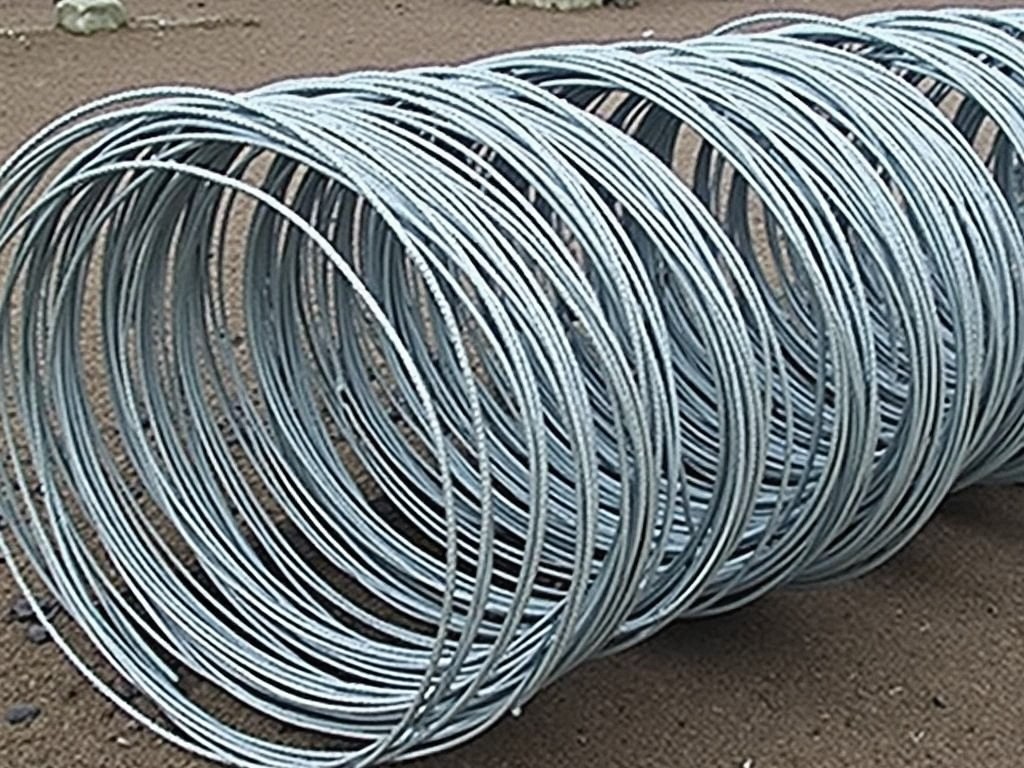
China Galvanized Steel Barbed Wire Manufacturer
Galvanized steel barbed wire consists of a low‑carbon steel core wire coated with a protective zinc layer and formed with sharp barbs at regular intervals. The product is designed to provide a
Request a QuoteGalvanized Steel Barbed Wire – Technical Overview
Galvanized steel barbed wire consists of a low‑carbon steel core wire coated with a protective zinc layer and formed with sharp barbs at regular intervals. The product is designed to provide a durable physical deterrent for perimeter security, livestock containment, and temporary enclosure applications where corrosion resistance and mechanical strength are essential.
Material and Coating Specifications
The core wire is typically produced from SAE 1006‑1010 low‑carbon steel, offering a tensile strength range of 350 MPa to 550 MPa depending on wire diameter. The zinc coating is applied via hot‑dip galvanization, conforming to ASTM A123 or ISO 1461 standards, with a typical coating weight of 60 g/m² to 270 g/m² (equivalent to 8 µm to 38 µm thickness) to achieve long‑term corrosion resistance in outdoor environments.
Barb Geometry and Spacing
Barbs are formed by twisting two shorter wire segments around the main strand, creating a sharp point with an included angle of approximately 25° to 30°. Standard barb length ranges from 15 mm to 22 mm, and the spacing between successive barbs is usually set at 75 mm to 150 mm, resulting in 6 to 13 barbs per meter of wire. This geometry maximizes snag resistance while maintaining flexibility during installation.
Roll Dimensions and Packaging
Finished wire is wound onto steel or wooden cores with an inner diameter of 50 mm to 75 mm. Standard roll lengths vary from 200 m to 500 m, giving an outer diameter of approximately 250 mm to 350 mm and a net weight between 15 kg and 35 kg per roll, depending on wire gauge and coating weight. Rolls are wrapped in UV‑stabilized stretch film, placed on pallets, and secured with corner protectors to prevent deformation during transit.
| Parameter | Typical Value | Customizable Range |
|---|---|---|
| Wire diameter | 2.0 mm – 3.0 mm | 1.6 mm – 4.0 mm |
| Zinc coating weight | 100 g/m² | 60 g/m² – 270 g/m² |
| Barb length | 18 mm | 12 mm – 25 mm |
| Barb spacing | 100 mm | 50 mm – 200 mm |
| Roll length | 300 m | 100 m – 800 m |
Applications and Suitability
In high‑security fencing, the combination of tensile strength and sharp barb geometry creates a barrier that resists cutting and climbing, making it suitable for prison perimeters, military installations, and industrial sites. Agricultural users select the product for livestock enclosures because the zinc coating withstands exposure to moisture, soil, and animal contact, reducing maintenance cycles. Temporary construction sites benefit from the product’s ease of deployment and retrievability, as the wire can be tensioned and re‑wound without loss of mechanical properties.
Quality Control and Testing
Production lines incorporate laser‑based diameter monitors that feed back to the drawing machine to maintain tolerance within ±0.02 mm. Coating adhesion is verified by a pull‑off test according to ASTM D4541, with a minimum acceptable value of 2.5 MPa. Each batch undergoes tensile testing on a universal testing machine to confirm strength conformance, and a visual inspection station checks for uniform barb formation and absence of surface defects. Traceability is maintained through batch numbers stamped on the core and recorded in the ERP system.
Customization Options
Customers may specify wire diameter to achieve desired flexibility or load‑bearing capacity, adjust zinc coating weight for harsher environments, modify barb length and spacing to match security requirements, and select alternative core materials such as polypropylene for lightweight rolls. Roll length and core dimensions are also adjustable to fit specific handling equipment or storage constraints. Lead times for custom specifications are typically 3‑4 weeks after final drawing approval, subject to production schedule.
Frequently Asked Questions
Can the wire diameter and coating weight be adjusted for corrosive environments?
Yes, both wire diameter and zinc coating weight can be increased; higher coating weights up to 270 g/m² provide extended service life in marine or industrial atmospheres.
What information is required to obtain a quotation?
Required details include desired wire diameter, coating weight, barb length, spacing, roll length, core type, and any applicable standards or certifications.
How is quality inspected before shipment?
Each roll undergoes dimensional verification, coating adhesion pull‑off test, tensile strength test, and a final visual inspection for barb uniformity and surface integrity.
What packaging methods protect the product during export?
Rolls are wrapped in UV‑stabilized stretch film, placed on wooden or metal pallets, secured with steel straps, and fitted with corner protectors to prevent deformation and moisture ingress.
For technical inquiries or to request a quotation, contact our engineering team.
Contact Us


