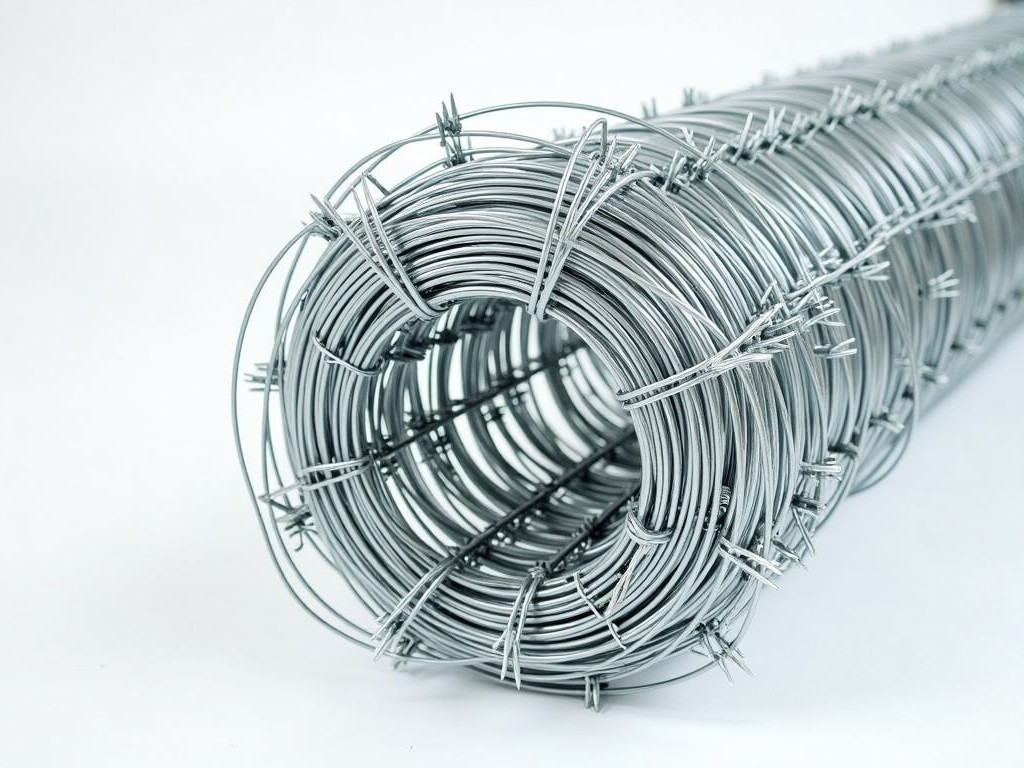
China Galvanized Barbed Wire Fencing Roll Manufacturer
Galvanized barbed wire fencing roll is a perimeter security product formed by twisting two strands of steel wire together and wrapping barbs at regular intervals. The zinc coating applied through
Request a QuoteChina Galvanized Barbed Wire Fencing Roll
Galvanized barbed wire fencing roll is a perimeter security product formed by twisting two strands of steel wire together and wrapping barbs at regular intervals. The zinc coating applied through hot‑dip galvanizing provides corrosion resistance suitable for outdoor installation in agricultural, industrial, and infrastructure settings.
Technical Specifications
| Parameter | Typical Value | Notes |
|---|---|---|
| Wire core diameter | 2.0 mm – 2.5 mm | Depending on required tensile strength |
| Barb length | 15 mm – 20 mm | Sharp edges formed by cutting |
| Barb spacing | 75 mm – 150 mm | Adjustable to project needs |
| Roll length | 50 m – 100 m | Standard packaging; custom lengths available |
| Weight per roll (approx.) | 12 kg – 20 kg | Depends on diameter and length |
| Tensile strength of wire | ≥ 550 MPa | Cold‑drawn high‑carbon steel |
| Zinc coating thickness | ≥ 55 µm (average) | Hot‑dip galvanized per ISO 1461 |
Material and Galvanization Process
The core wire is produced from high‑carbon steel rod, cold‑drawn to achieve the target diameter and mechanical strength. After drawing, the wire undergoes cleaning, fluxing, and immersion in a molten zinc bath at approximately 450 °C. The resulting zinc‑iron alloy layers provide metallurgical bonding that resists peeling and offers sacrificial protection to the underlying steel.
Coating thickness is monitored in‑line using magnetic inductance probes, with typical average values above 55 µm to satisfy ISO 1461 Class A requirements. Post‑galvanizing, the wire is cooled, inspected for uniformity, and then twisted into the double‑helix configuration before barbs are formed by cutting and bending.
Design and Mechanical Properties
- The double‑helix twist distributes load evenly between the two strands, reducing susceptibility to single‑point fatigue.
- Barbs are positioned at a 45° angle relative to the wire axis, which increases the effective gripping angle when tension is applied.
- Tensile strength of the assembled roll exceeds the sum of individual wire strengths due to the helical geometry, providing a safety factor against impact loads.
Typical Applications
In agricultural settings, the fencing roll is used to contain livestock and deter wildlife; the barb spacing is chosen to prevent animal injury while maintaining a psychological barrier.
Industrial facilities install the product along perimeter walls or atop concrete barriers to discourage unauthorized climbing; the zinc coating ensures long‑term exposure to UV, moisture, and occasional chemical splashes without significant rust formation.
Infrastructure projects such as highway guardrails and railway right‑of‑way fencing benefit from the product’s high tensile strength and ease of deployment, as rolls can be unrolled and stapled to posts with standard fastening tools.
Customization Options
- Wire diameter: 1.8 mm to 3.0 mm (affects weight and tensile capacity).
- Barb length and spacing: adjustable per security level required.
- Coating options: standard hot‑dip galvanized, or galvanized‑plus‑PVC over‑coat for added abrasion resistance.
- Roll length: custom lengths from 20 m up to 200 m to match site‑specific installation plans.
- Packaging: wooden pallets with stretch film, or corrugated cardboard rolls for easier handling.
Quality Control and Testing
Each production lot undergoes dimensional inspection of wire diameter, barb geometry, and roll length using calibrated calipers and laser measurers.
Coating adhesion is evaluated by the ASTM D3359 tape test, with a minimum rating of 4B required for acceptance.
Tensile tests are performed on samples taken from the finished roll according to ISO 6892‑1, verifying that the measured strength meets or exceeds the specified 550 MPa.
Visual inspection ensures uniform barb formation and absence of sharp edges that could cause handling injuries.
Packaging and Shipping
Finished rolls are wound onto a core with internal diameter of 50 mm, then wrapped in polyethylene film to protect against moisture during transit.
Palletized units are secured with strapping and corner protectors; each pallet typically holds 20‑30 rolls depending on roll weight, facilitating efficient container loading.
For overseas shipments, the cargo is placed in dry containers with desiccant packs, and the bill of lading includes the galvanizing certificate and test reports upon request.
Frequently Asked Questions
Can the wire diameter and barb spacing be customized?
Yes, both parameters are adjusted during the drawing and twisting stages based on customer specifications; technical drawings or sample requirements are needed before quotation.
What information is required before a quotation can be issued?
Required details include desired wire diameter, barb length, barb spacing, roll length, coating preference, and any special packaging or testing requirements.
How is the zinc coating thickness verified?
Thickness is measured using non‑destructive magnetic inductance probes on random samples from each batch, with results recorded in the quality inspection report.
What is the typical production lead time?
Lead time ranges from 10 to 20 working days after receipt of confirmed purchase order, depending on order size and current plant load.
Contact Us for Technical Support
Our engineering team is available to discuss project‑specific requirements, provide CAD drawings, and arrange sample shipments.
Request a Quote


