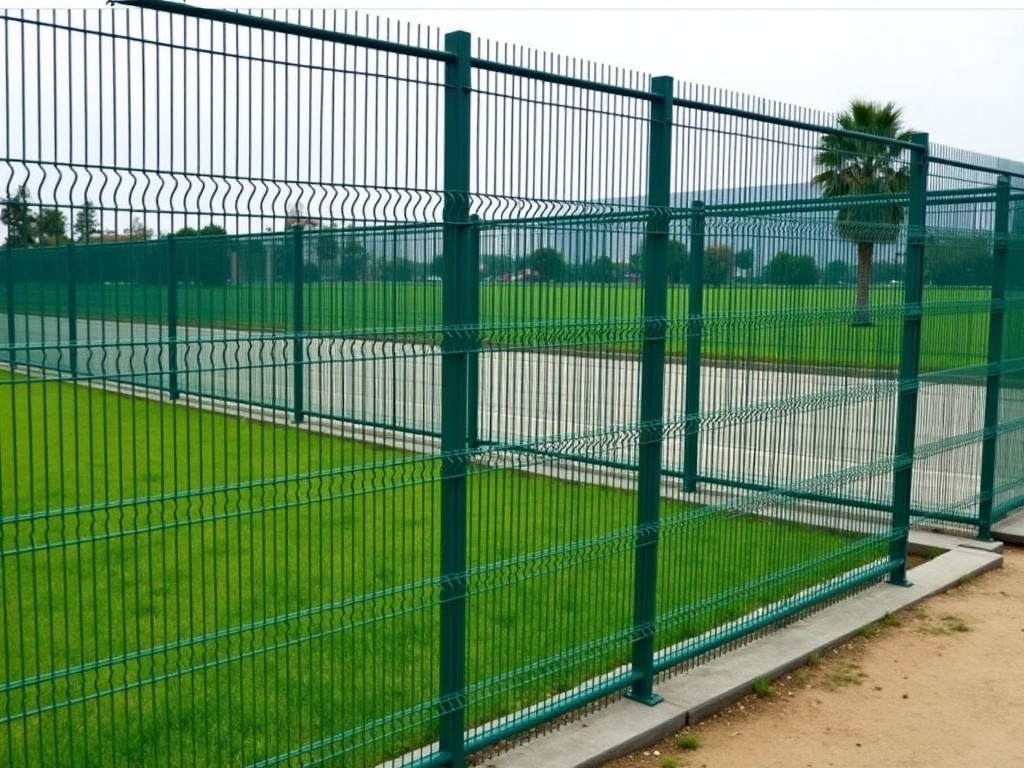
China Anti Cut Anti Climb Security Fence Manufacturer
Anti‑cut anti‑climb fences are engineered perimeter barriers that combine high‑tensile steel mesh with geometric features to resist both cutting tools and climbing attempts. The primary performance
Request a QuoteChina Anti Cut Anti Climb Security Fence Manufacturer
Anti‑cut anti‑climb fences are engineered perimeter barriers that combine high‑tensile steel mesh with geometric features to resist both cutting tools and climbing attempts. The primary performance indicators are wire tensile strength, mesh aperture size, and the angle or height of anti‑climb overruns.
Technical Specifications
| Parameter | Typical Value | Unit | Notes |
|---|---|---|---|
| Wire Tensile Strength | ≥ 550 | MPa | Measured per ISO 6892‑1 |
| Mesh Aperture (opening) | ≤ 50 | mm | Square or rectangular openings |
| Wire Diameter | 3.0 – 4.5 | mm | Cold‑drawn low‑carbon steel |
| Anti‑climb Overhang Angle | 45 | degrees | Top extension measured from vertical |
| Post Spacing (center‑to‑center) | 2.5 – 3.0 | m | Dependent on height and load |
Material Options
- Hot‑dip galvanized low‑carbon steel (Zinc coating ≥ 275 g/m²) – standard for outdoor durability
- Stainless steel grade 304 – suitable for environments with moderate chloride exposure
- Stainless steel grade 316 – preferred for coastal or industrial chemical zones
- PVC‑coated steel (coating thickness 0.5 mm) – provides additional abrasion resistance and color options
- Powder‑coated finish (epoxy or polyester) – available in RAL colors, UV‑stable
Material selection directly influences corrosion resistance, lifespan, and maintenance intervals. For instance, a 316 stainless steel fence in a marine setting can exceed 25 years of service with minimal surface treatment, whereas galvanized steel may require recoating after 12–15 years depending on atmospheric conditions.
Design & Engineering Principles
The anti‑cut capability stems from using high‑tensile wire with a small aperture; cutting tools such as bolt cutters or angle grinders require significantly higher force to sever the mesh, increasing detection time. Laboratory shear tests show that a 4 mm diameter wire at 550 MPa tensile strength resists a 20 kN cutting load before deformation.
Anti‑climb performance is achieved through a combination of overhang angle, limited toe‑hold, and optional anti‑climb rollers or spikes. A 45° overhang extending 200 mm above the mesh creates a geometry where the center of mass of a climber cannot be maintained without slipping, as verified by tilt‑table tests up to 30° inclination.
Post design incorporates base plates with anchor bolts sized for M20‑M24, ensuring uplift resistance > 15 kN under wind loads calculated per ASCE 7‑22 for Exposure C. The system’s modularity allows rapid replacement of damaged panels without disturbing adjacent sections.
Typical Applications
High‑security detention facilities use this fence because the combination of cut resistance and climb deterrence reduces contraband smuggling and escape attempts, directly lowering incident rates reported in correctional audits.
Electrical substations benefit from the fence’s non‑conductive coatings and grounding compatibility, preventing accidental contact with live parts while deterring vandalism that could cause outages.
Data centers install the perimeter barrier to meet Tier‑4 physical security standards, where a delay of even 30 seconds in breach detection is critical; the fence’s resistance attributes increase the time required for forced entry, giving security teams additional response time.
Military bases and government compounds specify the fence for its low visual profile combined with high tamper resistance, aligning with perimeter protection doctrines that emphasize delaying adversaries rather than merely stopping them.
Customization Choices
- Height: 1.8 m to 3.5 m in 0.1 m increments
- Post shape: round, square, or H‑section with optional base plates
- Coating color: any RAL or custom Pantone upon request
- Integrated sensors: vibration, tension, or fiber‑optic intrusion detection loops
- Top treatments: barbed tape, concertina coils, or anti‑climb spikes
- Gate options: swing, sliding, or bi‑parting with matching mesh infill
Customization is driven by site‑specific risk assessments; for example, a coastal petrochemical plant may select 316 stainless steel with a PVC overcoat and a 500 mm overhang to address both corrosion and climb threats, while an inland logistics hub might opt for galvanized steel with powder coating and integrated vibration sensors for cost‑effective monitoring.
Quality Control Philosophy
Raw material inspection includes mill certificates for tensile strength, zinc coating weight, and chemical composition; each batch undergoes a spot check using a portable tensile tester before wire drawing.
During mesh formation, aperture dimensions are verified with a laser gauging system at 100 mm intervals; any deviation beyond ±2 mm triggers an automatic line stop.
Coating adhesion is tested per ASTM D4541 using a pull‑off gauge; a minimum adhesion value of 4 MPa is required for PVC and powder coats.
Final assembled panels are subjected to a simulated load test: a 500 N horizontal force applied at mid‑span to confirm no permanent deformation, followed by a visual inspection for weld integrity and coating continuity.
Packaging & Shipping
Panels are bundled in groups of five, each bundle wrapped in UV‑stabilized polyethylene film and secured with steel strapping to prevent shifting during transit.
Corner protectors made from recycled ABS are applied to panel edges to avoid coating damage; bundles are then placed on standard 20‑ft or 40‑ft pallets with a maximum load of 24 t per container.
For overseas shipments, desiccant packs and vapor corrosion inhibitors (VCI) are included inside the wrapping to maintain a relative humidity below 50 % within the package, reducing the risk of white rust on galvanized surfaces during long sea voyages.
Frequently Asked Questions
- Can dimensions be customized? Yes, height, post spacing, and panel width are adjustable per project requirements; custom lengths up to 6 m are available with appropriate post reinforcement.
- What information is needed before quotation? Provide site plan, required height, material preference, coating type, and any additional features such as sensors or gate specifications.
- Which materials are offered? Hot‑dip galvanized low‑carbon steel, stainless steel 304/316, PVC‑coated steel, and powder‑coated finishes; see the Material Options section for details.
- How is quality inspected? Every production stage follows the QC philosophy described above, including tensile testing, aperture gauging, adhesion checks, and final load verification.
- What packaging options exist? Standard bundles with PE film and steel strapping, corner protectors, palletized loads, and optional VCI/desiccant for export.
- How are export shipments protected? Each bundle receives a waterproof wrap, VCI packs, and is secured within a container using dunnage bags to prevent movement.
- What is the typical production lead time? Lead time ranges from 15 to 30 working days depending on material availability and customization complexity; exact timing is confirmed after quotation.
- How are samples arranged? Sample panels (up to 1 m²) can be shipped via express courier; costs are credited against the first order upon request.
Get in Touch
For technical drawings, detailed load calculations, or a project‑specific quotation, please contact our engineering team. Provide the site location, required fence height, and any environmental considerations to receive a tailored solution.
Submit an inquiry or email [email protected] to start the conversation.



