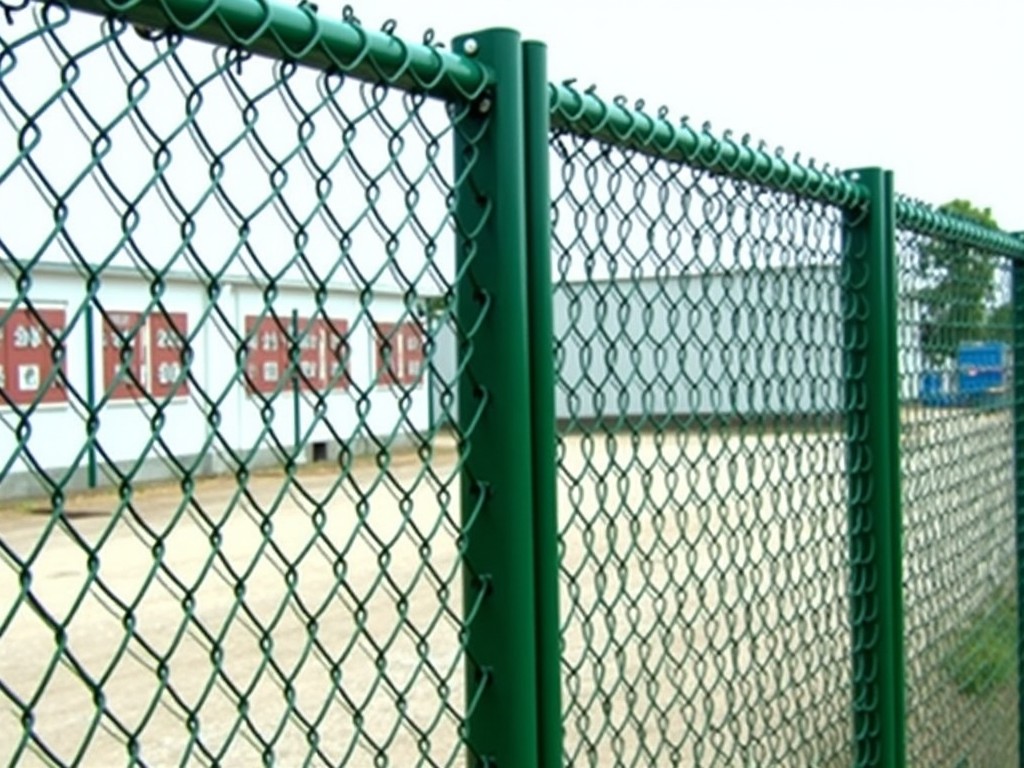
Buy 358 Anti Climb Security Mesh Fence Panels Manufacturer
These panels are formed from high‑tensile steel wire welded into a uniform 3 mm × 3 mm square mesh, then hot‑dip galvanized to a minimum coating weight of 275 g/m². The resulting barrier resists
Request a Quote358 Anti‑Climb Security Mesh Fence Panels
These panels are formed from high‑tensile steel wire welded into a uniform 3 mm × 3 mm square mesh, then hot‑dip galvanized to a minimum coating weight of 275 g/m². The resulting barrier resists cutting, climbing, and corrosion while maintaining a clear sight line for surveillance.
Design and Construction
- Wire diameter: 3.0 mm (±0.05 mm) cold‑drawn steel.
- Mesh opening: 3 mm × 3 mm, providing a rigid anti‑climb geometry.
- Panel dimensions: standard width 2.5 m, height options 2.0 m, 2.4 m, 3.0 m.
- Edge finishing: flattened and capped with a 20 mm × 20 mm steel strip to eliminate sharp protrusions.
- Coating: hot‑dip galvanized per ASTM A123, with optional polyester powder coat for additional UV resistance.
Technical Specifications
| Parameter | Typical Value |
|---|---|
| Tensile strength of wire | ≥ 550 MPa |
| Elongation at break | ≥ 10 % |
| Mesh opening size | 3 mm × 3 mm |
| Coating thickness (galvanized) | ≥ 55 µm (≈275 g/m²) |
| Wind load resistance (per EN 1991‑1‑4) | Up to 2.5 kPa (depends on post spacing) |
Applications
The 3 mm mesh creates a surface that is difficult to grasp or scale, making the panels suitable for high‑security perimeters such as correctional facilities, military installations, and critical infrastructure sites. Their open design allows CCTV cameras and motion sensors to maintain unobstructed lines of sight, reducing blind spots that solid barriers can create.
In commercial environments like data centers and power substations, the panels deter unauthorized access while preserving airflow and light transmission, which helps maintain equipment cooling and reduces the need for additional lighting fixtures.
Material Options
Base material is low‑carbon steel with a controlled carbon content of 0.12 % to 0.20 % to ensure weldability and ductility. For environments with elevated chloride exposure, a zinc‑aluminium alloy coating (Zn‑Al 5 %) can be specified, offering improved corrosion resistance compared to standard galvanizing.
- Standard hot‑dip galvanized (Zn 99 %).
- Zinc‑aluminium alloy coating (Zn‑Al 5 %).
- Polyester powder coat over galvanized layer (RAL colors available).
Customization
Panel width can be adjusted in 0.5 m increments to match site‑specific post spacing, while height can be tailored from 1.8 m up to 4.0 m without compromising mesh integrity. Additional features such as integrated anti‑cut barbs, tension wire grooves, or pre‑drilled mounting plates are available upon request.
Quality Control
Each production batch undergoes tensile testing of wire samples, coating thickness measurement via magnetic induction, and visual inspection of weld consistency. Panels are checked for dimensional accuracy (±5 mm) and surface defects before packaging. Test reports are retained for traceability and can be supplied with the shipment.
Packaging and Shipping
Panels are stacked flat on pallets, separated by corrugated cardboard layers, and secured with steel straps. For overseas shipments, moisture‑barrier film and corner protectors are added to prevent corrosion during transit. Standard pallet size accommodates up to 20 panels, facilitating efficient handling with forklifts.
Frequently Asked Questions
| Question | Answer |
|---|---|
| Can panel dimensions be customized? | Yes, width and height can be adjusted to meet project requirements; custom lengths are available upon request. |
| What information is needed for a quotation? | Required details include panel size, quantity, coating type, any additional features (e.g., barbs, mounting plates), and delivery destination. |
| Which coating options are offered? | Standard hot‑dip galvanized, zinc‑aluminium alloy, and polyester powder coat over galvanized layer are available. |
| How is quality verified before shipment? | Each lot undergoes tensile, coating thickness, and dimensional inspections; test certificates can be provided with the order. |
| What packaging methods are used for export? | Panels are palletized, protected with moisture‑barrier film, corner guards, and steel straps to withstand handling and transit conditions. |
Contact for Inquiry
To discuss specifications, obtain a formal quotation, or arrange sample shipment, please reach out to our technical sales team.



