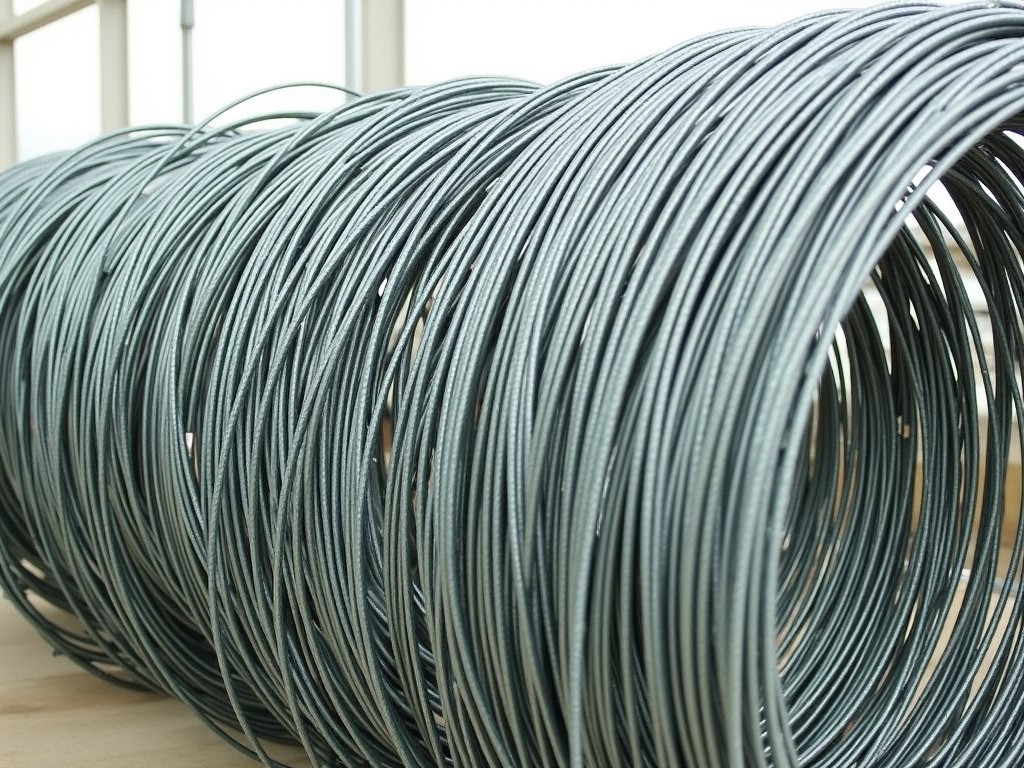
Bulk Barbed Wire Concertina Coil Fencing For Sale
Concertina coil fencing consists of tightly wound helices of barbed wire that expand into a formidable barrier when deployed. The geometry creates multiple overlapping sharp edges that deter climbing
Request a QuoteBulk Barbed Wire Concertina Coil Fencing For Sale
Concertina coil fencing consists of tightly wound helices of barbed wire that expand into a formidable barrier when deployed. The geometry creates multiple overlapping sharp edges that deter climbing and cutting attempts while allowing rapid installation over long distances.
Design and Construction
Manufacturers form the coil by winding a high‑tensile steel core wire around a mandrel, then attaching barbs at precise intervals. The core diameter determines the coil’s stiffness, while barb length and spacing influence penetration resistance. Typical production uses cold‑drawn wire to achieve consistent mechanical properties.
Material Options
- Hot‑dip galvanized steel provides a zinc coating thickness of 55–85 µm, suitable for most outdoor environments.
- Stainless steel grades 304 or 316 offer superior corrosion resistance in chemical or marine settings, with minimal maintenance.
- PVC‑coated variants add a polymeric layer that further reduces rust and provides a visible color option for safety markings.
Technical Specifications
| Parameter | Typical Range |
|---|---|
| Core wire diameter | 2.5 mm – 4.0 mm |
| Barb length | 15 mm – 25 mm |
| Barb spacing | 75 mm – 150 mm |
| Inner coil diameter | 150 mm – 300 mm |
| Uncoiled height | 1.0 m – 2.5 m |
| Wire tensile strength | ≥ 1500 MPa |
Advantages in Security Applications
The concertina shape creates a spring‑loaded barrier that rebounds when compressed, making it difficult to breach with hand tools. Overlapping barbs increase the effective cutting surface, while the high tensile strength of the core wire resists tearing under tension. These characteristics reduce the likelihood of successful intrusion compared to plain wire or mesh fences.
Typical Industrial Uses
- Perimeter protection for electrical substations, where tampering could cause service interruption.
- Boundary delineation for correctional facilities, providing a visible deterrent that complicates escape attempts.
- Security zones around oil and gas installations, where environmental exposure demands durable corrosion‑resistant materials.
- Temporary or permanent fencing for military bases and government installations requiring rapid deployment.
Quality Control and Testing
Visual inspection verifies uniform barb placement and absence of wire defects. Tensile testing confirms that each coil meets the specified minimum breaking load. Zinc coating thickness is measured using magnetic flux methods in accordance with ISO 1461. For stainless steel, passivation checks ensure surface chromium enrichment. Dimensional tolerances are verified with calipers and go/no‑go gauges before packaging.
Customization Options
Buyers can specify coil height, number of turns per meter, barb geometry (traditional reverse‑twist or razor‑style), and coating type. Length per coil and coils per pallet are adjusted to match handling equipment and site logistics. Special packaging such as corrosion‑inhibiting interleaving or UV‑stable wraps is available upon request.
Packaging and Logistics
Coils are stacked flat on wooden or steel pallets, secured with steel strapping and covered with UV‑stabilized stretch film. Each pallet includes a label indicating material grade, coating specifications, and total weight. For export shipments, pallets are placed in containers with desiccant packs to mitigate moisture ingress during transit.
Frequently Asked Questions
Can dimensions be customized?
Yes. Core wire diameter, barb length, spacing, and coil diameter can be adjusted to meet project‑specific requirements. Customers provide the desired performance criteria, and the manufacturer proposes a suitable configuration.
What information is needed for a quote?
To generate an accurate quotation, the supplier requires the intended material (galvanized, stainless, PVC‑coated), total linear meters or number of coils, any dimensional customizations, packaging preferences, and delivery location.
How is corrosion resistance ensured?
For galvanized products, coating thickness is measured and must meet the agreed micron range. Stainless steel undergoes passivation and surface analysis. PVC‑coated versions are inspected for coating adhesion and uniformity.
What is the typical lead time?
Lead time varies with order size and customization level, but standard galvanized coils typically ship within 2‑3 weeks after order confirmation. Special alloys or coatings may extend this period, which is communicated during quoting.
Request a Quote
To discuss technical details or obtain a formal quotation, contact the sales team via the provided inquiry form. Provide project specifications, and a representative will respond with available options, pricing, and lead time.



