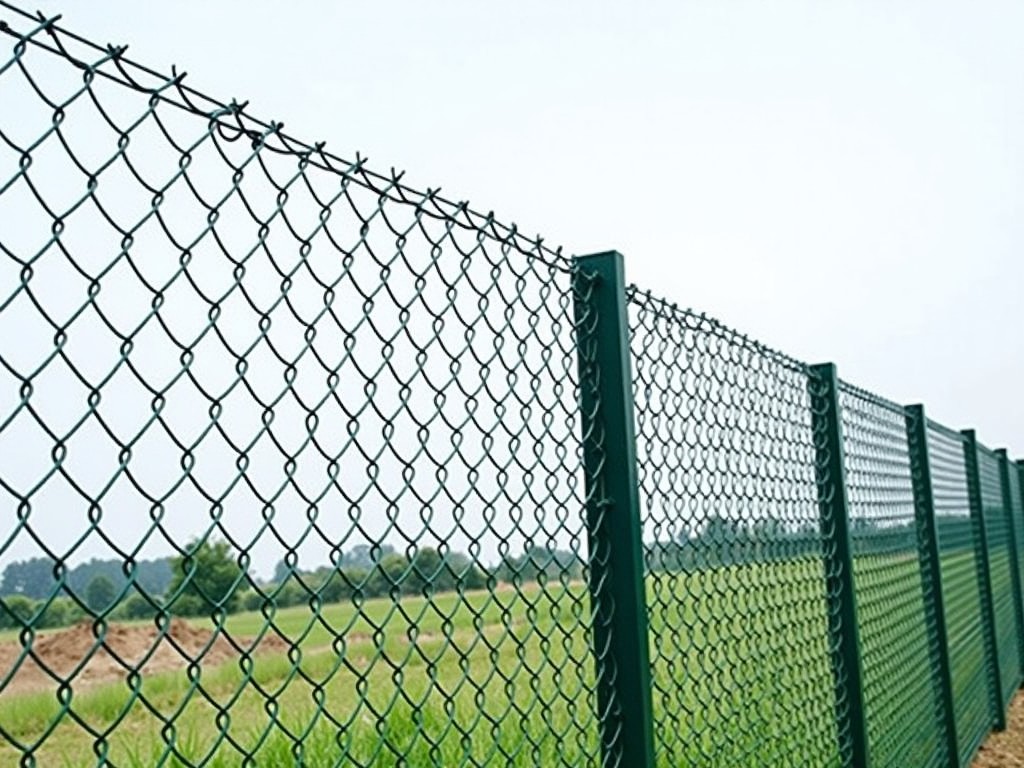
Best Price Zinc Coated Barbed Wire Fencing Exporter
Zinc coated barbed wire fencing is a perimeter security solution formed by twisting high‑tensile steel wire with sharp barbs at regular intervals, then applying a protective zinc layer to resist
Request a QuoteBest Price Zinc Coated Barbed Wire Fencing
Zinc coated barbed wire fencing is a perimeter security solution formed by twisting high‑tensile steel wire with sharp barbs at regular intervals, then applying a protective zinc layer to resist corrosion. The coating extends service life in outdoor environments where moisture, soil chemicals, and temperature variations are present.
Material Composition and Coating Process
The core wire is typically low‑carbon steel with a carbon content of 0.06%‑0.09%, providing a balance between ductility and tensile strength. After drawing to the target diameter, the wire undergoes a hot‑dip galvanizing process where it is immersed in molten zinc at approximately 450 °C, forming a metallurgical bond that yields a uniform coating thickness.
- Typical wire diameters: 2.0 mm, 2.5 mm, 3.0 mm (customizable)
- Zinc coating mass: 100 g/m² to 200 g/m² (hot‑dip)
- Tensile strength of base wire: 500 MPa to 650 MPa
- Elongation at break: ≥10%
Technical Specifications
| Parameter | Typical Value | Notes |
|---|---|---|
| Wire Diameter | 2.5 mm | Other diameters available on request |
| Barb Spacing | 75 mm | Adjustable per project |
| Zinc Coating | 150 g/m² | Hot‑dip, uniform coverage |
| Tensile Strength | 560 MPa | Measured per ASTM A370 |
| Roll Length | 50 m | Standard; custom lengths possible |
Applications in Industrial Security
Barbed wire fencing is deployed where a low‑cost, high‑deterrent barrier is required. The sharp barbs impede climbing and cutting, while the zinc coating prevents rust that could reduce tensile strength over time. Typical installations include perimeter boundaries of warehouses, manufacturing yards, utility substations, and agricultural facilities.
In high‑traffic zones, the fence is often combined with concrete posts or steel angles to increase impact resistance. The flexibility of the wire allows it to follow uneven terrain without compromising tension, which is essential for maintaining consistent barrier performance.
Quality Control and Testing
Each production lot undergoes dimensional verification, coating mass measurement, and mechanical testing. Coating thickness is checked using a magnetic‑induction gauge per ISO 1460. Tensile tests are performed on sampled wire lengths to confirm strength meets the specified range. Visual inspection ensures barb formation is uniform and free of defects that could cause premature failure.
For export shipments, a salt‑spray test (ASTM B117) may be conducted on request to validate corrosion resistance under accelerated conditions. Test reports are available alongside the commercial invoice.
Customization Options
- Wire diameter: 2.0 mm – 4.0 mm
- Barb spacing: 50 mm – 150 mm
- Coating type: hot‑dip zinc, zinc‑aluminum alloy, or PVC‑over‑zinc
- Roll length: 25 m – 100 m
- Packaging: coiled on wooden pallets, wrapped in UV‑stabilized film, or placed in corrugated cartons
Packaging and Export Logistics
Finished rolls are tightly wound and secured with steel strapping to prevent loosening during transit. Each pallet holds up to 20 rolls, with a total weight not exceeding 1,200 kg to comply with standard container limits. Corner protectors and edge boards are added to shield the wire from impact. For sea freight, pallets are fitted with moisture‑barrier liners and secured with lashing straps to withstand vessel motion.
All export documentation includes a detailed packing list, certificate of origin, and, if required, a third‑party inspection certificate. Lead times vary from 2 weeks for stock specifications to 4‑6 weeks for customized configurations, depending on raw material availability and production scheduling.
Frequently Asked Questions
A: Yes, both parameters are fully customizable; please provide the desired values when requesting a quotation.
A: Required details include wire diameter, barb spacing, coating type, roll length, quantity, and destination port.
A: Coating mass is measured via magnetic‑induction gauges, and adhesion is assessed by bend testing per ISO 2409.
A: Standard packaging consists of UV‑stabilized film‑wrapped rolls on wooden pallets; alternative options include cardboard cartons or custom crates upon request.
A: Lead time ranges from 10 days for standard specifications to 30 days for customized orders, excluding transit time.
Contact for Quotation
To obtain a detailed quotation or discuss technical requirements, please reach out to our export sales team.
Request Quote


