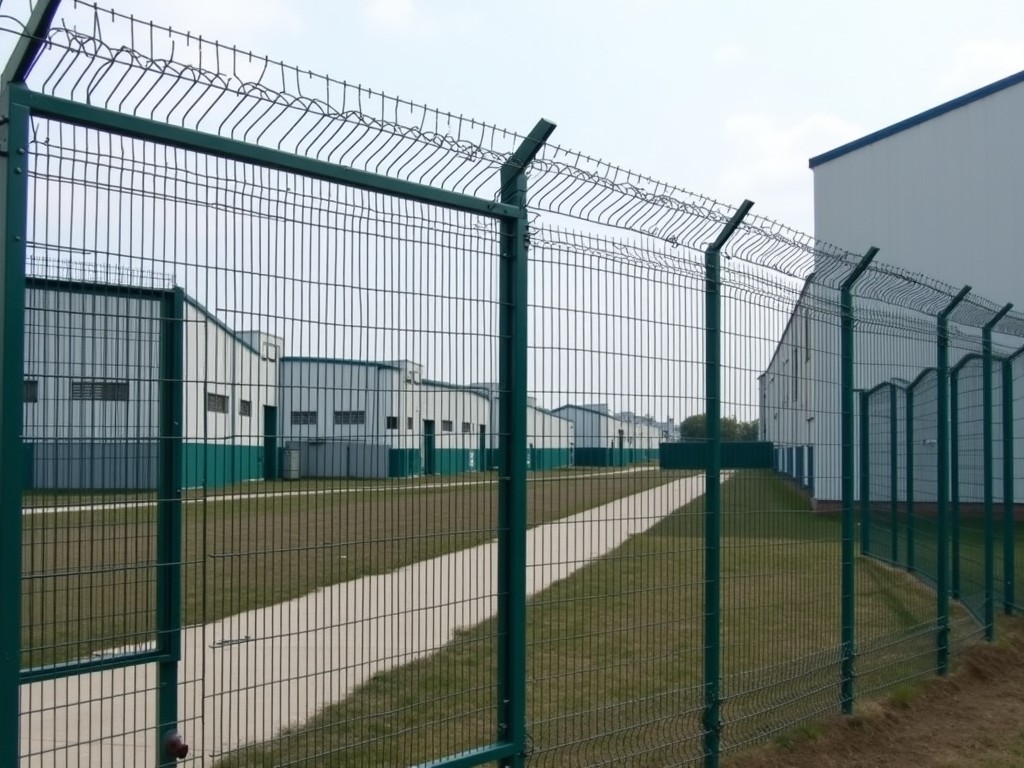
B2B Razor Wire Prison Fence Top Factory
The primary function of razor wire installed on the top of perimeter fences is to deter climbing attempts by presenting a sharp, painful barrier that significantly increases the time and risk
Request a QuoteB2B Razor Wire Prison Fence Top Factory
The primary function of razor wire installed on the top of perimeter fences is to deter climbing attempts by presenting a sharp, painful barrier that significantly increases the time and risk required for an intruder to breach the fence line.
Material Selection and Coating Options
Core wire is typically produced from low‑carbon steel with a tensile strength grade of 550 MPa, though high‑tensile variants up to 700 MPa are available for extreme load conditions. The wire undergoes hot‑dip galvanizing to achieve a zinc coating thickness of 55–85 µm, providing a minimum of 500 hours resistance to neutral salt spray per ASTM B117. For environments with high chloride exposure, stainless steel (AISI 304) wire with a passivated finish can be specified, offering comparable mechanical strength with superior corrosion resistance.
Design Parameters
Standard razor wire used for prison fence tops features a core wire diameter of 2.5 mm. Barbs are formed by pressing a length of 15 mm steel tape onto the core at a spacing of 50 mm between adjacent barbs, resulting in a repeating pitch of 100 mm along the wire axis. The overall outer diameter of the barbed section is approximately 4.5 mm, and the wire is supplied in coiled lengths ranging from 50 m to 200 m per spool, depending on handling equipment.
Mechanical Performance Data
| Property | Typical Value | Test Standard |
|---|---|---|
| Tensile Strength | 550–700 MPa | ASTM A370 |
| Elongation at Break | 10–15 % | ASTM A370 |
| Zinc Coating Thickness | 55–85 µm | ASTM A123/A123M |
| Salt Spray Resistance (Neutral) | ≥500 h | ASTM B117 |
Typical Applications in Correctional Facilities
Prison perimeter systems often combine a primary barrier such as chain‑link fence or welded mesh with a razor‑wire over‑top to add a psychological deterrent and a physical obstacle that increases the time required for an escape attempt. The sharp barbs cause painful lacerations on contact, discouraging individuals from attempting to scale the fence, while the low visual profile maintains sight lines for surveillance cameras and guard towers. Because the wire can be tensioned to the existing fence structure, installation does not require major civil works, reducing downtime and cost during upgrades.
Customization and Manufacturing Considerations
Coil length, inner diameter, and outer packaging can be adjusted to match client handling equipment; common spool sizes are 300 mm inner diameter with 50 m, 100 m, or 200 m lengths, packed on wooden pallets with stretch‑film protection. Optional PVC over‑coating in colors such as black, orange, or yellow is available for additional UV stability and visual identification. For projects requiring reduced weight, a high‑tensile steel core with a smaller diameter (2.0 mm) can be specified while maintaining equivalent barb geometry.
Quality Assurance Process
Incoming steel rod is inspected for diameter tolerance (±0.02 mm) and chemical composition. During forming, each barb is measured for length and spacing using laser gauges, with acceptance limits of ±0.5 mm. Finished coil samples undergo tensile testing to verify strength and elongation, while coating adhesion is assessed via cross‑cut tape per ASTM D3359. All batches are tagged with a unique lot number enabling full traceability from raw material to shipment.
Common Inquiries
-
Can the wire length and coil diameter be customized?
Yes. Lengths from 20 m to 300 m and inner diameters from 200 mm to 500 mm are available upon request, subject to production tooling.
-
What information is needed to obtain a quotation?
Required details include fence height, desired over‑top length, coating preference (galvanized or stainless), coil length, packaging method, and delivery destination.
-
Are samples provided before a production order?
Sample sections (typically 1 m) can be shipped for evaluation; costs are credited against the first order.
-
How is the product protected during overseas shipment?
Coils are wrapped in corrosion‑inhibiting film, placed on sturdy pallets, and secured with steel straps; optional wooden crates are offered for high‑risk routes.



