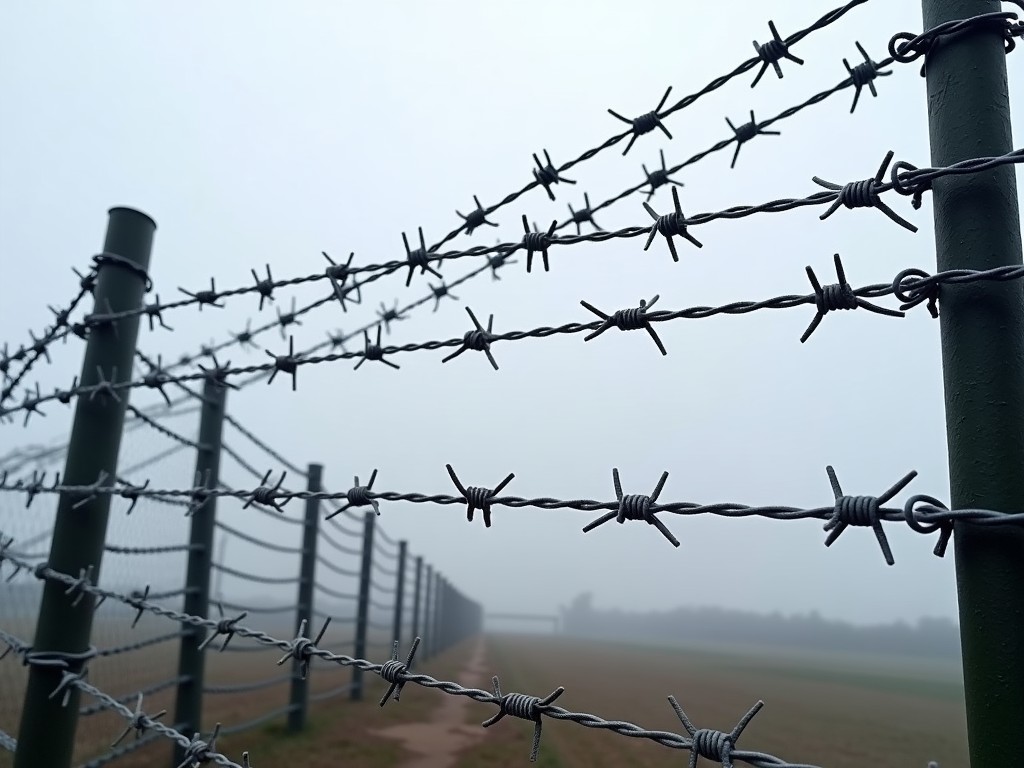
B2B Military Concertina Razor Barbed Wire
Concertina razor wire consists of a high‑tensile steel core wire formed into alternating coils with razor‑sharp barbs pressed into the windings. The geometry creates a continuous barrier that resists
Request a QuoteB2B Military Concertina Razor Barbed Wire
Concertina razor wire consists of a high‑tensile steel core wire formed into alternating coils with razor‑sharp barbs pressed into the windings. The geometry creates a continuous barrier that resists cutting and climbing while allowing rapid deployment in tactical environments.
Engineers select the core wire diameter based on the required tensile load and the expected impact forces. Typical core diameters range from 2.5 mm to 3.2 mm, providing a balance between flexibility for coiling and resistance to deformation under tension.
Barb length and spacing are calibrated to maximize deterrence while maintaining manufacturability. Standard barbs measure 22 mm in length with a pitch of 100 mm along the core, producing approximately 10 barbs per metre of wire.
Technical Specifications
| Parameter | Typical Value | Unit |
|---|---|---|
| Core wire diameter | 2.5 – 3.2 | mm |
| Barb length | 22 | mm |
| Barb spacing | 100 | mm |
| Coil diameter (expanded) | 450 – 550 | mm |
| Coil height | 150 – 180 | mm |
| Tensile strength (core) | ≥ 1550 | MPa |
| Zinc coating weight | 275 | g/m² |
| Operating temperature range | ‑40 to +80 | °C |
Material and Corrosion Protection
The core wire is produced from low‑alloy carbon steel with a controlled carbon content of 0.60 % to 0.65 % to achieve the required tensile strength after drawing. A hot‑dip galvanizing process applies a zinc coating whose weight is adjusted according to the exposure environment; for marine or high‑humidity sites, a coating of 350 g/m² is available upon request.
Optional upgrades include a stainless‑steel core (grade 304 or 316) for chloride‑rich atmospheres, or a PVC over‑coat that adds a dielectric layer and extends service life in chemically aggressive zones. All coatings are tested for adhesion using the ASTM D3359 tape test, with a minimum rating of 4B required for acceptance.
Applications in Military and Security Sectors
Concertina razor wire is employed where a rapid‑erect, high‑deterrent obstacle is needed to delay or prevent unauthorized access. Its helical form allows a single operator to deploy tens of metres per minute using simple hand tools, making it suitable for forward operating bases that must be established within hours.
- Perimeter defense of permanent military installations
- Temporary security zones around forward operating bases
- Detention and correctional facility perimeters
- Protection of critical infrastructure such as power stations and water treatment plants
- Border control points requiring a visible, low‑maintenance barrier
The barrier’s psychological impact stems from the visible razor profile, which increases the perceived risk of intrusion. Physically, the interlocking coils create a shear‑resistant mat that distributes load across multiple wires, reducing the likelihood of a single‑point failure under tensile stress.
Installation and Handling Guidelines
Deployment begins with anchoring the coil to a fixed point using a steel picket or a concrete‑set anchor bolt. The free end is then pulled outward while maintaining tension, allowing the concertina to expand to its nominal diameter. A tensioning tool calibrated to 2 kN ensures the coils remain tight without overstressing the core wire.
Personnel should wear cut‑resistant gloves and eye protection during handling, as the barbs can cause lacerations if mishandled. Coils are supplied with a temporary protective wrap that prevents accidental snagging during transport and is removed just before installation.
Quality Assurance and Testing
Each production lot undergoes dimensional verification of core diameter, barb length, and coil pitch using calibrated laser micrometers. Acceptance criteria limit deviations to ±0.05 mm for diameter and ±2 mm for barb length to ensure consistent barrier performance.
Tensile tests are performed on specimens cut from the core wire according to ISO 6892‑1, with a minimum elongation of 10 % at break to confirm ductility. Coating thickness is measured via magnetic induction, and adhesion is validated by the cross‑cut tape test. Any lot failing to meet the defined thresholds is segregated for rework or scrap.
Customization Options
Customers can specify core wire diameter, barb geometry, and coating type to match site‑specific threat levels and environmental conditions. Coil length is variable, ranging from 5 m spools for mobile units to 50 m palletized rolls for permanent installations.
- Core wire diameters: 2.0 mm, 2.5 mm, 3.0 mm, 3.2 mm
- Barb profiles: standard razor, twisted razor, reinforced tip
- Coatings: hot‑dip zinc, zinc‑aluminum alloy, PVC, stainless steel (no coating)
- Lengths: 5 m, 10 m, 20 m, 50 m per spool or roll
- Packaging: loose coils, shrink‑wrapped bundles, palletized with corner protectors
Packaging and Logistics
Standard packaging places each coil in a polyethylene sleeve that contains a volatile corrosion inhibitor (VCI) to protect the zinc layer during transit. Sleeves are then placed in corrugated cartons with a maximum gross weight of 25 kg to facilitate manual handling.
For bulk orders, cartons are stacked on ISO‑standard pallets, secured with stretch film, and labeled with part number, batch code, and handling instructions. Pallets are designed for forklift entry from all four sides, reducing loading‑unloading time at distribution centers.
Frequently Asked Questions
- Can the coil length be customized? Yes, lengths are produced to order; specify the required metreage when requesting a quotation.
- What information is needed for a quote? Provide core wire diameter, barb type, coating preference, total length, and any packaging constraints.
- Are samples available for field testing? Sample sections of up to 2 m can be supplied upon request, with the customer covering shipping costs.
- How is the product protected against corrosion during storage? Each coil includes a VCI additive in the sleeve; store in a dry, ventilated area away from direct sunlight.
For technical data sheets, custom specifications, or to arrange a quotation, please contact our sales team using the link below.
Request a Quote or Technical Consultation


