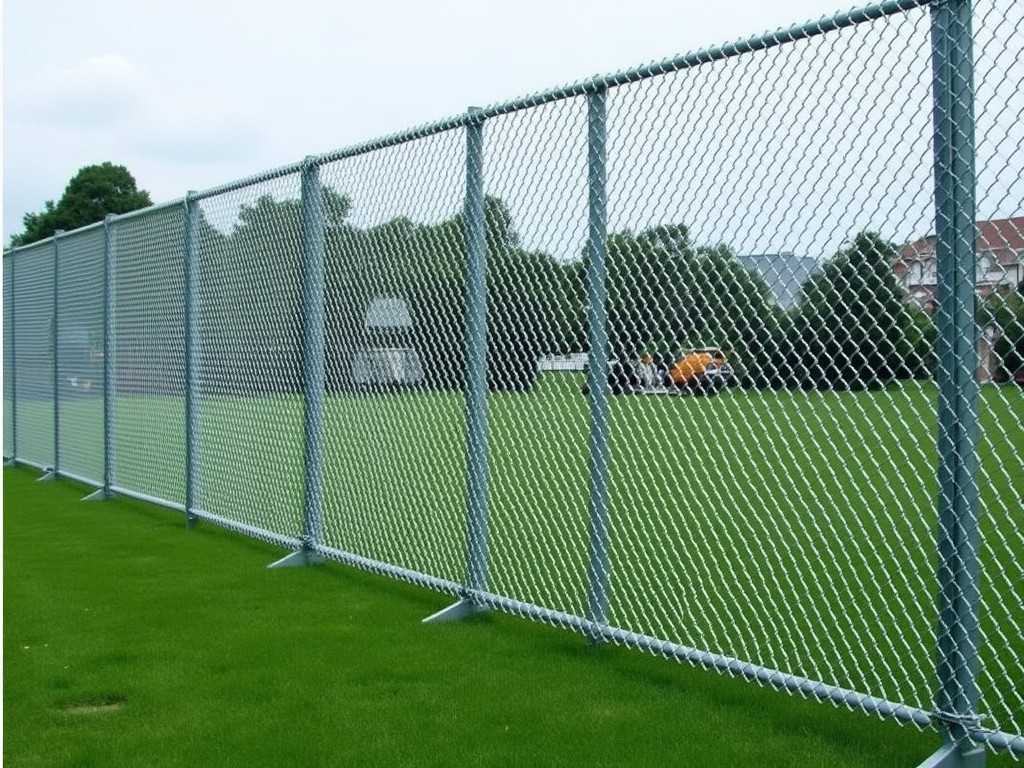
Wholesale Temporary Chain Link Fence Panels For Sale
Temporary chain link fence panels provide a modular barrier solution for short‑term site security, crowd control, and equipment protection. They are fabricated from galvanized steel wire woven into a
Request a QuoteWholesale Temporary Chain Link Fence Panels for Sale
Temporary chain link fence panels provide a modular barrier solution for short‑term site security, crowd control, and equipment protection. They are fabricated from galvanized steel wire woven into a diamond mesh and assembled into rigid frames that can be quickly connected without permanent foundations.
Construction & Materials
The primary material is low‑carbon steel wire with a zinc coating thickness typically ranging from 20 µm to 30 µm, which delivers corrosion resistance suitable for outdoor exposure up to 24 months under moderate climate conditions.
Frames are formed from cold‑rolled steel channels with a nominal thickness of 1.2 mm, pre‑punched for mesh attachment and equipped with interlocking lugs that allow panels to be stacked and locked in place using a simple pin‑and‑clip system.
Technical Specifications
| Specification | Typical Value |
|---|---|
| Mesh Opening (mm) | 50 × 50 |
| Wire Diameter (mm) | 2.0 |
| Panel Height (mm) | 2000 |
| Panel Width (mm) | 2500 |
| Frame Material | Cold‑rolled steel, 1.2 mm thickness |
| Coating Type | Hot‑dip galvanized (Zn) |
| Connection Method | Pin‑and‑clip lug system |
| Typical Load Resistance (kN/m) | 1.5 |
Installation & Handling
Installation relies on the pin‑and‑clip mechanism, which aligns the lugs of adjacent panels and secures them with a galvanized steel pin. No tools are required beyond a mallet for pin insertion, and a single operator can assemble a 50 m run in under 30 minutes under normal site conditions.
Panels are designed to nest flat when disassembled, reducing storage volume by approximately 70 % compared to assembled length. The nested stack height for a standard 2 m × 2.5 m panel is less than 150 mm, facilitating transport on standard pallets.
Applications
Typical applications include construction site perimeter control, event crowd management, temporary storage area segregation, and road work zone delineation. In each case, the panels provide a visible barrier that can be erected and removed without damaging the underlying surface, preserving site integrity for subsequent phases.
- Construction site perimeter
- Event venues and festivals
- Utility and pipeline work zones
- Agricultural livestock control
Quality Assurance
Quality control follows a three‑stage process: incoming wire tensile testing (minimum 350 MPa), mesh weld strength verification (average shear strength 1.8 kN per joint), and final frame alignment check (tolerance ±2 mm on overall dimensions). Records are retained for each production lot and are available upon request.
Customization Options
Panels can be supplied with alternative mesh openings (e.g., 50 mm × 50 mm for increased visibility) or with powder‑coated finishes in RAL colors to match site branding. Frame lengths are adjustable in 100 mm increments, allowing the creation of non‑standard panel widths without custom tooling.
Packaging & Shipping
Standard packaging places ten nested panels on a heat‑treated pallet, secured with stretch film and corner protectors. Each pallet is labeled with lot number, panel specifications, and handling instructions, and is rated for a maximum gross weight of 1,200 kg to comply with international freight regulations.
Call to Action
For pricing, lead times, or to request a sample panel, contact our sales team.
Request Quote


