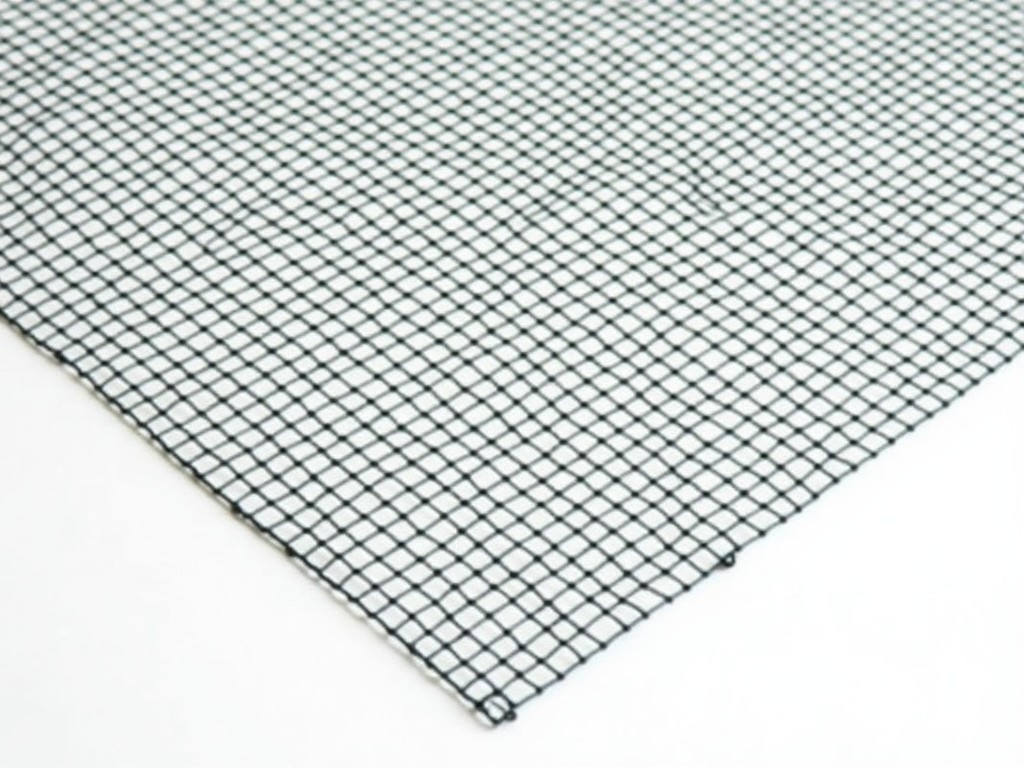
Wholesale Small Hole Steel Mesh Supplier
Small hole steel mesh consists of steel wires arranged in a regular grid with opening dimensions typically ranging from 0.5 mm to 5 mm. The wire diameter is selected to balance structural strength
Request a QuoteWholesale Small Hole Steel Mesh Supplier
Product Overview
Small hole steel mesh consists of steel wires arranged in a regular grid with opening dimensions typically ranging from 0.5 mm to 5 mm. The wire diameter is selected to balance structural strength with open area, commonly between 0.2 mm and 1.2 mm. This configuration provides precise filtration, screening, or barrier functions while maintaining sufficient mechanical load capacity for industrial environments.
Technical Specifications
| Parameter | Typical Value | Notes |
|---|---|---|
| Opening Size (mm) | 0.5 – 5.0 | Customizable per project |
| Wire Diameter (mm) | 0.2 – 1.2 | Affects tensile strength and open area |
| Material | Low carbon steel, Galvanized steel, SS304, SS316 | Selection based on corrosion requirements |
| Tensile Strength (MPa) | 350 – 550 (depends on grade) | Measured per ASTM A370 |
| Standard Panel Size (mm) | 1000 × 2000 (custom lengths available) | Edges can be finished or left raw |
Material Options
- Low carbon steel (AISI 1008) – economical, suitable for dry indoor environments.
- Hot‑dip galvanized steel – zinc coating provides sacrificial corrosion protection for outdoor or humid settings.
- Stainless steel 304 – adequate resistance to mild chemicals and atmospheric corrosion.
- Stainless steel 316 – molybdenum addition enhances resistance to chlorides and acidic conditions.
Manufacturing Process
The mesh is produced either by resistance welding of intersecting wires or by weaving pre‑drawn wire through a loom. Welded mesh offers uniform joint strength and is preferred for structural screening. Woven mesh provides flexibility and is often used where precise opening tolerances are critical. After forming, the product may undergo annealing to relieve stresses, followed by surface treatment such as galvanizing or passivation according to the selected material grade.
Dimensional accuracy is maintained using CNC‑controlled welding heads or precision looms, with tolerances typically within ±0.05 mm for opening size and ±0.02 mm for wire diameter. Final inspection includes visual examination and automated optical measurement to verify conformity to the specified grid pattern.
Applications and Functional Benefits
Fine opening steel mesh is commonly employed in liquid filtration where particle retention down to sub‑millimeter sizes is required, such as in coolant filtration for machining centers or wash‑down systems in food processing. The high open area relative to wire volume minimizes pressure drop while retaining contaminants.
In screening operations, the mesh separates granules or powders in pharmaceutical and chemical industries; the consistent aperture size ensures repeatable product gradation. Its rigidity supports vibratory screen decks without significant deformation under load.
Protective barriers made from small hole mesh prevent ingress of debris while allowing ventilation or visibility, suitable for machine guarding, HVAC inlet screens, and agricultural pest exclusion. The steel construction resists impact and maintains integrity over extended service cycles.
Quality Control Philosophy
Quality assurance begins with raw material certification, verifying chemical composition and mechanical properties against ASTM or EN standards. In‑process monitoring includes real‑time weld current monitoring for welded mesh and tension sensors for woven mesh to detect deviations that could affect opening uniformity.
Finished goods undergo a three‑tier inspection: (1) dimensional verification using calibrated optical comparators, (2) tensile testing of representative samples to confirm strength meets grade specifications, and (3) corrosion resistance assessment via salt‑spray testing for coated variants. Documentation of each test lot is retained for traceability.
Customization Options
- Opening size – adjustable from 0.2 mm to 10 mm in increments of 0.1 mm.
- Wire diameter – selectable to achieve desired open area and load capacity.
- Panel dimensions – custom widths up to 2000 mm and lengths up to 6000 mm, with optional roll‑form delivery.
- Edge treatment – flattened, folded, or fitted with framing strips for easy installation.
- Surface coating – galvanizing, powder coating, or passivation per environmental exposure.
Packaging and Logistics
Mesh panels are stacked flat with interleaving protective paper to prevent surface abrasion, then secured onto steel‑banded pallets. For corrosion‑sensitive grades, a vapor‑corrosion inhibitor (VCI) film is applied before stretch‑wrapping. Each pallet is labeled with material grade, lot number, and quantity, facilitating efficient receiving and inventory management.
Shipping options include full‑truckload (FTL) for large volumes or less‑than‑truckload (LTL) consolidated shipments. Export crates comply with ISPM‑15 standards when required for international destinations.
Inquiry and Next Steps
To receive a formal quotation, please provide the required opening size, wire diameter, material grade, panel dimensions, and any secondary operations such as edge finishing or coating. Our engineering team will review the specifications and confirm feasibility, lead time, and pricing.



