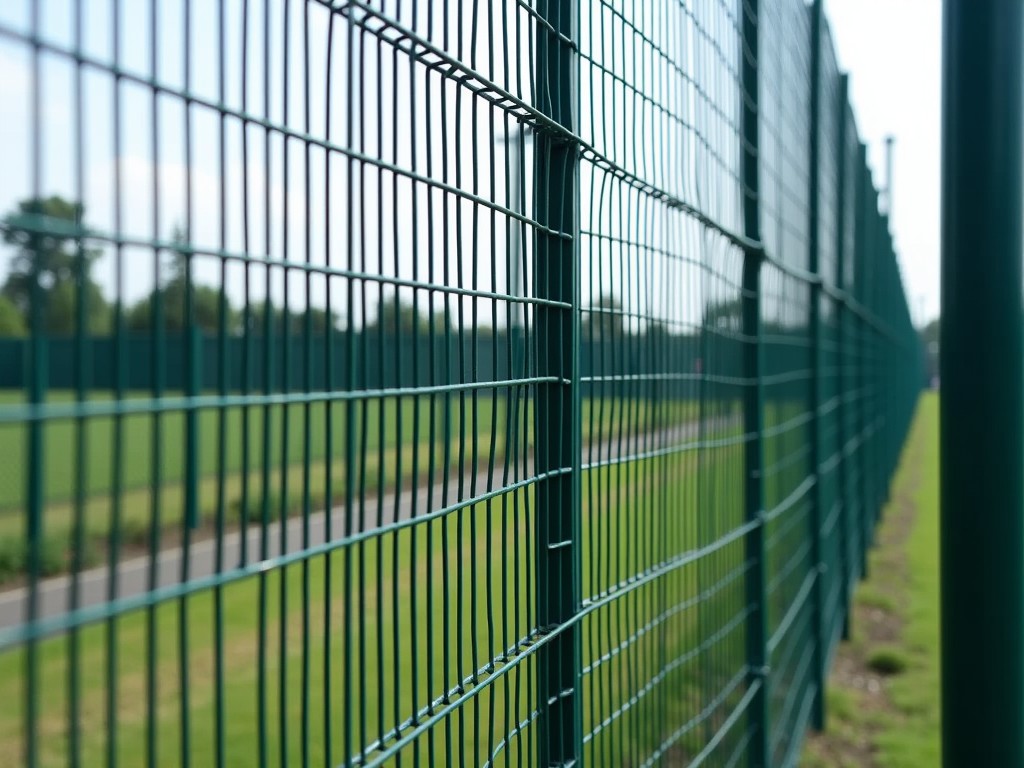
Wholesale Expanded Metal Security Fence Exporter
Expanded metal security fences are produced by slitting and stretching metal sheets to form a uniform pattern of diamond-shaped openings. This process creates a lightweight yet rigid barrier with
Request a QuoteWholesale Expanded Metal Security Fence Exporter
Expanded metal security fences are produced by slitting and stretching metal sheets to form a uniform pattern of diamond-shaped openings. This process creates a lightweight yet rigid barrier with high shear resistance and minimal material waste. The resulting panel maintains structural integrity under impact loads while allowing visibility and airflow.
Technical Specifications
| Parameter | Typical Range | Unit |
|---|---|---|
| Strand Width | 3–6 | mm |
| Opening Size (Diamond) | 12–50 | mm |
| Overall Thickness | 0.8–2.5 | mm |
| Tensile Strength (Base Metal) | 350–550 | MPa |
| Weight per Area | 2.5–8.0 | kg/m² |
| Coating Thickness (Zn) | 15–27 | µm |
Materials and Coatings
- Base metals include low-carbon steel (ASTM A36 equivalent) and pre-galvanized steel for enhanced corrosion resistance.
- Stainless steel grades 304 and 316 are available for environments with high chloride exposure or chemical agents.
- Standard hot-dip galvanizing provides a zinc coating of 55–85 g/m², meeting ISO 1461.
- Optional PVC or powder coating adds a polymeric layer of 80–120 µm thickness, improving UV stability and aesthetic finish.
- All materials are supplied with mill test certificates confirming chemical composition and mechanical properties.
Manufacturing Process
The production line begins with coil feeding, where the metal sheet is drawn through a series of staggered knives that slit the material in a precise pattern. Simultaneous stretching expands the slits into uniform diamonds while maintaining the original sheet width. After forming, the panel passes through a leveling station to relieve residual stresses and ensure flatness within ±2 mm over a 2‑meter span. Final steps include edge trimming, coating application, and curing in accordance with the selected finish.
Applications
- Perimeter security for industrial facilities: the high tensile strength and small opening size deter climbing while allowing CCTV visibility.
- Machine guarding: the rigid mesh prevents accidental contact with moving parts and provides adequate airflow for cooling.
- Infrastructure protection: used along highways and railways as anti‑throw barriers, the lightweight panels simplify installation on existing posts.
- Storage yards and lumber yards: the open design reduces wind load and enables easy inspection of stored goods.
- Temporary site fencing: the panels can be bolted or clipped to modular posts, offering quick deployment and reuse.
Quality Control Philosophy
Each batch undergoes dimensional verification using laser scanning to confirm strand width, opening size, and overall thickness within ±0.1 mm. Tensile tests are performed on representative samples per ASTM E8, ensuring the base metal meets the specified strength range. Coating thickness is measured with a magnetic induction gauge, and adhesion is evaluated via cross‑hatch testing according to ASTM D3359. Visual inspection checks for defects such as tears, burrs, or incomplete galvanizing, with acceptance criteria based on a defined defect density per square meter.
Customization Options
- Panel dimensions: width from 0.5 m to 3.0 m, length up to 6.0 m, adjustable in 50 mm increments.
- Opening geometry: diamond, hexagonal, or custom patterns achievable by altering knife geometry.
- Edge treatments: flattened, rolled, or fitted with PVC edge caps for safety.
- Mounting features: pre‑drilled holes, welded brackets, or clip‑on systems compatible with standard posts.
- Color choices: standard galvanized gray, RAL‑matched powder coats, or clear PVC for translucent appearance.
Packaging and Shipping
Panels are stacked flat on wooden pallets with interleaving corrugated sheets to prevent surface abrasion. Each pallet is secured with steel strapping and stretch film, providing protection against moisture and shifting during transit. For overseas shipments, the pallets are placed inside ISO‑rated containers with desiccant packs and marked with handling instructions. Export documentation includes certificate of origin, material test reports, and packing list, facilitating customs clearance.
Frequently Asked Questions
- Can dimensions be customized? Yes, width, length, and opening size are adjustable according to project drawings; provide CAD files or detailed sketches for quotation.
- What information is required before quotation? Required inputs include material grade, coating type, panel dimensions, quantity, and any special features such as pre‑drilled holes or edge caps.
- What materials are available? Low‑carbon steel, pre‑galvanized steel, stainless steel 304/316, with optional hot‑dip galvanizing, PVC, or powder coating.
- How is quality inspected? Dimensional checks via laser scanning, tensile testing per ASTM E8, coating thickness measurement, and visual inspection per internal defect standards.
- What packaging methods are available? Standard palletizing with interleaving sheets, steel strapping, and stretch film; custom crating available upon request.
- How are export shipments protected? Pallets are wrapped in stretch film, placed in containers with desiccant, and secured to prevent movement; optional waterproof covers are available.
- What is the typical production lead time? Lead time ranges from 2 to 4 weeks depending on coating complexity and order volume; confirmed after receipt of technical specifications.
- How are samples arranged? Sample panels up to 0.5 m² can be dispatched via express courier; shipping costs are borne by the requester, and sample fees are credited toward subsequent orders.
Contact for Inquiry
To receive a detailed quotation or request technical datasheets, please provide your project specifications via the inquiry form. Our engineering team will review the requirements and respond with optimal material configurations, lead times, and pricing.



