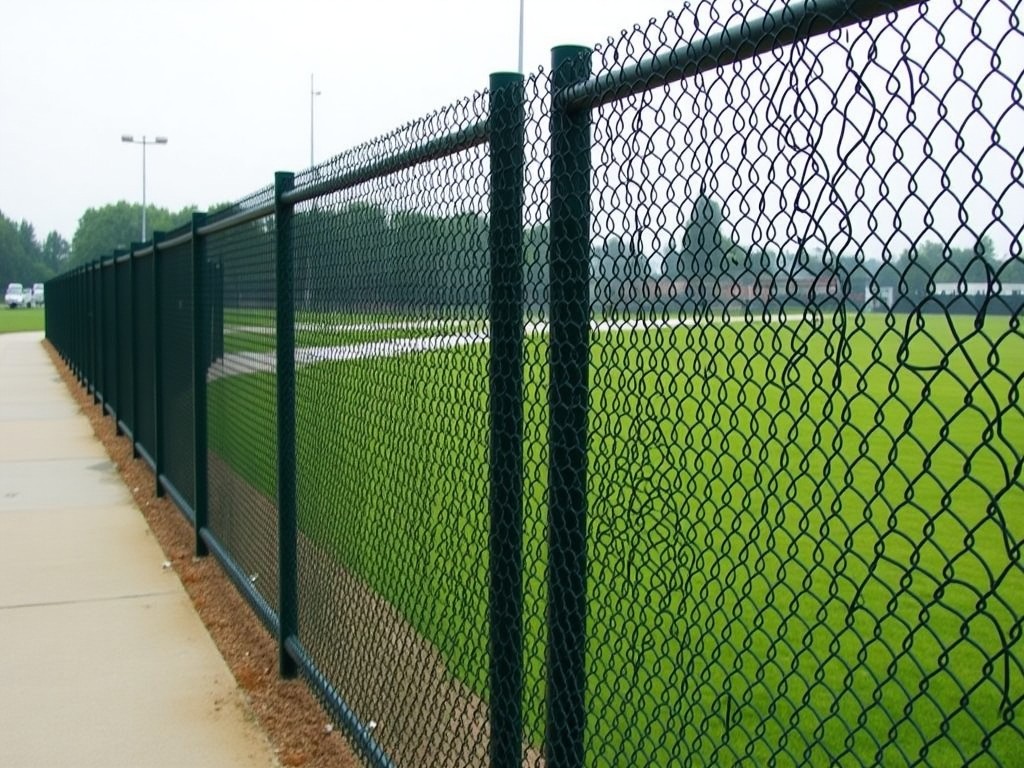
Oem Black Vinyl Coated Chain Link Fence Rolls Manufacturer
Black vinyl coated chain link fence rolls are fabricated from galvanized steel wire that undergoes a PVC vinyl coating process to achieve a uniform black finish. The coating provides corrosion
Request a QuoteOEM Black Vinyl Coated Chain Link Fence Rolls
Black vinyl coated chain link fence rolls are fabricated from galvanized steel wire that undergoes a PVC vinyl coating process to achieve a uniform black finish. The coating provides corrosion resistance, UV stability, and a low‑maintenance surface suitable for industrial perimeters, security enclosures, and agricultural barriers. Vinyl thickness typically ranges from 0.35 mm to 0.50 mm, ensuring adequate protection without excessive stiffness.
Material Composition
The core wire is low‑carbon steel, usually ASTM A641 Class 1 galvanized, with a zinc coating weight of approximately 10 g/m². This base provides tensile strength in the range of 350–550 MPa, depending on wire diameter. The vinyl coating is a polyvinyl chloride (PVC) compound formulated with UV stabilizers and plasticizers to maintain flexibility across temperature extremes (−20 °C to +60 °C).
Coating Process Overview
The vinyl is applied via extrusion coating, where the heated PVC melt is forced through a die onto the pre‑heated galvanized wire as it passes through a cooling chamber. Line speeds are controlled to achieve coating thickness uniformity within ±0.05 mm. Post‑cooling, the product undergoes a curing stage to relieve internal stresses and ensure adhesion strength exceeding 1.5 MPa (peel test).
Dimensional Specifications
| Parameter | Typical Range | Notes |
|---|---|---|
| Wire Diameter (core) | 2.0 mm – 4.0 mm | Selected per load requirement |
| Overall Diameter (with coating) | 2.7 mm – 4.8 mm | Includes vinyl thickness |
| Roll Width | 0.9 m – 3.0 m | Custom widths available |
| Roll Length | 10 m – 50 m | Standard lengths; longer on request |
Mechanical Properties
After coating, the composite wire retains a minimum tensile strength of 300 MPa, sufficient for typical fence tensions of 2–5 kN per post. Elongation at break remains above 12 %, allowing the fabric to accommodate thermal expansion without permanent deformation. The vinyl layer adds a modest increase in flexural rigidity, measured as a bending modulus of approximately 1.2 GPa.
Manufacturing Considerations
Production lines incorporate inline thickness gauges and adhesion test stations to monitor coating consistency. Tension control during winding prevents wire deformation, while UV‑stable additives are dosed based on extruder throughput. Batch traceability is maintained via barcode labeling on each roll, linking to raw material certificates and process parameters.
Typical Applications
- Perimeter security for warehouses and logistics centers, where visibility and deterrence are required.
- Animal containment in farms and ranches, benefiting from the smooth black surface that reduces snagging.
- Temporary site fencing for construction projects, offering quick installation and re‑usability.
- Sports facility boundaries, providing a low‑glare backdrop that minimizes visual distraction.
Quality Control Philosophy
Each roll undergoes visual inspection for coating defects such as pinholes, bubbles, or uneven thickness. A random sample is subjected to salt‑spray testing (ASTM B117) for 500 hours, with acceptance criteria of less than 5 % red rust on the underlying galvanized layer. Dimensional verification uses laser micrometers to confirm wire and overall diameters within tolerance.
Customization Options
- Alternative coating colors (green, brown, white) upon request, using the same PVC formulation.
- Modified vinyl thickness for enhanced impact resistance in high‑traffic zones.
- Custom roll lengths and widths to match specific project layouts, reducing field splicing.
- Pre‑punched selvage edges for easier attachment to posts or tension wires.
Packaging and Shipping
Rolls are wrapped in UV‑stabilized polyethylene film, then placed on pallets with corner protectors and stretch‑wrapped for load stability. Each pallet carries a maximum of 20 rolls, depending on roll diameter, and is labeled with product code, batch number, and handling instructions. For export shipments, desiccant packets and plywood crating are available to mitigate moisture ingress during transit.
Frequently Asked Questions
- Can dimensions be customized? Yes, wire diameter, coating thickness, roll width, and length can be adjusted to meet project specifications; consult technical sales for feasibility.
- What information is required before quotation? Required details include desired wire diameter, coating color/thickness, roll dimensions, quantity, and any special packaging or certification needs.
- How is quality inspected? Inline thickness monitoring, adhesion peel tests, visual defect checks, and periodic salt‑spray validation per ASTM B117.
- What packaging methods are available? Standard poly‑film wrap on pallets, with options for corrosion‑inhibiting interleaving, plywood crates, or custom labeling.



