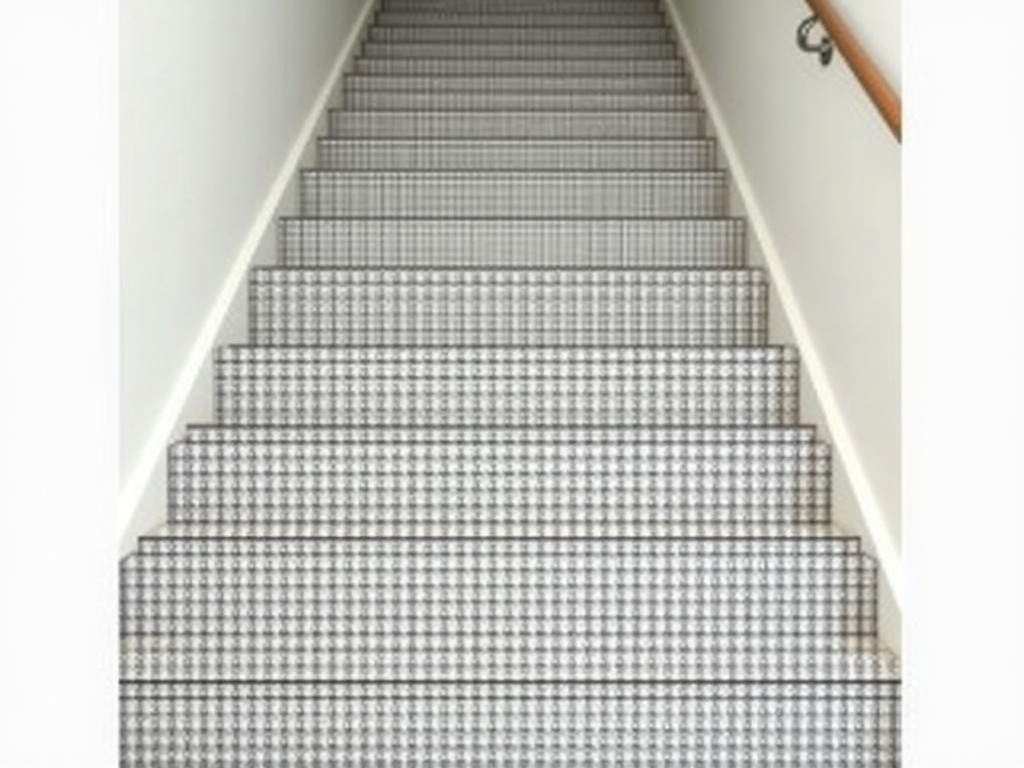
Direct Factory Wire Mesh Stair Railing Panels Supplier
We produce wire mesh panels that serve as infill for stair railings in industrial and commercial facilities. The panels are fabricated from cold‑drawn steel wire that is welded or woven into a
Request a QuoteDirect Factory Wire Mesh Stair Railing Panels Supplier
We produce wire mesh panels that serve as infill for stair railings in industrial and commercial facilities. The panels are fabricated from cold‑drawn steel wire that is welded or woven into a uniform grid, providing a barrier that meets typical handrail loading requirements while allowing visibility and airflow.
Materials and Construction
The base material is typically low‑carbon steel wire with diameters ranging from 3 mm to 6 mm, depending on the required stiffness and impact resistance. Wire can be supplied with a hot‑dip galvanized coating (minimum 55 µm zinc) or as austenitic stainless steel (grade 304 or 316) for environments with exposure to chlorides or moisture.
- Carbon steel, hot‑dip galvanized per ISO 1461
- Stainless steel 304 (18‑8) for general indoor/outdoor use
- Stainless steel 316 for marine or chemical‑exposed areas
- Optional PVC‑coated wire for additional abrasion resistance
The mesh is formed by either resistance spot welding at each intersection or by weaving the wires in a plain square pattern. Welded joints provide a shear strength typically exceeding 1.5 kN per spot, while woven meshes rely on the tensile capacity of the wire itself, with ultimate tensile strength of the wire ranging from 450 MPa to 620 MPa depending on grade.
Design Parameters and Customization
Panel dimensions are defined by clear opening size (the distance between parallel wires), overall height and width, and edge treatment. Standard mesh openings are 25 mm × 25 mm, 38 mm × 38 mm, and 50 mm × 50 mm, but any opening from 12 mm to 100 mm can be produced to match specific climb‑prevention or ball‑impact criteria.
- Wire diameter (3 mm, 4 mm, 5 mm, 6 mm)
- Mesh opening (square or rectangular)
- Panel width (up to 1200 mm) and height (up to 2400 mm) in single piece; larger areas assembled with modular frames
- Edge finishing: flattened, folded over, or fitted with U‑channel for frame attachment
- Surface treatment: galvanized, powder‑coated (RAL colors), or left bare for subsequent painting
Load capacity is calculated based on the mesh’s effective width and the wire’s yield strength. For a 4 mm wire with 25 mm opening, the panel can resist a uniform line load of approximately 0.8 kN/m before noticeable deflection, suitable for stair infill where guardrail loads are typically 0.5 kN/m.
Manufacturing Process
Production begins with wire drawing to the specified diameter, followed by cleaning and coating if required. The wire is then fed into a CNC‑controlled welding machine that places spot welds at each intersection with a dwell time optimized for penetration without compromising wire ductility. For woven panels, wires are interlaced on a loom and the edges are secured by crimping or welding.
After forming, panels undergo straightening to remove any residual curvature, then are cut to final length using shear or laser cutting. Edge treatments are applied in a secondary operation, and the finished panels are stacked with protective interleaving to prevent surface damage during transport.
Quality Assurance and Testing
Each batch is subject to dimensional verification using calibrated gauges; wire diameter tolerance is ±0.05 mm and opening size tolerance ±1 mm. Weld strength is assessed by pulling a sample joint until failure, with acceptance criterion of ≥1.2 kN shear load. Corrosion resistance of galvanized coatings is checked via salt‑spray testing (ASTM B117) for a minimum of 200 hours without red rust.
Visual inspection checks for missing welds, wire breakage, and coating uniformity. Panels that do not meet the criteria are reworked or scrapped. Documentation of test results is available upon request for project‑specific quality plans.
Applications and Suitability
Wire mesh stair railing panels are chosen when a barrier must prevent climb‑through while maintaining sight lines, such as in factories, warehouses, parking garages, and public transit stations. The open geometry reduces wind load on the railing system and facilitates cleaning, which is important in environments where debris accumulation could create slip hazards.
Compared with solid infill panels, mesh offers a higher strength‑to‑weight ratio; a 4 mm wire panel weighs roughly 3.2 kg/m², whereas a comparable solid steel sheet of the same thickness would exceed 8 kg/m². This weight advantage reduces the load on the stair structure and simplifies handling during installation.
Technical Specifications
| Parameter | Typical Value | Customizable Range / Notes |
|---|---|---|
| Wire Diameter | 4 mm | 3 mm – 6 mm (carbon or stainless) |
| Mesh Opening | 25 mm × 25 mm | 12 mm – 100 mm square or rectangular |
| Panel Width | Up to 1200 mm | Custom widths available; modular joining for larger spans |
| Panel Height | Up to 2400 mm | Custom heights; standard lengths for transport |
| Wire Material | Low‑carbon steel (galvanized) or SS 304/316 | Grade selection per environmental exposure |
| Coating/Finish | Hot‑dip galvanized (55 µm Zn) or powder‑coat | PVC‑coat, RAL colors, or bare for field painting |
| Tensile Strength of Wire | 450 MPa – 620 MPa | Depends on grade and cold‑work level |
| Shear Strength per Weld | ≥1.2 kN (acceptance) | Typical spot weld >1.5 kN |
| Weight per Area | ≈3.2 kg/m² (4 mm wire, 25 mm opening) | Scales linearly with wire diameter and opening size |
| Standard Edge Treatment | Flattened or folded edge | U‑channel, welded flange, or custom profile on request |
Frequently Asked Questions
Can the panel dimensions be customized to match existing stair geometry?
Yes. Width, height, mesh opening, and wire diameter are all adjustable. Provide the clear opening between posts and the required infill height, and we will produce panels to suit.
What information is needed to obtain a quotation?
We require the desired panel size (width × height), wire diameter, mesh opening, material grade, coating or finish, edge treatment, and quantity. Drawings or sketches are helpful but not mandatory.
Which material grades are available for corrosive environments?
Austenitic stainless steel grades 304 and 316 are standard for chloride or moisture exposure. For more aggressive chemistry, higher alloy grades can be sourced upon request.
How is the mesh inspected for weld integrity?
Each lot undergoes shear testing on a statistically significant number of spot welds. Acceptance is based on a minimum shear load of 1.2 kN per weld, with typical values exceeding 1.5 kN.
What packaging methods are used to protect panels during shipment?
Panels are stacked with corrugated interleaving, strapped onto pallets, and stretch‑wrapped. For export, additional corner protection and moisture‑barrier film are applied as needed.
Ready to Discuss Your Project?
Share your stair railing requirements and we will return a detailed quote with lead times and packaging options.



