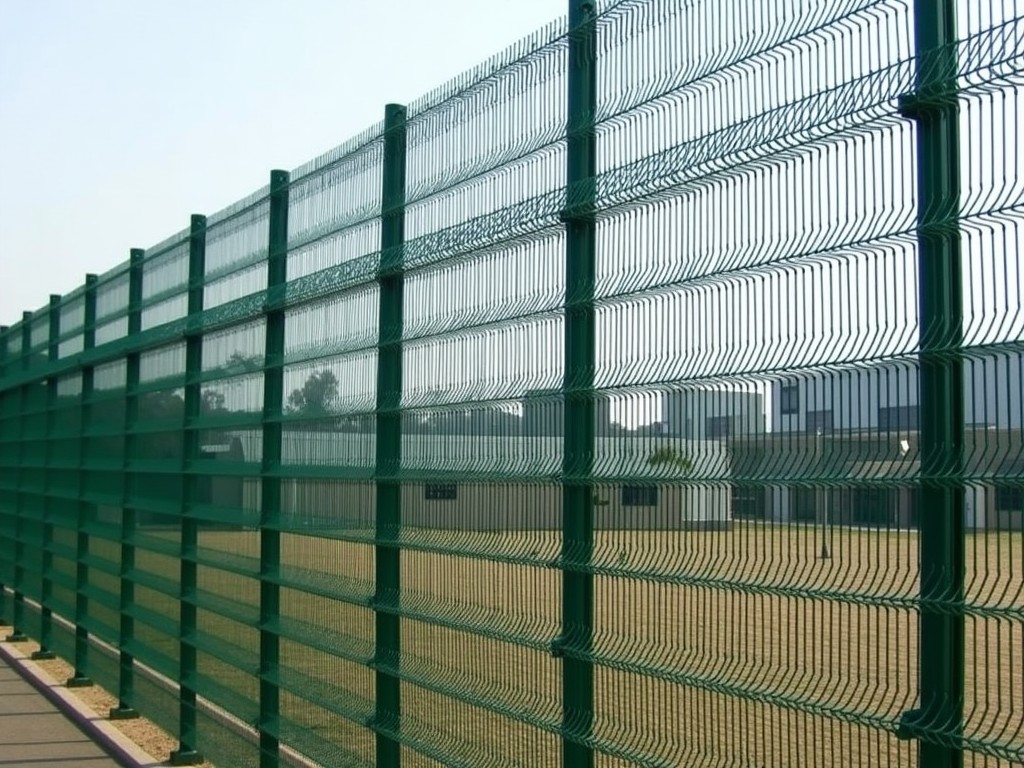
Direct Factory Heavy Duty Security Perimeter Fencing Supplier
Heavy duty security perimeter fencing is engineered to provide a robust physical barrier against unauthorized entry while maintaining visibility for surveillance. Typical installations include
Request a QuoteDirect Factory Heavy Duty Security Perimeter Fencing Supplier
Overview
Heavy duty security perimeter fencing is engineered to provide a robust physical barrier against unauthorized entry while maintaining visibility for surveillance. Typical installations include correctional facilities, power substations, water treatment plants, and high‑value logistics centers where impact resistance and long service life are required.
The system combines high‑strength steel panels with reinforced posts and tensioned mesh to resist dynamic loads such as vehicle impact, wind pressure, and attempted cutting. Design parameters are selected based on site‑specific risk assessments and local building codes.
Material Selection
The primary structural material is hot‑rolled carbon steel with a minimum yield strength of 235 MPa (grade Q235 or equivalent). For enhanced corrosion resistance, the steel undergoes hot‑dip galvanizing that deposits a zinc coating typically ranging from 60 µm to 120 µm depending on the exposure class.
- Base steel: Q235, Q345, or ASTM A36 equivalents
- Galvanized coating: 60‑120 µm Zn (ISO 1461)
- Optional powder‑coat top layer: 80‑120 µm polyester or epoxy
- Stainless steel cladding (grade 304/316) for aggressive environments
Structural Design
Panel geometry is defined by height, width, and mesh opening, which together determine stiffness and climb resistance. Posts are typically set in concrete footings and connected to panels via bolted brackets that allow for thermal expansion and periodic retensioning.
- Standard panel width: 2.4 m – 3.0 m (customizable)
- Available heights: 1.8 m, 2.1 m, 2.4 m, 3.0 m (up to 4.0 m on request)
- Mesh opening options: 50 mm × 50 mm, 75 mm × 75 mm, or 100 mm × 100 mm square
- Post diameter: 114 mm – 168 mm round or square, wall thickness 4.5 mm – 6.0 mm
- Design wind load: up to 2.0 kPa (equivalent to 150 km/h gust) without permanent deformation
Corrosion Protection
Hot‑dip galvanizing provides sacrificial protection; the zinc layer corrodes preferentially to the steel, extending service life. In coastal or industrial atmospheres, an additional powder‑coat barrier is applied to reduce zinc consumption and improve UV stability.
Typical total coating thickness (galvanize + powder) ranges from 140 µm to 240 µm, which corresponds to a predicted maintenance‑free period of 20‑30 years in C3‑C4 environments according to ISO 12944‑2.
Installation Considerations
Proper foundation depth and concrete strength are critical to resist overturning moments caused by impact loads. Posts are usually embedded in bored holes filled with C25/30 concrete, with embedment depth ranging from 0.6 m to 1.0 m depending on height and soil conditions.
Panels are attached using M16 high‑strength bolts with lock washers; torque values are specified to maintain clamp load while allowing for slight movement. Tension wires or bottom rails may be added to prevent panel sagging over long spans.
- Foundation types: bored pier, driven pile, or surface‑mounted base plate with chemical anchors
- Alignment tolerance: ±5 mm vertical, ±10 mm horizontal over 10 m length
- Accessories: barbed wire, razor tape, anti‑climb brackets, swing or sliding gates
Customization Options
Beyond standard dimensions, the fencing system can be tailored to meet specific security levels, aesthetic requirements, or site constraints. Customization includes varying mesh patterns, integrating anti‑cut features, and selecting finish colors that blend with surrounding architecture.
- Height increments of 150 mm up to 4.0 m
- Mesh patterns: welded wire, woven chain‑link, perforated plate, or expanded metal
- Top finishes: straight edge, rolled over, Y‑top, or barbed wire arms
- Gate types: single leaf, double leaf, sliding, or cantilever with motorized operation
- Color options: standard galvanized gray, RAL powder‑coat shades, or custom matched to corporate branding
Quality Control
Each production lot undergoes dimensional inspection, coating thickness measurement, and mechanical testing to verify compliance with the agreed specification. Non‑conforming items are segregated and reworked before shipment.
Typical checks include:
- Panel width and height tolerance: ±3 mm
- Mesh opening uniformity: ±2 mm
- Galvanize coating thickness: measured by magnetic induction, minimum 60 µm
- Powder‑coat adhesion: cross‑hatch test per ASTM D3359, rating 5B
- Tensile strength of base steel: verified via coupon test, ≥ 400 MPa
Applications
Correctional facilities require a barrier that deters climbing and resists sustained attempts to cut or bend the mesh. The combination of small mesh openings, high‑tensile steel, and optional anti‑climb toppings satisfies these demands while allowing clear lines of sight for surveillance cameras.
In power substations, the fence must withstand fault currents induced by nearby equipment and prevent unauthorized access to live parts. The galvanized steel provides effective grounding, and the structural design accommodates the required clearance distances specified in IEC 61850.
Water treatment plants benefit from the corrosion‑resistant coating that endures constant humidity and occasional chemical splash, reducing maintenance downtime and protecting critical infrastructure from sabotage.
Specification Table
| Parameter | Typical Value | Customizable Range |
|---|---|---|
| Panel Height | 2.4 m | 1.8 m – 4.0 m (in 150 mm increments) |
| Panel Width | 2.5 m | 2.0 m – 3.5 m |
| Mesh Opening | 50 mm × 50 mm | 50 mm, 75 mm, 100 mm square |
| Post Diameter | 114 mm | 114 mm – 168 mm round or square |
| Wall Thickness (post) | 5.0 mm | 4.5 mm – 6.0 mm |
| Galvanize Coating | 80 µm Zn | 60 µm – 120 µm |
| Powder‑Coat Thickness (optional) | 100 µm | 80 µm – 150 µm |
| Design Wind Load | 2.0 kPa | Up to 3.0 kPa on request |
| Tensile Strength (base steel) | ≥ 400 MPa | Can be increased to ≥ 550 MPa with higher grade steel |



