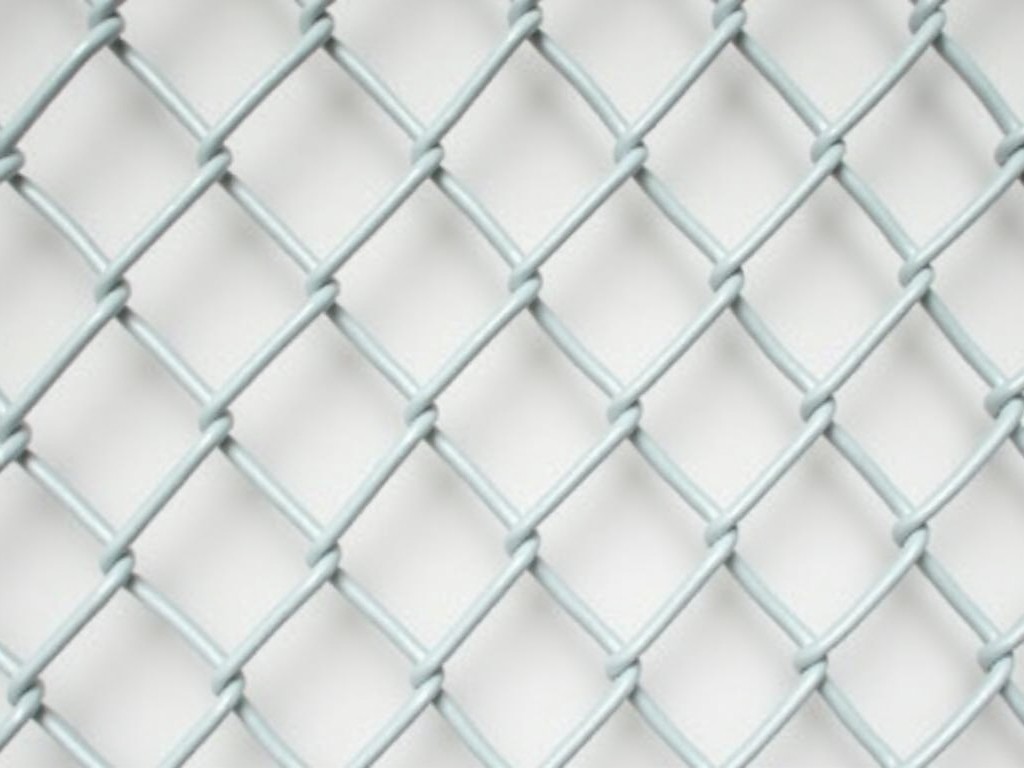
Custom White Metal Mesh Panel For Sale Manufacturer
A white metal mesh panel is a fabricated sheet formed from interlaced metal wires that creates a uniform opening pattern. The panel is coated with a white finish to provide corrosion resistance,
Request a QuoteCustom White Metal Mesh Panel for Sale Manufacturer
Product Overview
A white metal mesh panel is a fabricated sheet formed from interlaced metal wires that creates a uniform opening pattern. The panel is coated with a white finish to provide corrosion resistance, reflectivity, and a neutral appearance for architectural or industrial environments.
Typical applications require specific mechanical properties such as tensile strength, opening size, and coating adhesion, which are defined during the design phase to meet functional requirements.
Material and Construction
Base materials include austenitic stainless steel grades 304 and 316, aluminum alloy 5052, and low-carbon steel Q235. Each grade offers distinct corrosion resistance, weight, and modulus of elasticity values that influence panel performance.
Wire is drawn to precise diameters, then woven or welded into a mesh pattern. Welding uses resistance spot welding for stainless steel, while aluminum panels often employ ultrasonic welding to avoid heat‑induced distortion.
Dimensional Specifications
| Parameter | Typical Value | Customizable Range |
|---|---|---|
| Wire Diameter | 0.8 mm ±0.05 mm | 0.5 mm – 2.0 mm |
| Opening Size (Square) | 10 mm × 10 mm | 5 mm – 50 mm |
| Panel Thickness | 1.2 mm (including coating) | 0.8 mm – 3.0 mm |
| Width × Length | 1000 mm × 2000 mm (standard) | Up to 1500 mm × 6000 mm |
| Tensile Strength (Base Material) | 350 MPa (304 SS) | Depends on grade |
Surface Treatment
The white finish is applied via electrostatic powder coating using a polyester‑based resin. Coating thickness averages 60 µm with a gloss level of 20–30 units (60° meter). Adhesion is measured by cross‑hatch test per ASTM D3359, typically achieving 5B rating.
Alternative finishes include anodized aluminum (clear or white seal) and liquid paint systems for specific chemical resistance requirements.
Customization Options
- Panel shape: rectangular, circular, or custom CNC‑cut profiles
- Opening pattern: square, rectangular, hexagonal, or decorative motifs
- Edge treatment: folded, flanged, or with integrated mounting holes
- Coating color: white (RAL 9010), off‑white, or custom Pantone match
- Additional treatments: anti‑fingerprint, UV‑stabilizer, or conductive overlay
Industrial Applications
In filtration systems, the mesh provides precise particle retention while maintaining low pressure drop; opening size and wire diameter directly influence flow rate and efficiency.
For electromagnetic shielding, the panel’s conductivity and aperture ratio determine shielding effectiveness across frequency bands, enabling use in enclosure walls or waveguide windows.
Architectural facades leverage the white reflective surface to reduce solar gain and provide a uniform aesthetic; the panel’s rigidity and wind load resistance are calculated based on thickness and support spacing.
Quality Assurance
Dimensional inspection uses coordinate measuring machines (CMM) with a repeatability of ±0.02 mm to verify opening size, panel squareness, and edge flatness.
Coating quality is assessed by dry film thickness gauges (magnetostatic for steel, eddy‑current for aluminum) and adhesion tape tests per ASTM D3359.
Each batch undergoes a visual inspection under 500 lux illumination to detect coating defects such as pinholes, orange peel, or color variation.
Packaging and Shipping
- Panels are stacked flat with polyethylene interleaving sheets to prevent surface abrasion.
- Edge protectors made of corrugated cardboard are applied to all four sides.
- Standard crate dimensions: 1200 mm × 2400 mm × 200 mm (holds up to 10 panels).
- For export, crates are fumigated and secured with steel straps; shock‑absorbing corner blocks are added for long‑haul transport.
Frequently Asked Questions
- Can dimensions be customized? Yes, panel width, length, opening size, and wire diameter are adjustable per project drawings.
- What information is required before quotation? Required data includes material grade, desired dimensions, opening pattern, coating thickness, and any secondary operations (e.g., holes, bends).
- What materials are available? Stainless steel 304/316, aluminum 5052, and low‑carbon steel Q235 are standard; other alloys are available upon request.
- How is quality inspected? Dimensional checks via CMM, coating thickness via gauges, adhesion via tape test, and visual inspection under controlled lighting.
- What packaging methods are available? Flat stacking with PE interleaving, edge protectors, and wooden or steel crates; custom packaging is possible.
- How are export shipments protected? Crates are fumigated, strapped, and equipped with shock‑absorbing corners; moisture barrier liners are added for humid climates.
- What is the typical production lead time? Lead time ranges from 2 to 4 weeks depending on complexity and current capacity; exact schedule is confirmed after order receipt.
- How are samples arranged? Sample panels (up to 300 mm × 300 mm) can be produced within 5 working days; shipping costs are borne by the requester.
Get a Quote
To receive a detailed quotation, provide your project specifications including material, dimensions, opening pattern, coating requirements, and quantity. Our engineering team will review the data and return a formal proposal with lead time and pricing.



