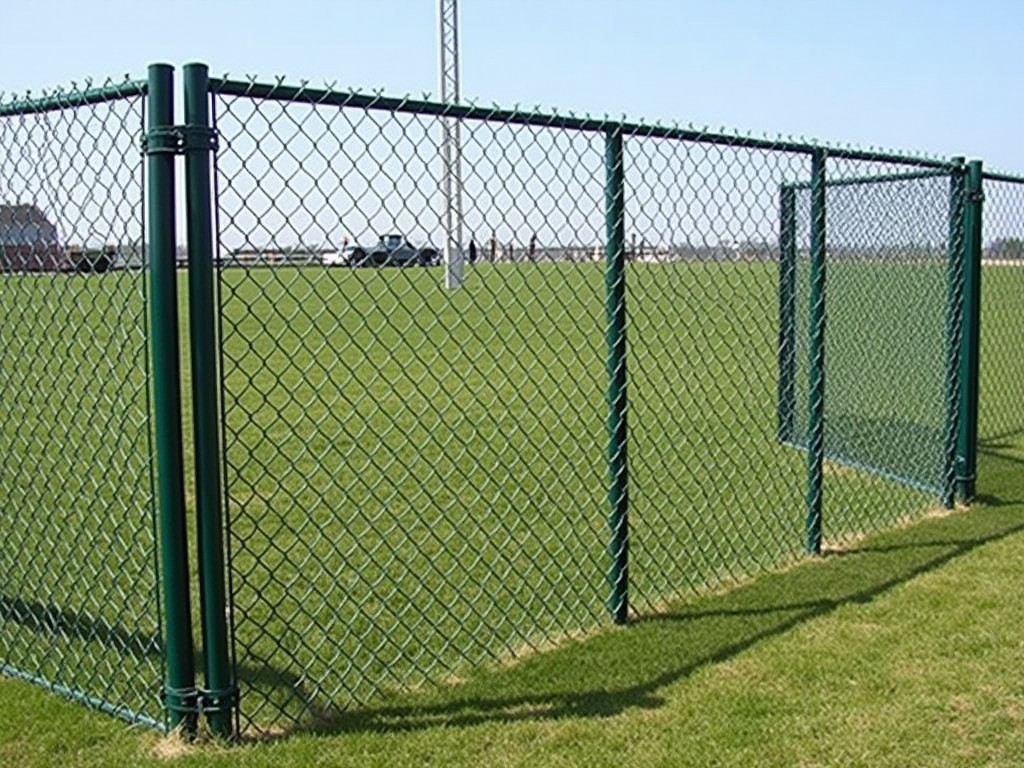
Custom Steel Cattle Fence Panels Manufacturer
Cattle fence panels serve as the primary barrier that controls livestock movement while withstanding physical impact from animals and environmental forces. The design must balance stiffness to resist
Request a QuoteCustom Steel Cattle Fence Panels Manufacturer
Cattle fence panels serve as the primary barrier that controls livestock movement while withstanding physical impact from animals and environmental forces. The design must balance stiffness to resist deformation under pressure with sufficient flexibility to accommodate ground irregularities without cracking.
Material Selection and Corrosion Protection
Panels are typically fabricated from hot‑rolled structural steel grades such as ASTM A36 or A572 Grade 50, offering a minimum yield strength of 250 MPa and tensile strength ranging from 400 MPa to 550 MPa. To extend service life in outdoor livestock environments, the steel undergoes hot‑dip galvanization conforming to ASTM A123, delivering a zinc coating thickness of at least 55 µm on all surfaces, which provides sacrificial protection against rust in humid and acidic conditions.
Panel Geometry and Structural Design
Standard panel heights range from 1.2 m to 1.8 m, with vertical rail spacing of 100 mm to 150 mm to prevent hoof entrapment while maintaining visibility. Horizontal rails are usually 50 mm × 50 mm square tubing with a wall thickness of 2.0 mm to 3.0 mm, giving a section modulus sufficient to resist bending moments caused by animal pressure of up to 2 kN per rail. Posts are commonly 76 mm Ø × 3.0 mm wall thickness pipe, set in concrete footings to achieve embedment depth of 0.6 m, ensuring lateral stability under wind loads of 150 Pa.
Customization Options
- Panel length: 2.0 m to 6.0 m in 0.5 m increments
- Height adjustments: 0.1 m steps within the 1.2 m–1.8 m range
- Gate integration: single or double leaf gates with matching hardware
- Coating choices: hot‑dip galvanized, powder‑coated (UV‑stable), or duplex system
- Perforation patterns: slotted, mesh, or solid infill for specific ventilation or visibility needs
- Post accessories: base plates, caps, and tension brackets
Typical Specifications
| Parameter | Typical Value | Notes / Customizable |
|---|---|---|
| Steel Grade | ASTM A36 / A572 Gr‑50 | Higher grades available on request | Yield Strength | ≥250 MPa | Depends on grade |
| Tensile Strength | 400–550 MPa | Grade dependent |
| Galvanized Coating | ≥55 µm (ASTM A123) | Duplex coating optional |
| Panel Height | 1.2 m – 1.8 m | Custom increments 0.1 m |
| Rail Spacing | 100 mm – 150 mm | Adjusted for animal size |
| Rail Section | 50 mm × 50 mm × 2.0‑3.0 mm | Alternative profiles available |
| Post Diameter | 76 mm Ø × 3.0 mm wall | Larger diameters for high‑load sites |
| Design Wind Load | 150 Pa (≈15 kg/m²) | Higher loads require deeper footings |
Applications in Livestock Management
Cattle exert concentrated forces on fence rails when pushing, rubbing, or attempting to jump. The panel’s rail spacing and tubular geometry distribute these loads across multiple support points, reducing localized stress that could cause permanent deformation. Additionally, the smooth galvanized surface minimizes abrasion on hides, lowering injury risk compared to barbed or rough finishes. Open designs also allow visual contact between animals, which can reduce stress‑related behaviors in herd environments.
Manufacturing Process and Quality Assurance
Production begins with CNC cutting of steel tube to specified lengths, followed by precision forming of rails and posts on rotary benders to achieve consistent curvature and dimensional tolerance of ±1 mm. Welding is performed using MIG processes with qualified weld procedures, and each joint undergoes visual inspection and, where required, ultrasonic testing to confirm penetration. After assembly, panels are cleaned, flux‑coated, and submerged in a molten zinc bath; coating thickness is measured with a magnetic gauge to verify compliance before cooling and passivation.
Packaging and Logistics
Finished panels are bundled in groups of five to ten units, protected by polyethylene corner guards and stretch‑wrapped to prevent surface scratching during transit. Bundles are placed on standard pallets (1.1 m × 1.1 m) with a maximum load of 1.5 t per pallet, facilitating forklift handling and container stacking. For export shipments, additional moisture‑absorbent desiccants and external plywood crating are applied upon customer request to safeguard against corrosion during long‑sea voyages.
Frequently Asked Questions
- Can dimensions be customized? Yes, panel length, height, rail spacing, and tube dimensions are adjustable to match site‑specific requirements.
- What information is needed for a quotation? Provide desired panel size, quantity, coating preference, gate details, and any special loading or environmental conditions.
- What steel grades and coatings are available? Standard offering includes ASTM A36/A572 Gr‑50 with hot‑dip galvanization; higher‑strength grades and duplex or powder‑coated finishes are available upon request.
- How is quality inspected? Dimensional checks, weld visual inspection, coating thickness measurement, and mechanical testing of sample coupons are performed per internal QC plan.
- What packaging options exist? Standard stretch‑wrapped bundles on pallets; optional crate or container‑specific packaging for overseas transport.
- How are export shipments protected? Use of moisture barriers, desiccants, and external plywood crating to resist corrosion and mechanical damage.
- What is the typical production lead time? Lead time ranges from 3 to 6 weeks depending on order complexity and current capacity; exact schedule is confirmed at quote stage.
- Can samples be arranged? Yes, sample panels (typically 1 m × height) can be supplied for evaluation; shipping costs are borne by the requester.
Next Steps
To discuss your project specifications and receive a detailed quote, please use the inquiry form linked below. Providing the required parameters will enable our engineering team to confirm feasibility, suggest optimal configurations, and outline the production timeline.



