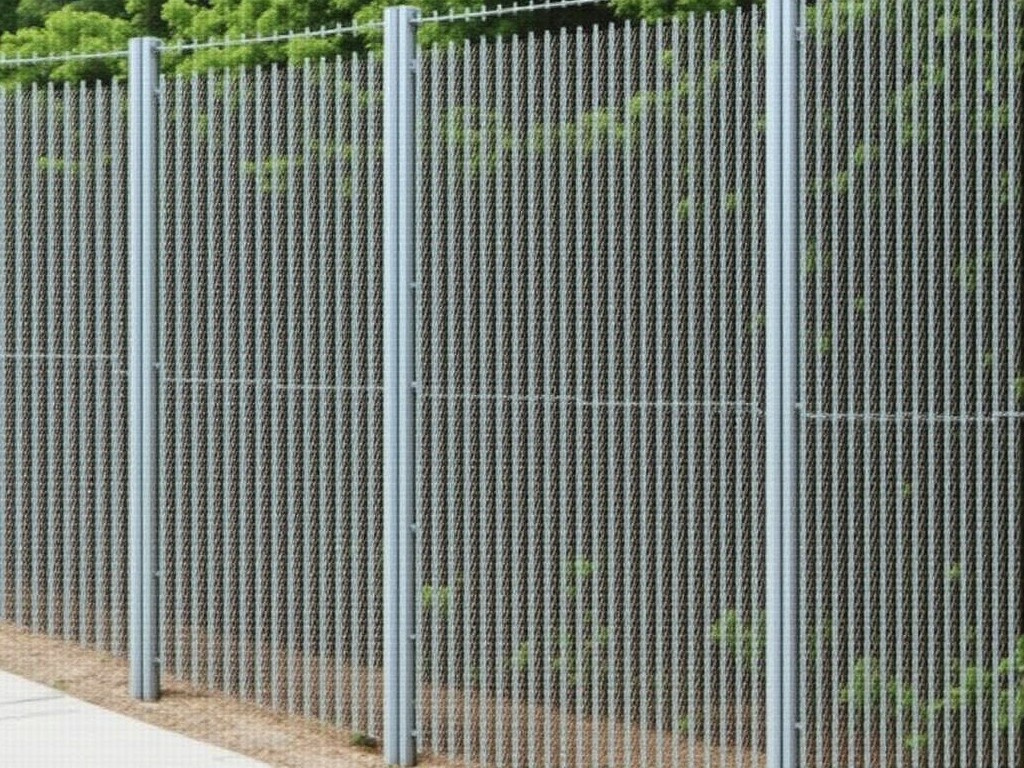
Custom Stainless Steel Fence Panels Manufacturer
Stainless steel fence panels are engineered barriers that combine structural strength with resistance to corrosion, making them suitable for environments where untreated steel would degrade quickly.
Request a QuoteCustom Stainless Steel Fence Panels Manufacturer
Stainless steel fence panels are engineered barriers that combine structural strength with resistance to corrosion, making them suitable for environments where untreated steel would degrade quickly. Panels are fabricated to customer‑specified dimensions, perforation patterns, and mounting configurations, allowing integration into existing infrastructure or new constructions. This approach reduces on‑site welding and ensures consistent quality across large installations.
Material Characteristics
Alloy selection determines corrosion resistance and mechanical performance in specific environments. Commonly used grades include austenitic 304 and 316, as well as duplex variants that offer higher yield strength. The chromium‑nickel content forms a passive oxide layer that protects the surface in chloride‑exposed settings.
- Grade 304 – good general‑purpose resistance, suitable for indoor or mildly corrosive outdoor use.
- Grade 316 – added molybdenum improves resistance to chlorides and acidic environments.
- Duplex 2205 – higher strength and excellent stress‑corrosion cracking resistance.
- Custom alloys available upon request for specialized temperature or chemical exposure.
Design and Customization Options
Panel geometry is defined by project‑specific dimensions, opening patterns, and attachment methods. Design flexibility accommodates varying wind loads, security requirements, and aesthetic preferences while maintaining structural integrity. All custom features are detailed in fabrication drawings before production begins.
- Height: 800 mm to 3000 mm (customizable).
- Width per panel: 600 mm to 2400 mm (modular).
- Thickness: 1.2 mm to 5.0 mm depending on load.
- Opening types: square, rectangular, circular, or custom laser‑cut patterns.
- Mounting options: post‑set, bolt‑through, or welded brackets.
- Surface finishes: mill finish, brushed, bead‑blasted, or electropolished.
Manufacturing Process Overview
Production begins with coil or sheet stock that is cut to blank size before forming. Subsequent steps include bending, punching or laser cutting for openings, and welding of frames or stiffeners as required. Final surface treatment removes oxides and enhances the passive layer.
| Process Step | Typical Tolerance / Control |
|---|---|
| Blank cutting | ±0.5 mm length, ±0.3 mm width |
| Forming / bending | Angle tolerance ±1° |
| Opening fabrication | Position ±0.2 mm, edge burr < 0.1 mm |
| Welding (if applicable) | Visual inspection, penetration ≥ 75 % thickness |
| Surface finishing | Roughness Ra ≤ 0.8 µm (brushed) or ≤ 0.2 µm (electropolished) |
Quality Assurance and Testing
Verification occurs at multiple stages to confirm conformance with drawing requirements and material specifications. Non‑destructive methods are preferred to avoid altering the protective oxide layer. Documentation of inspection results accompanies each shipment.
- Dimensional inspection – height, width, thickness, opening locations.
- Visual surface examination – scratches, weld spatter, contamination.
- Passivation verification – copper sulfate test or ferroxyl test.
- Mechanical property spot checks – hardness or tensile strength on coupons.
- Packaging inspection – corrosion‑inhibiting wrap, corner protection.
Typical Applications
Facilities that expose barriers to aggressive chemicals, moisture, or mechanical impact benefit from the inherent stability of stainless steel. The low maintenance lifecycle reduces total cost of ownership compared with coated or painted alternatives. Properly specified panels meet industry‑specific safety and hygiene standards.
- Chemical processing plants – resistance to acids, alkalis, and solvent vapors.
- Food and beverage production – easy to clean, no crevices for bacterial growth.
- Marine and coastal structures – withstands salt spray and humidity.
- Infrastructure – highways, railways, and utilities where long service life is required.
- Architectural – aesthetic durability in public spaces and façades.
Technical Data
The following table lists typical values for key parameters; actual figures are adjusted according to grade, thickness, and project requirements.
| Parameter | Typical Value | Notes |
|---|---|---|
| Panel weight (per m²) | 10 kg/m² – 25 kg/m² | Dependent on thickness and opening ratio. |
| Yield strength (MPa) | 210 – 550 | Varies by grade (304 ≈ 215, duplex ≈ 450). |
| Corrosion resistance (PREN) | 18 – 35 | Higher PREN indicates better pitting resistance. |
| Maximum recommended wind load | Up to 2.5 kPa | Calculated based on panel size and support spacing. |
| Temperature range (°C) | ‑196 to +800 | Limited by grade; austenitic grades retain toughness at cryogenic temps. |
Frequently Asked Questions
Yes, panel height, width, thickness, and opening patterns are produced to customer‑supplied drawings. Standard modular sizes are available for rapid lead times.
Required details include overall dimensions, material grade, opening type or percentage, mounting method, surface finish, and any applicable standards (e.g., ASTM, EN). Quantities and delivery location also affect pricing.
Commonly stocked grades are 304, 316L, and duplex 2205. Other alloys such as 904L or super‑duplex can be sourced upon request.
Inspection includes dimensional verification, visual surface review, passivation testing, and mechanical spot checks. Documentation and traceability are maintained per ISO 9001‑aligned procedures.
Panels are typically wrapped in corrosion‑inhibiting film, placed on pallets with edge protectors, and secured with straps. Custom crating or containerization is offered for overseas shipments.
Lead time ranges from 2 to 4 weeks for standard specifications, depending on current capacity and order complexity. Expedited schedules are evaluated case‑by‑case.
To initiate a quotation, provide the required panel dimensions, material grade, and any special features. Our engineering team will review the specifications and return a detailed proposal with lead time and pricing.
Request a quote


