Custom Stainless Steel Chain Link Mesh Supplier
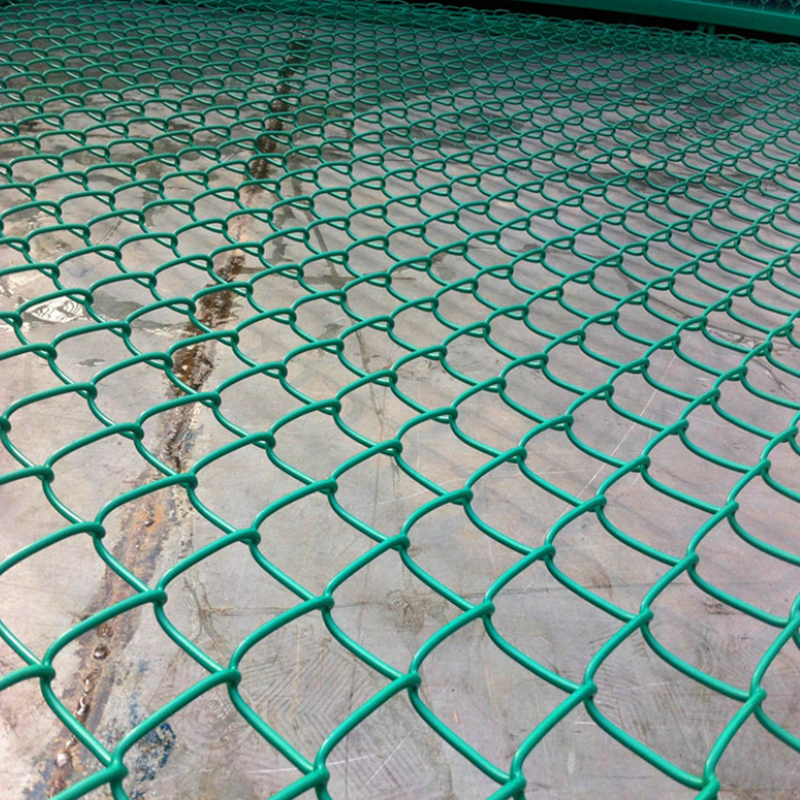
Chain link mesh fabricated from stainless steel wire provides a barrier that combines mechanical strength with resistance to environmental degradation. The product is specified by wire diameter,
Request a QuoteCustom Stainless Steel Chain Link Mesh
Chain link mesh fabricated from stainless steel wire provides a barrier that combines mechanical strength with resistance to environmental degradation. The product is specified by wire diameter, opening size, alloy grade, and edge finish to match the functional demands of a given installation. Understanding these parameters allows engineers to predict service life, load capacity, and maintenance intervals.
Material Composition and Grade Selection
Stainless steel grades differ in chromium, nickel, and molybdenum content, which directly influences corrosion resistance in specific atmospheres. Grade 304 offers adequate protection in mildly corrosive environments such as indoor facilities or low‑humidity outdoor settings. Grade 316 adds molybdenum, improving resistance to chlorides and making it suitable for marine exposure or chemical processing areas. Grade 316L, with lower carbon content, reduces sensitization risk during welding, preserving corrosion resistance in the heat‑affected zone.
Wire Diameter and Opening Size Options
Wire diameter determines tensile strength and impact resistance, while opening size governs flow characteristics and particle retention. Typical wire diameters range from 1.2 mm to 4.0 mm, providing tensile strengths from approximately 450 MPa to over 900 MPa depending on the grade. Opening sizes (clear width between adjacent wires) are commonly specified from 6 mm up to 50 mm, allowing selection based on required screening efficiency or protective spacing.
Customization Logic
Customization begins with translating functional requirements into geometric and material specifications. For instance, a food‑processing line requiring frequent wash‑downs may specify 316L wire with a 2.0 mm diameter and 12 mm opening to balance cleanability with strength. A security perimeter in a coastal industrial zone might choose 316 wire with a 3.2 mm diameter and 25 mm opening to resist wind load and salt‑spray corrosion. Edge treatments such as knuckle, twist, or welded finish are selected based on installation method and stress concentration concerns.
Manufacturing Considerations
The mesh is produced by drawing stainless steel rod to the target wire diameter, followed by weaving or welding the wires into the desired pattern. Weaving involves interlacing longitudinal and transverse wires on a loom, producing a flexible sheet that can be rolled. Welding creates a rigid panel where each intersection is resistance‑welded, increasing shear resistance but reducing post‑forming flexibility. Post‑process annealing may be applied to relieve internal stresses introduced during drawing or welding, particularly for austenitic grades susceptible to work‑hardening.
Quality Control and Inspection
Inspection focuses on dimensional conformity, material integrity, and surface condition. Wire diameter is verified with micrometers or laser gauges against tolerance bands typically ±0.05 mm. Opening size is measured using calibrated gauges or optical systems to ensure uniformity across the sheet. Visual inspection under standardized lighting detects surface defects such as pits, scratches, or weld discontinuities. Mechanical testing, including tensile strength and elongation, is performed on sampled lengths to confirm compliance with grade‑specific minimums.
- Wire diameter tolerance verification
- Opening size uniformity check
- Surface defect visual inspection
- Mechanical property tensile testing
- Corrosion resistance spot testing (e.g., salt spray)
Typical Applications
In pharmaceutical manufacturing, mesh with 316L grade and fine openings prevents particulate contamination while allowing fluid drainage during cleaning cycles. In aggregate handling, heavier gauge 304 mesh with larger openings serves as a screen that separates oversized rocks from conveyable material, reducing equipment wear. Architectural façades utilize ornamental mesh patterns where the corrosion resistance of 316 maintains appearance over decades with minimal maintenance, providing both functional shading and aesthetic continuity.
Comparison Table: Standard Offering vs Customizable Parameters
| Parameter | Standard Offering | Customizable per Project |
|---|---|---|
| Alloy Grade | AISI 304 | 304, 316, 316L, 321, 904L (upon request) |
| Wire Diameter (mm) | 1.6 – 2.5 | 1.2 – 4.0 (tolerance ±0.05) |
| Opening Size (mm) | 10 – 25 | 6 – 50 (custom patterns available) |
| Edge Finish | Knuckle | Knuckle, twist, welded, folded, custom profiles |
| Sheet Width (m) | 1.0 – 1.5 | Up to 3.0 (seamless or seamed) |
| Surface Treatment | Mill finish | Pickled, passivated, electropolished, coated |
Frequently Asked Questions
Can dimensions be customized to match existing equipment?
Yes. Width, length, wire diameter, and opening size are adjusted according to the installation drawing or retrofit specifications provided by the client.
What information is required before a quotation can be issued?
The quotation process needs the alloy grade, wire diameter, opening dimensions, edge finish, quantity, and any required surface treatment or testing standards.
How is quality inspected for large orders?
Inspection follows a sampling plan based on ISO 2859-1, covering dimensional checks, visual examination, and mechanical tests on representative samples from each production batch.
What packaging methods are available for export shipments?
Mesh is rolled onto corrosion‑protected cores, wrapped in water‑resistant film, and placed in wooden crates or steel‑banded pallets, with desiccant and corner protectors as needed.
What is the typical production lead time?
Lead time varies from 2 to 4 weeks for standard specifications, extending to 6–8 weeks when special alloys, non‑standard widths, or additional surface treatments are involved.
Contact for Technical Inquiry
Provide your project parameters to receive a detailed feasibility review, including material recommendations, lead time, and cost breakdown.
Request a Quote