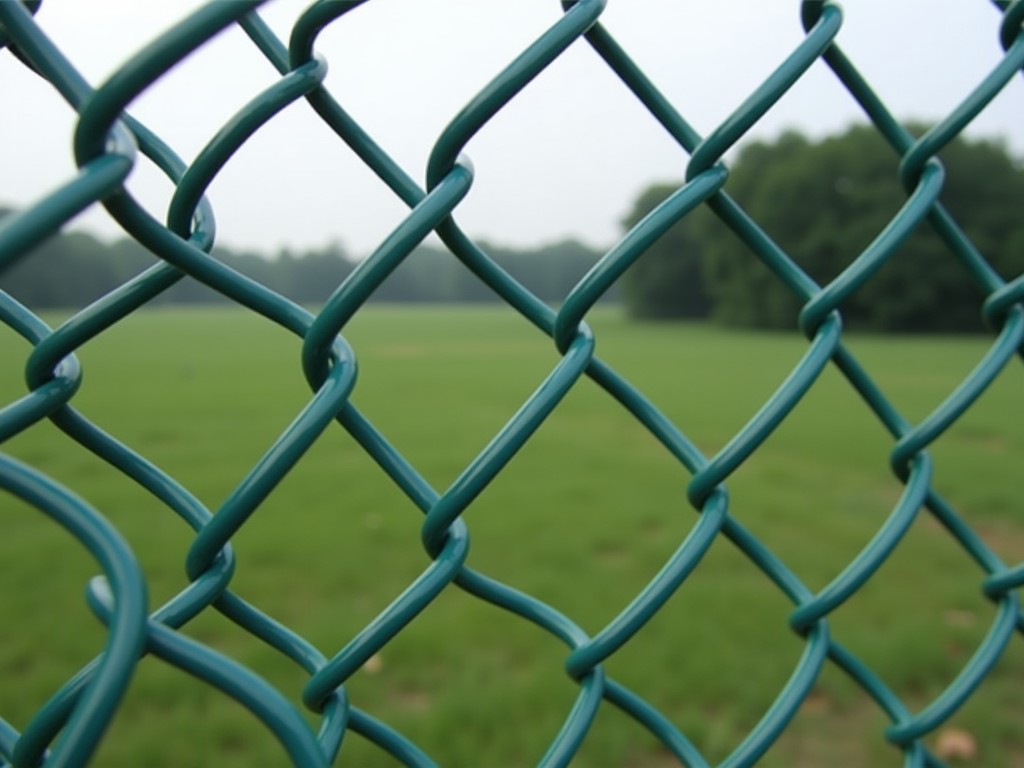
Custom Diamond Shape Metal Mesh Fence Supplier
Diamond shape metal mesh fences consist of interlocking wires forming a repeating rhombic pattern, providing uniform open area while maintaining structural integrity. This geometry offers a high
Request a QuoteCustom Diamond Shape Metal Mesh Fence Supplier
Diamond shape metal mesh fences consist of interlocking wires forming a repeating rhombic pattern, providing uniform open area while maintaining structural integrity. This geometry offers a high strength-to-weight ratio and predictable load distribution, making it suitable for security barriers, animal enclosures, and architectural screens.
Design and Geometry
The diamond opening is defined by two key dimensions: the short diagonal (width) and the long diagonal (length). Typical short diagonal ranges from 20 mm to 100 mm, while the long diagonal is proportionally larger, often 1.5 to 2 times the short diagonal. Wire diameter is selected based on required tensile strength and impact resistance, commonly between 1.2 mm and 4.0 mm.
Open area percentage, calculated from the geometry, typically falls between 55 % and 75 % for standard configurations, influencing visibility, airflow, and light penetration. The angle of the diamond sides (usually 60° or 90°) affects the mesh’s rigidity and the direction of load transfer.
Material Options
| Material | Typical Wire Diameter (mm) | Short Diagonal (mm) | Coating Options | Corrosion Resistance (hrs salt spray) |
|---|---|---|---|---|
| Low‑carbon steel | 1.2 – 3.0 | 25 – 80 | Hot‑dip galvanized, PVC‑coated | 500 – 1500 |
| Stainless steel (Grade 304) | 1.0 – 2.5 | 20 – 60 | Mill finish, electropolished | >2000 |
| Aluminum alloy (5052) | 1.5 – 3.5 | 30 – 100 | Anodized, powder‑coated | >1000 (natural oxide) |
| Weathering steel (Corten) | 2.0 – 4.0 | 40 – 120 | Pre‑rusted, clear sealant | >1500 (patina formation) |
Customization Capabilities
- Opening size: short diagonal adjustable from 15 mm to 150 mm in 1 mm increments.
- Wire diameter: selectable from 0.8 mm to 5.0 mm to meet specific load ratings.
- Panel dimensions: width up to 3 m, length up to 6 m; custom lengths available with butt‑joint or overlapping joints.
- Edge finish: folded, capped, or welded edge rails for added rigidity and safety.
- Surface treatment: galvanization, PVC coating, powder coating, anodizing, or leave mill finish per environmental requirements.
- Additional features: integrated barbed top, anti‑climb spikes, or photovoltaic laminates for multifunctional barriers.
Manufacturing Process
Wire is first drawn to the specified diameter, then formed into a continuous diamond pattern using a precision weaving loom that interlaces each strand at the predetermined angle. The resulting mesh is either welded at each intersection for rigid panels or left as a woven fabric for flexible applications. Post‑forming, the mesh undergoes cleaning, coating application, and curing under controlled temperature to ensure adhesion and uniformity.
Dimensional tolerances are maintained within ±0.5 mm for wire diameter and ±2 mm for opening dimensions across a full panel, verified by laser scanning at multiple points. This level of repeatability supports interchangeable parts in modular fencing systems.
Quality Assurance
Each batch undergoes visual inspection for coating defects, followed by mechanical testing of tensile strength per ISO 6892‑1. Corrosion resistance is validated by salt‑spray testing (ASTM B117) for the duration specified in the material table. Dimensional accuracy is checked using coordinate measuring machines (CMM) on a sampling basis, with acceptance criteria of 95 % of measurements within tolerance.
Documentation includes material test certificates, coating thickness reports, and a traceability lot number affixed to each panel. These records are retained for a minimum of five years to support warranty claims and regulatory audits.
Applications
In perimeter security, the diamond mesh provides a clear line of sight while resisting cutting and climbing attempts; the open area reduces wind load, lowering the required post size and foundation depth. For agricultural enclosures, the geometry prevents small predators from passing through while allowing airflow that reduces heat stress in livestock.
Architectural installations use the mesh as a decorative screen or solar shading element; the uniform pattern creates consistent light diffusion, and the ability to select different coatings enables color matching to building façades. In industrial settings, the mesh serves as machine guarding where visibility is required for operator safety, and the welded intersections maintain integrity under impact from rotating equipment.
Ordering Information
To obtain a quotation, provide the following details: desired material and coating, short diagonal opening size, wire diameter, panel width and length, quantity, edge finish, and any additional features such as barbed tops or integrated laminates. Including a sketch or CAD file accelerates the review process and ensures accurate pricing.
Lead times typically range from 3 to 6 weeks for standard coatings, with expedited options available for urgent projects. Shipping is arranged in flat‑stacked pallets or custom crates to prevent deformation during transit.
Frequently Asked Questions
Can the diamond opening be customized to non‑standard angles?
Yes. The weaving loom can be programmed to produce angles ranging from 45° to 90°, allowing designers to tailor the mesh for specific aesthetic or functional requirements.
What information is required before a quotation can be issued?
Material type, coating, opening dimensions, wire diameter, panel dimensions, quantity, edge treatment, and any special features are needed. Providing a drawing or CAD file reduces lead time.
How is quality inspected for large orders?
Inspection follows a sampling plan based on ISO 2859‑1, with checks on tensile strength, coating thickness, and dimensional accuracy at defined intervals throughout production.
What packaging methods are available for export shipments?
Panels are stacked flat with interleaving protective film, placed on wooden pallets, and secured with steel strapping. Custom crates or corrugated boxes are available upon request for delicate finishes.
Get in Touch
For technical consultation or to request a detailed quotation, contact our engineering team. We will review your specifications and provide a tailored solution that meets performance, budget, and schedule requirements.



