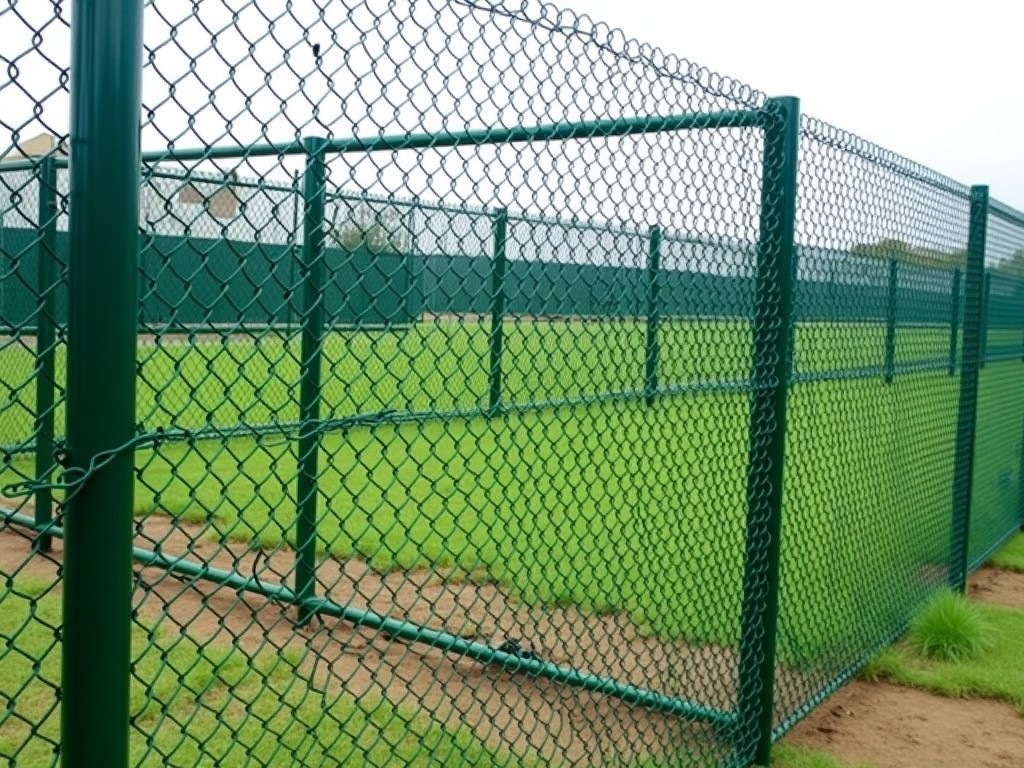
China Heavy Duty Aluminum Chain Link Fence Panels Factory
Heavy duty aluminum chain link fence panels provide a lightweight yet robust barrier for industrial perimeters, utilizing extruded aluminum wire woven into a diamond mesh and reinforced with
Request a QuoteChina Heavy Duty Aluminum Chain Link Fence Panels Factory
Heavy duty aluminum chain link fence panels provide a lightweight yet robust barrier for industrial perimeters, utilizing extruded aluminum wire woven into a diamond mesh and reinforced with peripheral frames. Compared to steel alternatives, aluminum offers superior corrosion resistance in humid or marine environments while reducing structural load on support posts.
Material and Alloy Selection
The wire is typically produced from 6063-T5 alloy, chosen for its excellent extrudability and moderate tensile strength (approximately 180 MPa). For applications requiring higher impact resistance, 6061-T6 alloy (tensile strength around 240 MPa) can be substituted, though extrusion dies must be adjusted accordingly.
Wire diameters range from 3.0 mm to 5.0 mm, influencing both the mesh opening size and the panel’s overall stiffness. Surface treatments such as clear anodizing (coating thickness 12‑18 µm) or polyester powder coating (60‑80 µm) are applied after weaving to enhance UV stability and color retention.
Manufacturing Process
Aluminum billets are heated to extrusion temperature and forced through a die to produce round wire of the specified diameter. The wire is then drawn to improve tensile properties before being woven on a high‑speed loom into a uniform 50 mm × 50 mm diamond pattern.
After weaving, the mesh is trimmed to the desired panel dimensions and attached to extruded aluminum frames (typically 40 mm × 20 mm rectangular tube) using TIG welding or mechanical crimping. The assembled panel undergoes a pretreatment wash, followed by either an anodic oxidation bath or a powder‑coat spray line, and is cured at 180‑200 °C for powder finishes.
Design Characteristics
Standard panel heights vary from 1.2 m to 3.0 m, with widths modularized at 2.5 m to facilitate transport and installation. Mesh apertures of 50 mm, 75 mm, or 100 mm are offered; smaller apertures increase climb resistance and reduce ball penetration, while larger apertures lower wind load.
Wind pressure calculations assume a basic wind speed of 35 m/s (per ASCE 7‑16) and incorporate a drag coefficient of 1.2 for the diamond mesh. Deflection limits are set to L/150 for the frame, ensuring the panel remains taut under gust loads without permanent deformation.
Typical Specifications
| Property | Typical Value | Unit |
|---|---|---|
| Alloy (wire) | 6063‑T5 | – |
| Wire Diameter | 3.0 – 5.0 | mm |
| Mesh Opening | 50, 75, 100 | mm |
| Tensile Strength (wire) | 180 (6063‑T5) / 240 (6061‑T6) | MPa |
| Panel Height | 1.2 – 3.0 | m |
| Panel Width (modular) | 2.5 | m |
| Coating Thickness (anodize) | 12 – 18 | µm |
| Coating Thickness (powder) | 60 – 80 | µm |
| Wind Load Capacity (basic) | 1.2 kPa (≈120 kg/m²) | kPa |
Applications
Industrial facilities such as manufacturing plants, warehouses, and logistics centers use these panels to delineate secure zones while maintaining visibility for surveillance cameras. The non‑magnetic nature of aluminum makes the fence suitable for areas housing sensitive electronic equipment or MRI suites where ferrous interference must be avoided.
In coastal or chemical processing environments, the inherent resistance to chloride‑induced corrosion reduces maintenance cycles compared to galvanized steel. Transportation infrastructure, including airport perimeters and railway yards, benefits from the panel’s low weight, which simplifies installation on existing concrete barriers without requiring extensive foundation reinforcement.
Quality Control Philosophy
Dimensional verification is performed on each batch using laser‑scanning gauges to confirm wire diameter, mesh pitch, and overall panel squareness within ±0.5 mm. Mechanical testing includes tensile sampling of wire per ASTM B557 and peel‑adhesion tests for coating integrity per ASTM D3359.
Visual inspection under standardized lighting checks for weld uniformity, surface pitting, and coating defects. All panels receive a traceability label that links raw material lot numbers to final inspection records, supporting audit trails for project specifications.
Customization Options
- Wire gauge: 3.0 mm, 3.5 mm, 4.0 mm, 4.5 mm, 5.0 mm
- Mesh aperture: 38 mm, 50 mm, 75 mm, 100 mm (custom sizes available)
- Panel height: 1.0 m to 3.5 m in 0.1 m increments
- Frame profile: rectangular tube (40×20 mm, 50×25 mm) or C‑channel
- Surface finish: clear anodize, bronze anodize, standard RAL powder colors, or custom color matching
- Security enhancements: integrated barbed wire, anti‑climb spikes, or welded V‑top extensions
- Accessory compatibility: swing gates, sliding gates, and tension bar kits designed to match panel dimensions
Packaging and Shipping
Panels are stacked flat on wooden pallets, with interleaving layers of corrugated cardboard to prevent surface abrasion. Each pallet is secured with PET strapping and covered with a UV‑stabilized polyethylene shrink film that resists moisture ingress during transit.
For full container loads, pallets are arranged to maximize weight distribution, typically accommodating 20‑25 panels per pallet depending on height. Desiccant packets are included inside the wrapping to mitigate condensation, and a corrosion‑inhibiting vapor phase inhibitor may be added upon request for particularly humid routes.
Frequently Asked Questions
- Can dimensions be customized? Yes, panel width, height, mesh size, and wire diameter can be adjusted to meet project‑specific requirements; tooling changes may affect lead time.
- What information is required before quotation? We need the desired panel dimensions, wire gauge, mesh opening, coating type, and any additional features such as barbed wire or gate integration.
- How is quality inspected? Each lot undergoes dimensional checks, tensile testing of wire, coating thickness measurement, and visual inspection per the procedures described above.
- What packaging methods are available? Standard packaging includes palletizing with cardboard interleaving and shrink wrap; custom crating or container‑specific solutions can be arranged.
- Are export shipments protected against corrosion? The shrink film provides a moisture barrier, and optional VCI (volatile corrosion inhibitor) additives can be included for extended sea transit.
- What is the typical production lead time? Lead times range from 15 to 30 working days after drawing approval, depending on alloy selection and coating complexity.



