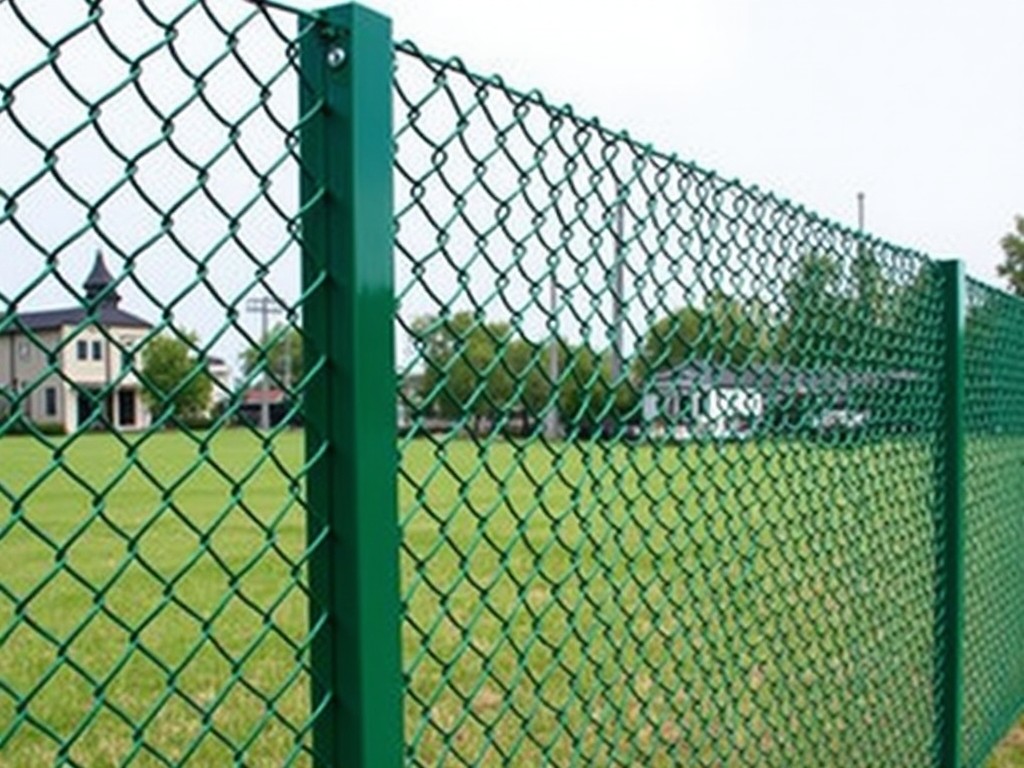
China Green Pvc Vinyl Coated Chain Link Fence Manufacturer
The fence core is made from low‑carbon steel wire that undergoes hot‑dip galvanizing to achieve a zinc coating weight of typically 180 g/m². A PVC vinyl layer is then extruded over the galvanized
Request a QuoteGreen PVC Vinyl Coated Chain Link Fence – Manufacturer Overview
The fence core is made from low‑carbon steel wire that undergoes hot‑dip galvanizing to achieve a zinc coating weight of typically 180 g/m². A PVC vinyl layer is then extruded over the galvanized wire, resulting in a total coating thickness of 0.5 mm to 0.8 mm depending on customer specifications.
Material Composition and Coating Process
Galvanization provides sacrificial protection against rust, while the PVC vinyl acts as a barrier to moisture and chemicals. The vinyl formulation includes titanium dioxide for UV resistance and a green pigment dispersed at a concentration that ensures color stability under ASTM G154 cyclic UV exposure.
Engineering Specifications
| Property | Typical Value | Unit | Notes |
|---|---|---|---|
| Wire diameter (core) | 2.0 – 3.5 | mm | Galvanized before coating |
| Mesh opening | 50 × 50 | mm | Standard square mesh |
| Roll height | 0.9 – 3.0 | m | Custom heights available |
| Tensile strength of wire | ≥ 350 | MPa | Measured per ASTM A370 |
| PVC coating thickness | 0.5 – 0.8 | mm | Uniform over entire wire |
| Coating adhesion | ≥ 12 | N/mm | Peel test per ASTM D903 |
Performance Characteristics
The combination of galvanized steel and PVC vinyl yields a corrosion resistance rating suitable for environments with up to 5 % chloride exposure, as demonstrated by 1000‑hour salt spray testing (ASTM B117) with less than 5 % red rust appearance. The coated fence retains flexibility down to ‑30 °C, allowing installation in cold climates without cracking.
Impact resistance is measured by a falling weight test; a 1 kg steel ball dropped from 1 m produces no coating delamination or wire breakage. The PVC layer also provides electrical insulation, with a volume resistivity exceeding 10¹² Ω·cm.
Typical Applications
- Agricultural livestock enclosures – the smooth vinyl surface reduces injury to animals while the coating resists fertilizer and manure corrosion.
- Sports field perimeter – non‑reflective green color minimizes visual glare for players and spectators.
- Construction site security – high tensile strength and optional barbed wire top deter unauthorized entry.
- Park and recreation barriers – UV‑stabilized color maintains appearance over years of sunlight exposure.
- Industrial facility boundaries – chemical‑resistant coating protects against splashes of oils and solvents.
Customization Options
- Wire gauge: 1.8 mm to 4.0 mm (core) to adjust load‑bearing capacity.
- Mesh size: 25 mm, 50 mm, 75 mm, or rectangular patterns for specific containment needs.
- Height: 0.6 m to 4.0 m, with optional overlap for seamless installation.
- Roll length: 10 m to 50 m, tailored to site logistics.
- Coating color: standard green, black, white, or custom RAL matches upon request.
- Additives: anti‑static, fire‑retardant, or antimicrobial agents can be incorporated into the PVC formulation.
Quality Assurance
In‑line monitoring includes laser micrometers for wire diameter, X‑ray fluorescence for zinc coating weight, and ultrasonic gauges for PVC thickness. Each batch undergoes adhesion testing, and a random sample is subjected to 500‑hour UV exposure followed by visual inspection for chalking or cracking.
Dimensional tolerances are held to ± 2 % for mesh opening and ± 0.1 mm for wire diameter, ensuring consistent tension when the fence is stretched.
Packaging and Shipping
Finished rolls are wrapped in low‑density polyethylene film to prevent surface abrasion, then placed on wooden pallets with corner protectors. Pallets are strapped with polyester bands and loaded into 20‑foot or 40‑foot containers with moisture‑absorbent desiccants.
| Packaging Parameter | Typical Value | Unit |
|---|---|---|
| Roll weight (average) | 15 – 25 | kg |
| Pallet dimensions | 1.1 × 1.1 × 0.9 | m |
| Maximum rolls per pallet | 20 | units |
| Container load (20 ft) | 16 – 18 | pallets |
Frequently Asked Questions
- Can dimensions be customized? Yes, wire gauge, mesh size, height, and roll length can be adjusted to project requirements; please provide detailed specifications for a quotation.
- What information is required before quotation? Required details include desired height, length, wire diameter, mesh opening, coating color, and any special additives or certifications.
- What materials are available? Core wire is low‑carbon steel with hot‑dip galvanization; PVC coating can be formulated with UV stabilizers, anti‑static, or fire‑retardant additives.
- How is quality inspected? In‑line checks for diameter, zinc weight, coating thickness, plus final batch tests for adhesion, salt spray, and UV stability.
- What packaging methods are available? Standard packaging is polyethylene‑wrapped rolls on pallets; custom crating or reusable containers can be arranged upon request.



