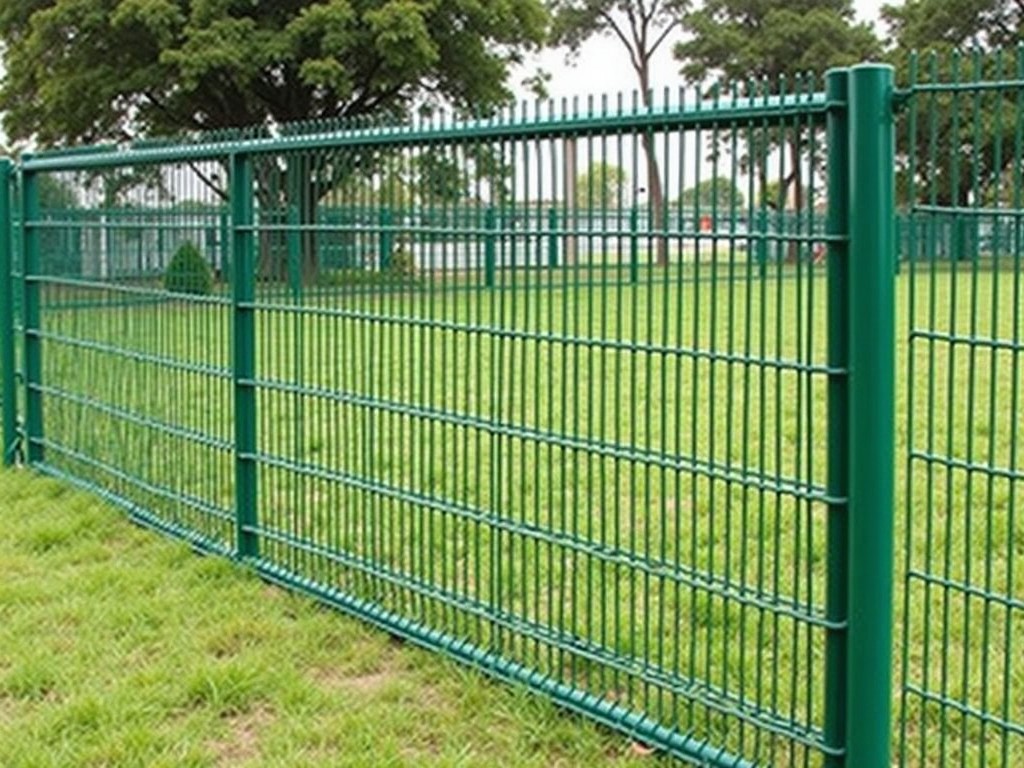
China Cattle Metal Mesh Fencing Manufacturer
Cattle metal mesh fencing is a barrier system formed from welded or woven steel wires coated to resist rust and mechanical wear. It provides a physical limit that prevents livestock from straying
Request a QuoteChina Cattle Metal Mesh Fencing Manufacturer
Cattle metal mesh fencing is a barrier system formed from welded or woven steel wires coated to resist rust and mechanical wear. It provides a physical limit that prevents livestock from straying while allowing airflow and visibility. The selection of wire gauge, mesh opening, and coating type directly influences service life under varying pasture conditions.
Product Overview
The fencing consists of longitudinal and transverse wires joined at each intersection by electric resistance welding, creating a rigid grid. Standard panel heights range from 1.2 m to 2.0 m, with roll lengths typically 20 m to 30 m for easy handling. Wire diameters are chosen between 3.0 mm and 4.0 mm to balance flexibility with impact resistance.
Material and Construction
Steel wire is drawn from low‑carbon billet, then cleaned and coated via hot‑dip galvanization, which deposits a zinc layer of approximately 275 g/m². For environments with high moisture or chemical exposure, an additional PVC over‑coat can be applied, increasing thickness by 0.3 mm to 0.5 mm. The welding process achieves a shear strength at each node exceeding 1.5 kN, ensuring the mesh maintains integrity under animal pressure.
Design Options
- Mesh opening: 50 mm × 50 mm, 75 mm × 75 mm, or 100 mm × 100 mm
- Wire diameter: 3.0 mm, 3.5 mm, or 4.0 mm
- Height: 1.2 m, 1.5 m, 1.8 m, or 2.0 m (custom lengths available)
- Coating: hot‑dip galvanized only, or galvanized + PVC (available in green, black, or white)
Typical Applications
In beef and dairy operations, the fencing delineates grazing paddocks, separates calves from adult herds, and protects feedlots from wildlife intrusion. The open mesh design reduces wind load compared to solid panels, lowering stress on support posts during storms. Additionally, the visibility afforded by the grid assists supervisors in monitoring animal behavior without physical obstruction.
Quality Assurance
Each roll undergoes dimensional verification using laser gauges to confirm wire diameter and mesh pitch within ±0.1 mm. Tensile tests on sampled wire sections verify compliance with a minimum yield strength of 350 MPa. Salt‑spray chambers evaluate coating durability, with a target of no red rust after 1000 hours exposure for hot‑dip galvanized finishes.
Technical Specification Table
| Property | Typical Value | Notes / Customization |
|---|---|---|
| Mesh Opening | 50 mm × 50 mm (standard) | 75 mm × 75 mm or 100 mm × 100 mm available |
| Wire Diameter | 3.5 mm | Range 3.0 mm–4.0 mm |
| Height | 1.5 m | 1.2 m–2.0 m custom |
| Roll Length | 25 m | 20 m–30 m options |
| Coating Type | Hot‑dip Galvanized (275 g/m² Zn) | PVC over‑coat optional |
| Tensile Strength (Wire) | ≥450 MPa | Typical 450–550 MPa |
| Corrosion Resistance | >1000 h salt spray (no red rust) | Higher with PVC coating |
Customization and Ordering
Clients specify mesh opening, wire diameter, height, and coating type during quotation. Technical drawings are generated to confirm post spacing, tension wire requirements, and gate integration. Lead time depends on order volume and coating selection, generally ranging from 15 to 30 working days after receipt of confirmed specifications and deposit.
Frequently Asked Questions
- Can dimensions be customized? Yes, mesh opening, wire diameter, height, and roll length can be adjusted to match site‑specific livestock management plans.
- What information is required before quotation? Required details include desired height, total linear meters, mesh opening, wire diameter, coating preference, and any special accessories such as tension wires or gates.
- How is quality inspected? Each production lot undergoes dimensional checks, tensile testing on wire samples, and salt‑spray evaluation for coating durability before packaging.
- What packaging methods are available? Rolls are wrapped in polyethylene film, placed on pallets, and secured with strapping; custom crating is offered for overseas shipments requiring additional protection.
Contact for Inquiry
To discuss your cattle fencing project, request a detailed quote, or obtain sample sections, please use the link below.



