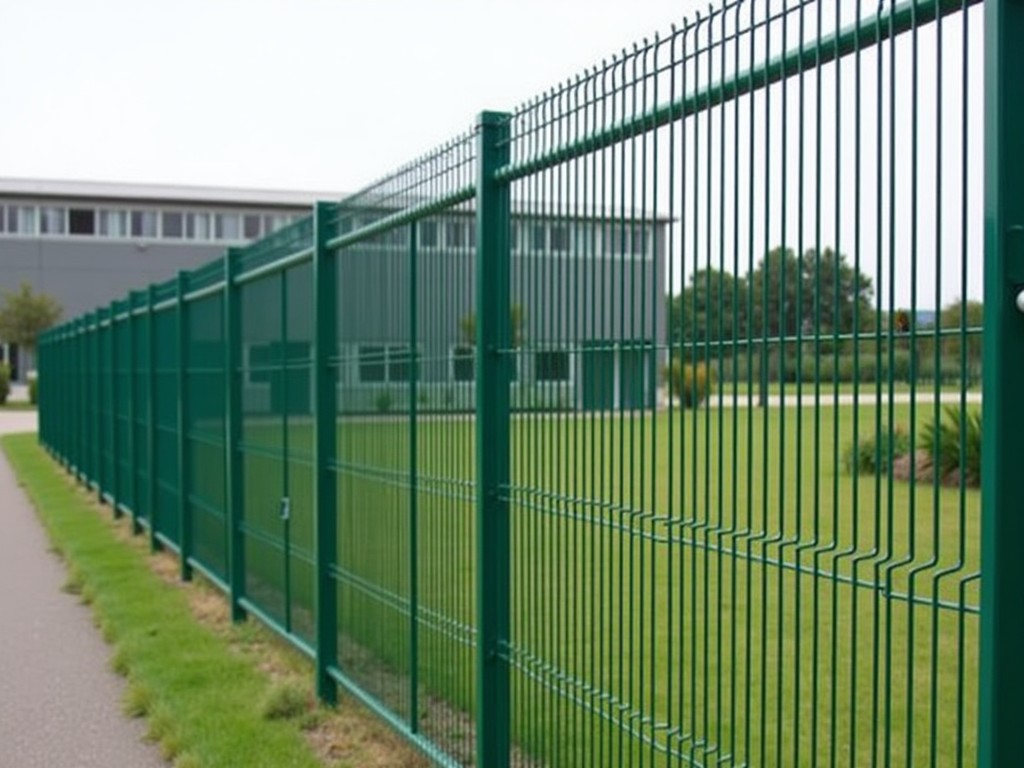
Best Price Expanded Metal Mesh Fencing Supplier
Expanded metal mesh fencing is produced by slitting and stretching a metal sheet to create a uniform pattern of diamond‑shaped openings. The process yields a high strength‑to‑weight ratio, making it
Request a QuoteBest Price Expanded Metal Mesh Fencing Supplier
Expanded metal mesh fencing is produced by slitting and stretching a metal sheet to create a uniform pattern of diamond‑shaped openings. The process yields a high strength‑to‑weight ratio, making it suitable for applications where material cost and structural performance are both critical.
Product Overview
The base material is typically low‑carbon steel, stainless steel grade 304 or 316, or aluminum alloy 5052. Sheet thickness ranges from 0.8 mm to 3.0 mm before expansion, and the final strand thickness after stretching depends on the selected opening size.
Expanded mesh is supplied in flat panels or rolled coils, with standard panel widths of 1.0 m, 1.2 m, and 1.5 m. Lengths can be cut to project‑specific dimensions, and the mesh can be oriented with the long axis of the diamonds either parallel or perpendicular to the fence line.
Typical Specifications
| Property | Typical Value |
|---|---|
| Material | Low‑carbon steel, stainless steel 304/316, aluminum 5052 |
| Pre‑expansion thickness | 0.8 mm – 3.0 mm |
| Opening size (diagonal) | 10 mm – 50 mm |
| Strand thickness (after expansion) | 0.5 mm – 2.0 mm |
| Weight per area | 2.5 kg/m² – 8.0 kg/m² (depends on material and opening) |
| Standard panel size | Width 1.0 m – 1.5 m, length up to 6.0 m (cut to length) |
Cost Influencing Factors
Raw material price dominates the cost structure; stainless steel adds approximately 40 % over low‑carbon steel for the same thickness. Processing cost increases with smaller opening sizes because more slitting and stretching passes are required.
Surface treatment such as hot‑dip galvanizing, powder coating, or anodizing adds a fixed cost per square metre that varies with coating thickness. Logistics expenses depend on panel density; lighter aluminum mesh reduces freight weight compared with steel equivalents.
Applications
Expanded metal mesh fencing provides a barrier that resists climb‑through while maintaining visibility and airflow, which is essential for perimeter security at utility substations and transportation facilities.
- Animal enclosures in agricultural farms where durability and corrosion resistance are required.
- Architectural façades and sunshades where the open area percentage influences solar gain.
- Machine guarding in manufacturing plants, offering impact resistance without obstructing operator sight lines.
Customization Options
Customers can specify opening dimensions, strand orientation, and edge finishing to match functional and aesthetic requirements.
- Opening size: 10 mm, 20 mm, 30 mm, 40 mm, 50 mm diagonal.
- Strand orientation: standard (0°) or rotated 90° for directional strength.
- Edge treatment: flattened, rounded, or fitted with a C‑channel for frame attachment.
- Coating: hot‑dip galvanizing (Z275), powder coating (RAL colors), or anodizing for aluminum.
Quality Assurance
Each production lot undergoes dimensional verification of opening size and strand thickness using calibrated laser gauges, with tolerances typically ±0.2 mm for opening and ±0.05 mm for strand thickness.
Coating adhesion is tested by cross‑hatch and pull‑off methods according to ISO 2409, ensuring a minimum adhesion rating of 4B for galvanized finishes. Tensile strength of the base material is verified via mill certificates, and finished mesh is subjected to a uniform load test to confirm resistance to deformation under a 500 N/m line load.
Packaging and Shipping
Flat panels are stacked on pallets with interleaving polyethylene sheets to prevent surface abrasion, then secured with steel strapping. Rolled coils are wound on corrugated cores, wrapped in stretch film, and placed in cardboard tubes for protection.
Export shipments are sealed in weather‑resistant crates with desiccant packs, and each pallet is marked with handling instructions and weight specifications to facilitate customs clearance and inland transport.
Frequently Asked Questions
- Can dimensions be customized?
- Yes, panel width, length, and opening size can be tailored to project specifications; custom tooling may be required for non‑standard openings.
- What information is needed for a quotation?
- Material grade, sheet thickness, desired opening size, coating type, panel dimensions, quantity, and delivery location.
- Which materials are available?
- Low‑carbon steel, stainless steel 304/316, and aluminum alloy 5052 are stocked; other alloys are available upon request.
- How is quality inspected?
- Dimensional checks, coating adhesion tests, tensile strength verification, and uniform load testing are performed on each lot.
- What packaging options are available?
- Palletized flat panels with interleaving film, coiled cores with stretch film, and weather‑proof crates for export.
- What is the typical production lead time?
- Standard lead time is 2‑3 weeks for stocked materials; customized orders may require 4‑6 weeks depending on tooling and coating schedules.



