Wholesale Hot Dip Galvanized Steel Grating Factory
Hot dip galvanized steel grating consists of load-bearing bars welded or forged to cross rods, then immersed in molten zinc to form a metallurgical bond. The resulting coating provides sacrificial
Request a QuoteWholesale Hot Dip Galvanized Steel Grating Factory
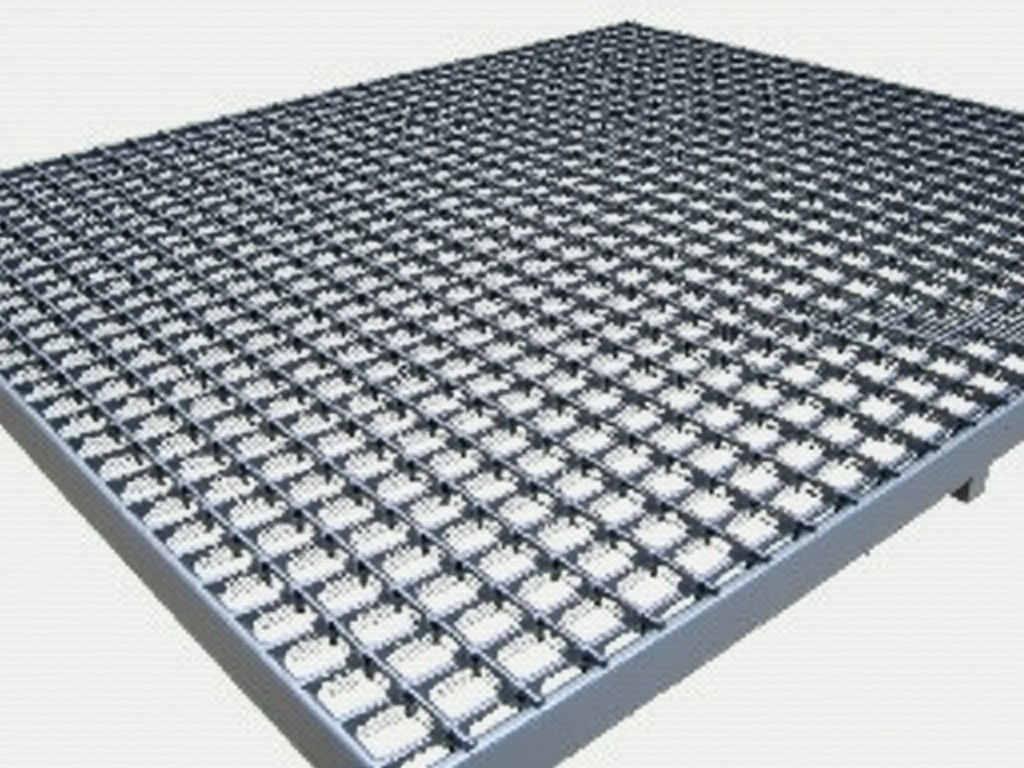
Hot dip galvanized steel grating consists of load-bearing bars welded or forged to cross rods, then immersed in molten zinc to form a metallurgical bond. The resulting coating provides sacrificial protection that extends service life in environments where moisture, chemicals, or abrasion are present. Understanding the interplay between base steel, coating thickness, and grating geometry helps buyers assess long‑term performance and maintenance needs.
Material and Coating Process
The base material is typically hot‑rolled carbon steel conforming to ASTM A36 or equivalent, with a minimum yield strength of 250 MPa. After fabrication, each grating panel undergoes pre‑treatment (degreasing, pickling, fluxing) before immersion in a zinc bath maintained at approximately 450 °C. The zinc‑iron alloy layers formed during diffusion provide a coating weight commonly ranging from 60 µm to 85 µm per side, measured per ASTM A123.
Coating adhesion is evaluated by bend test; the zinc layer must remain intact when the specimen is bent over a mandrel equal to the bar thickness. This ensures that mechanical handling during installation does not compromise corrosion protection. The process also yields a uniform surface free of bare spots, which is critical for grating exposed to splash zones or cyclic wet‑dry conditions.
Product Specifications
| Parameter | Typical Range | Notes |
|---|---|---|
| Load‑bar size (height × thickness) | 25 mm × 3 mm to 50 mm × 6 mm | Selected based on expected load and span |
| Bar spacing (center‑to‑center) | 30 mm, 40 mm, 50 mm | Affects open area and slip resistance |
| Cross rod diameter | 6 mm to 10 mm | Provides lateral stiffness |
| Panel width (clear opening) | 600 mm to 1200 mm | Custom lengths available up to 6 m |
| Estimated weight per m² | 15 kg to 35 kg | Depends on bar size and spacing |
| Zinc coating thickness (each side) | 60 µm to 85 µm | Measured per ASTM A123 |
Manufacturing Considerations
Fabrication begins with cutting and punching of the load‑bar stock to the specified pitch. Resistance welding or forge welding creates a rigid joint at each intersection, producing a monolithic panel that distributes loads evenly across the bar array. The welding parameters (current, time, pressure) are controlled to achieve a minimum shear strength of 150 MPa at the weld nugget, ensuring the grating can sustain repeated impact without joint failure.
Prior to galvanizing, panels are inspected for weld integrity and dimensional tolerance (±2 mm on length, ±1 mm on width). Any deviations are corrected before the zinc bath to avoid coating defects. After galvanizing, a passivation step may be applied to reduce white rust formation during storage, extending the shelf life of the product in humid climates.
Applications and Load Scenarios
- In petrochemical plants, grating is used for walkways over sumps and drainage channels where exposure to hydrocarbons and salt spray requires a coating that resists both chemical attack and mechanical wear.
- Municipal wastewater facilities install galvanized grating on trench covers and stair treads; the zinc layer protects against sulfides and continuous wet‑dry cycling, reducing maintenance intervals.
- Heavy‑duty industrial flooring in steel mills relies on the high load capacity of 50 mm × 6 mm bars spaced at 30 mm, supporting pallet jack traffic and occasional impact from falling billets.
- Outdoor power substations use grating for equipment platforms; the non‑magnetic zinc coating minimizes interference with nearby sensors while providing a slip‑resistant surface for personnel.
Quality Control and Testing
Each production lot undergoes visual inspection for coating uniformity, followed by magnetic thickness gauging at five random points per panel to verify compliance with the target zinc weight. Representative samples are subjected to a 180‑degree bend test over a mandrel equal to the bar thickness; no cracking or delamination of the coating is permitted.
Load testing is performed on a simply supported span of 1 m using a central point load; deflection is measured and compared against the allowable limit of L/200 (where L is the span). Results are recorded and traceable to the specific heat number of the base steel, providing traceability for future audits.
Customization Options
- Bar dimensions: height from 20 mm to 75 mm, thickness from 2 mm to 8 mm, adjustable in 1 mm increments.
- Opening patterns: rectangular, square, or diamond; pitch customizable from 20 mm to 100 mm.
- Surface finishes: standard galvanized, galvanized + powder coat (available in RAL colors), or hot‑dip aluminized for higher temperature environments.
- Edge treatments: plain, capped with flat bar, or fitted with welded end plates for bolting to support structures.
- Fastening options: welded studs, screw‑type cleats, or integrated clips for modular assembly.
Packaging and Logistics
Finished gratings are bundled in groups of five to ten panels, depending on weight, and secured with steel strapping. Each bundle is wrapped in water‑resistant polyethylene film and placed on pallets fitted with corner protectors to prevent edge damage during forklift handling. For overseas shipments, containers are lined with moisture‑absorbing desiccant packs and the cargo is blocked and braced to limit movement.
Pallet dimensions conform to standard 1.1 m × 1.1 m footprints, allowing efficient stacking in warehouses. Labels on each bundle include heat number, coating weight, panel dimensions, and QR code linking to the material test certificate, facilitating quick verification at the receiving dock.
Frequently Asked Questions
| Question | Answer |
|---|---|
| Can dimensions be customized to match existing structural openings? | Yes. Panel length, width, bar size, and pitch are all adjustable per project drawings. Provide the required clear opening and load specifications for a detailed quote. |
| What information is needed before issuing a quotation? | Required data include: intended load (uniform or point), span length, environmental conditions (e.g., exposure to chemicals, temperature range), preferred bar size or weight limit, and any finishing or fastening requirements. |
| Which steel grades and coating standards do you offer? | Base steel is typically ASTM A36 or equivalent; alternative grades such as ASTM A572 Grade 50 are available upon request. Coating follows ASTM A123 for hot dip galvanizing, with optional compliance to ISO 1461. |
| How is coating thickness verified? | We use calibrated magnetic induction gauges per ASTM E376, taking multiple readings per panel and reporting the average and minimum values. |
| What packaging methods protect against corrosion during transit? | Panels are wrapped in UV‑stabilized polyethylene film, placed on pallets with corner protectors, and secured with steel strapping. Desiccant packs are added for containerized shipments to control humidity. |
| What is the typical production lead time? | Lead time ranges from 2 to 4 weeks after receipt of approved drawings and deposit, depending on order size and current plant capacity. Expedited schedules can be discussed for urgent projects. |
Contact for Technical Inquiry
For further details on load tables, custom fabrication, or to request a material test certificate, please reach out to our engineering team. Provide your project specifications and we will respond with a tailored solution and quotation.