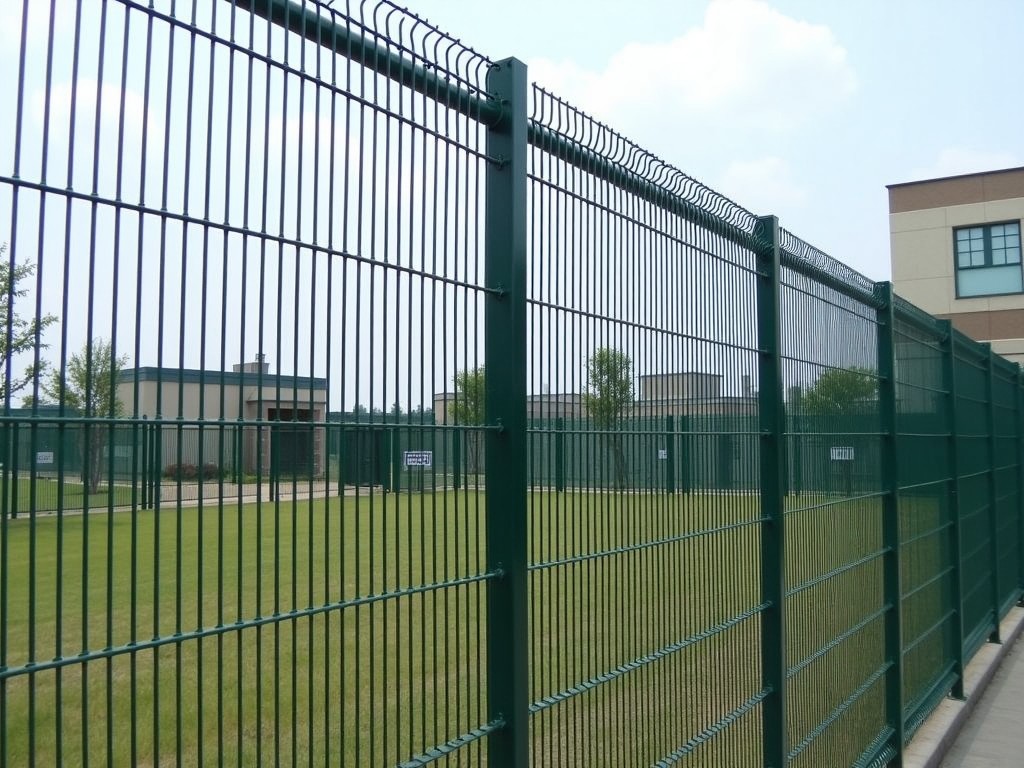
Low Price Construction Perimeter Noise Barrier Supplier
Construction perimeter noise barriers are designed to attenuate sound generated by heavy equipment, demolition, and concrete pouring. Their effectiveness depends on mass, height, and the ability to
Request a QuoteLow Price Construction Perimeter Noise Barrier Supplier
Construction perimeter noise barriers are designed to attenuate sound generated by heavy equipment, demolition, and concrete pouring. Their effectiveness depends on mass, height, and the ability to withstand wind loads typical of open sites.
Acoustic Performance Fundamentals
Sound reduction is quantified by the weighted sound reduction index (Rw) measured in decibels. A barrier with an Rw of 25 dB reduces perceived noise by roughly half compared to an unshielded source. Achieving higher Rw values requires greater surface mass per unit area and careful sealing of gaps.
For perimeter applications, barriers are often installed in a continuous line. The overall insertion loss also depends on the barrier’s height relative to the line‑of‑sight between source and receiver. Doubling the barrier height can increase insertion loss by up to 6 dB for low‑frequency sources.
Material Options and Structural Characteristics
Commonly used materials include galvanized steel panels, aluminum composites, and high‑density polyethylene (HDPE) sheets. Each material offers a distinct surface density:
- Galvanized steel: 7.8 kg/m² per mm thickness, providing high stiffness and resistance to impact.
- Aluminum composite: 2.7 kg/m² per mm thickness, lighter weight facilitating manual handling.
- HDPE: 0.95 kg/m² per mm thickness, corrosion‑free and suitable for chemically aggressive environments.
Panel thickness typically ranges from 0.8 mm to 2.0 mm, directly influencing the mass law contribution to sound attenuation.
Typical Specification Table
| Parameter | Typical Value | Notes |
|---|---|---|
| Panel Height | 2.0 m – 3.5 m | Selected based on site line‑of‑sight requirements. |
| Panel Width (effective) | 0.6 m – 1.2 m | Standard modular width for rapid erection. |
| Material Thickness | 0.8 mm – 2.0 mm | Varies with material type. |
| Surface Density | 6.0 kg/m² – 15.0 kg/m² | Determines mass law contribution. |
| Rw (Weighted Sound Reduction Index) | 22 dB – 30 dB | Measured per ISO 140‑3 in laboratory conditions. |
| Wind Load Resistance | Up to 1500 Pa | Achieved via post‑and‑panel anchorage. |
Installation Considerations
Barriers are typically anchored to driven steel posts spaced at 2.0 m to 3.0 m intervals. The connection uses bolted brackets that allow vertical adjustment for ground irregularities. Proper tensioning of the panels prevents flutter under wind loads, which could otherwise reduce acoustic performance.
Ground preparation includes compacting a granular base to prevent settlement. In soft soil conditions, concrete footings or screw piles may be required to maintain vertical alignment over the construction period.
Typical Applications
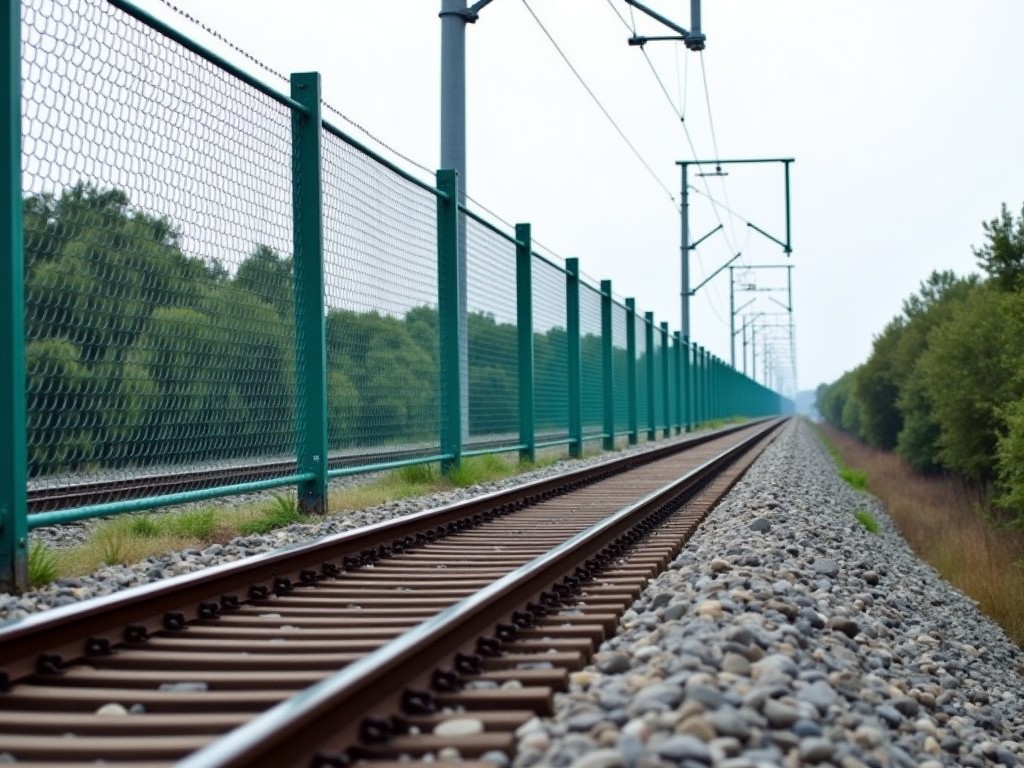
Perimeter noise barriers are employed where construction activity adjoins residential zones, schools, or hospitals. By blocking the direct line‑of‑sight between noisy equipment and nearby receptors, they lower the A‑weighted sound pressure level experienced at the property line.
- High‑rise building foundations – mitigates impact hammer and pile driving noise.
- Roadway widening projects – controls asphalt paver and compactor sound.
- Demolition of existing structures – reduces airborne debris and crushing noise.
Quality Assurance Approach
Each production batch undergoes dimensional verification (height, width, thickness) using calibrated calipers. Material composition is checked via spectrometer for steel grades or melt flow index for HDPE. Acoustic performance is validated on a representative sample per ISO 140‑3, and the results are retained for traceability.
Visual inspection confirms coating uniformity, absence of sharp edges, and proper hole alignment for fasteners. Panels that deviate beyond ±2 mm on any dimension are segregated for rework.
Frequently Asked Questions
Can the barrier height be customized for specific site constraints?
Yes. Height is adjusted by selecting different panel lengths or by adding supplemental extension sections. Post spacing remains unchanged to preserve structural integrity.
What information is needed to obtain a quotation?
Required details include total linear meters, desired height, material preference (steel, aluminum, HDPE), and any special wind load or corrosion resistance specifications.
How are the barriers protected during export shipment?
Panels are stacked on pallets with corner protectors, wrapped in stretch film, and secured with steel strapping. For ocean freight, moisture‑barrier liners are added to prevent corrosion of steel components.
What is the typical production lead time?
Lead time ranges from 2 to 4 weeks after receipt of approved drawings and material confirmation, depending on order volume and current plant capacity.
Next Steps
Engineers and procurement teams are invited to submit project specifications for a technical review. Our team will provide a detailed quotation, including anchoring recommendations and expected acoustic performance based on the supplied site data.