Direct Factory Wire Mesh For Gabion Wall Factory
This product page explains the engineering characteristics of welded steel wire mesh manufactured directly at the factory for use in gabion wall systems. The information focuses on material
Request a QuoteDirect Factory Wire Mesh for Gabion Walls
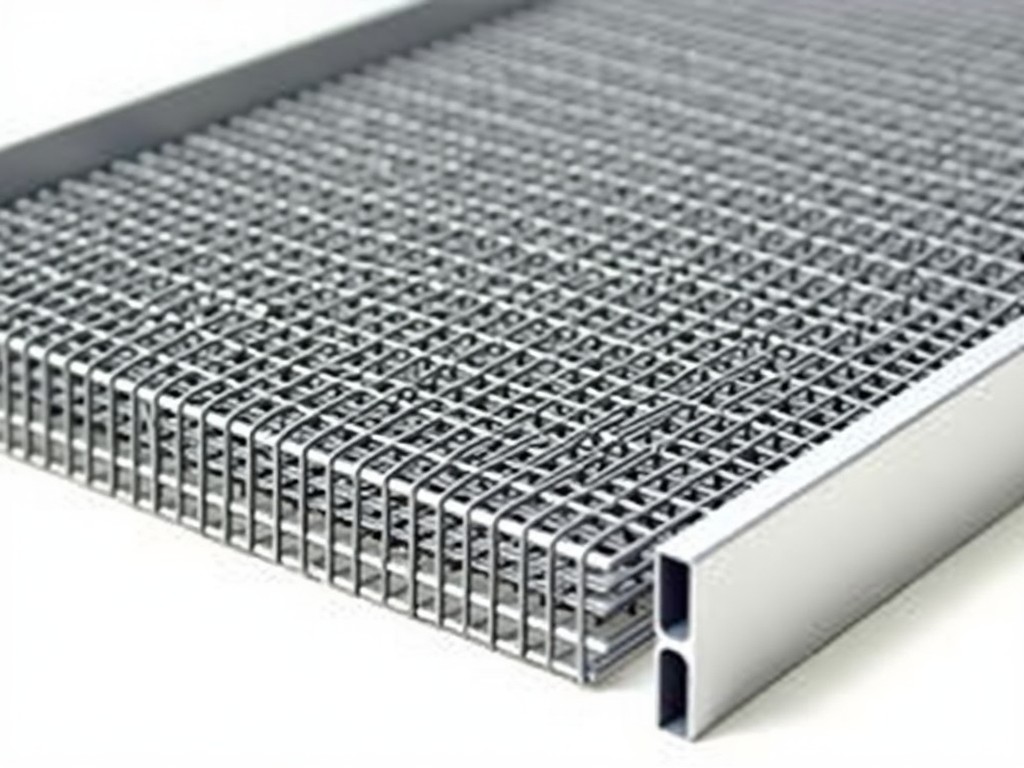
This product page explains the engineering characteristics of welded steel wire mesh manufactured directly at the factory for use in gabion wall systems. The information focuses on material properties, dimensional tolerances, and performance criteria that procurement engineers evaluate when selecting reinforcement for retaining structures.
Material and Construction
The mesh is produced from low‑carbon steel wire that is cold‑drawn to precise diameters ranging from 2.0 mm to 4.0 mm. Welding occurs at each intersection using resistance welding, creating a joint with tensile strength exceeding 90 % of the parent wire. After welding, the mesh undergoes a hot‑dip galvanizing process that deposits a zinc coating of at least 270 g/m², followed optionally by a PVC over‑coat of 0.5 mm thickness for additional abrasion resistance.
Technical Specifications
| Parameter | Typical Value | Customizable Range |
|---|---|---|
| Wire Diameter | 3.0 mm | 2.0 mm – 4.0 mm |
| Mesh Opening (Square) | 75 mm × 75 mm | 50 mm × 50 mm – 100 mm × 100 mm |
| Tensile Strength of Wire | ≥ 550 MPa | Based on wire grade |
| Zinc Coating Weight | ≥ 270 g/m² | Up to 400 g/m² |
| PVC Over‑coat Thickness (optional) | 0.5 mm | 0.3 mm – 0.8 mm |
| Roll Width | 2.0 m | 1.0 m – 2.5 m |
| Roll Length | 25 m | 10 m – 50 m |
Applications in Gabion Walls
Gabion walls rely on the mesh to confine stone fill while allowing drainage and preventing soil migration. The mesh’s open area ratio (typically 60 %–70 % depending on opening size) provides sufficient hydraulic conductivity to relieve hydrostatic pressure behind the wall. The welded joints maintain structural integrity under lateral earth pressures, reducing the risk of progressive deformation compared with woven alternatives.
Manufacturing Process
Wire is drawn through a series of dies to achieve the target diameter, then fed into an automated welding machine where electrodes apply precise current and time to fuse each crossover. The welded sheet passes through a zinc bath at approximately 450 °C, ensuring metallurgical bonding of the coating. If a PVC over‑coat is specified, the galvanized mesh travels through a powder‑coat line where electrostatic application and curing produce a uniform polymeric layer.
Quality Control
Each production lot undergoes tensile testing on sampled wires to verify minimum yield strength. Coating thickness is measured with a magnetic flux gauge at multiple points per square meter, ensuring compliance with the specified zinc weight. Dimensional checks use laser scanners to confirm wire diameter, opening size, and roll width within ±0.1 mm tolerances. Visual inspection identifies welding defects such as under‑fill or excessive spatter.
Customization Options
- Wire diameter from 2.0 mm to 4.0 mm in 0.1 mm increments.
- Mesh opening sizes adjustable between 50 mm and 100 mm square.
- Zinc coating weight upgradable to 400 g/m² for aggressive environments.
- Optional PVC or PE over‑coat with selectable thickness and color.
- Roll width and length tailored to site handling equipment.
Packaging and Shipping
Finished rolls are wrapped in UV‑stabilized polyethylene film, placed on pallets with corner protectors, and secured with polyester strapping. Each pallet carries a maximum load of 2 tonnes to facilitate containerized shipping. Labels include product code, wire diameter, opening size, coating weight, and batch number for traceability.
Frequently Asked Questions
Yes. The wire diameter, opening size, and roll width are adjusted according to the gabion unit dimensions provided by the client.
Q: What information is required before a quotation can be issued?Required data include wire diameter, mesh opening, coating type (galvanized only or galvanized+PVC), total area or linear meters needed, and delivery destination.
Q: How is coating adhesion verified?Adhesion is assessed by the bend test per ASTM A123/A123M, where the coated wire is bent over a mandrel and inspected for cracking or flaking.
Q: What is the typical production lead time?Lead time ranges from 10 to 20 working days depending on order volume and coating specifications, confirmed at quote stage.