Custom Metal Windbreak Panels Wholesale
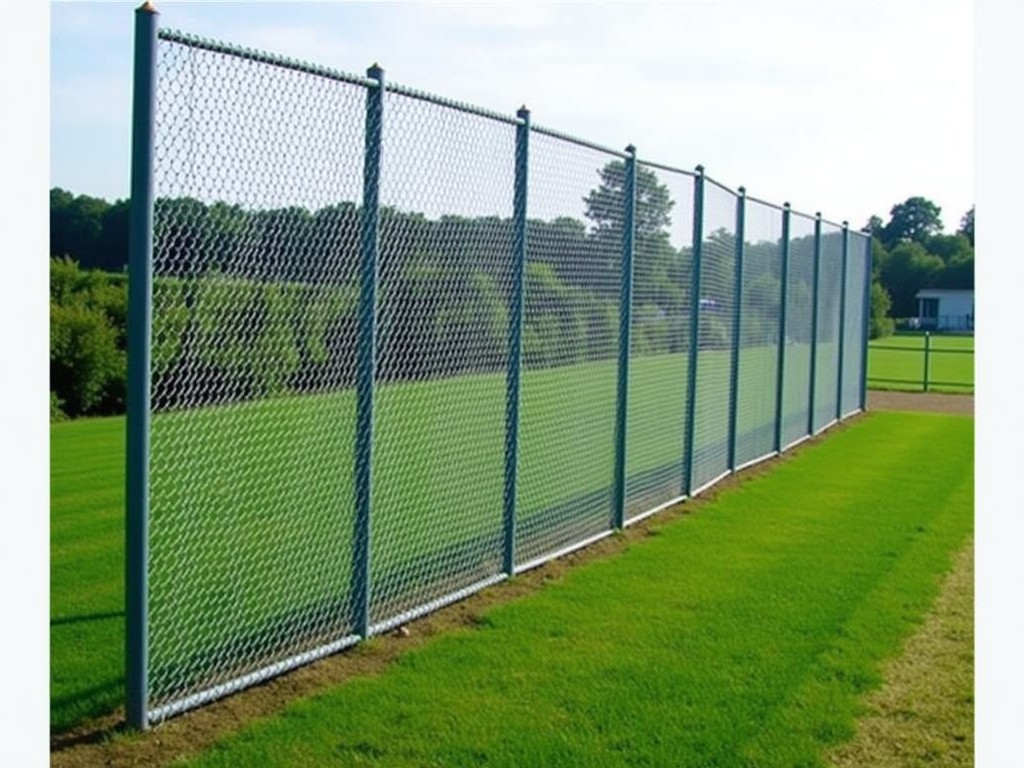
Windbreak panels are engineered barriers that reduce wind velocity and turbulence in exposed industrial environments, protecting equipment, storage areas, and personnel from wind‑induced forces.
Request a QuoteCustom Metal Windbreak Panels Wholesale
Windbreak panels are engineered barriers that reduce wind velocity and turbulence in exposed industrial environments, protecting equipment, storage areas, and personnel from wind‑induced forces.
Material Selection and Properties
Commonly used substrates include hot‑dip galvanized steel (Z275), cold‑rolled steel, aluminum alloy 5052, and austenitic stainless steel grade 304. Thickness typically ranges from 1.5 mm to 6 mm, providing a balance between structural rigidity and weight.
Galvanized coatings offer sacrificial protection against corrosion, with a zinc layer thickness of 20 µm to 40 µm suitable for most outdoor sites. Stainless steel provides inherent resistance to chloride‑rich atmospheres, while aluminum delivers a high strength‑to‑weight ratio and natural oxide film.
Design Parameters for Wind Load Resistance
Panel performance depends on geometry, perforation ratio, and mounting stiffness. Engineers calculate design wind pressure using local basic wind speed, exposure category, and importance factor, then select panel dimensions that keep resulting forces below the material’s yield strength.
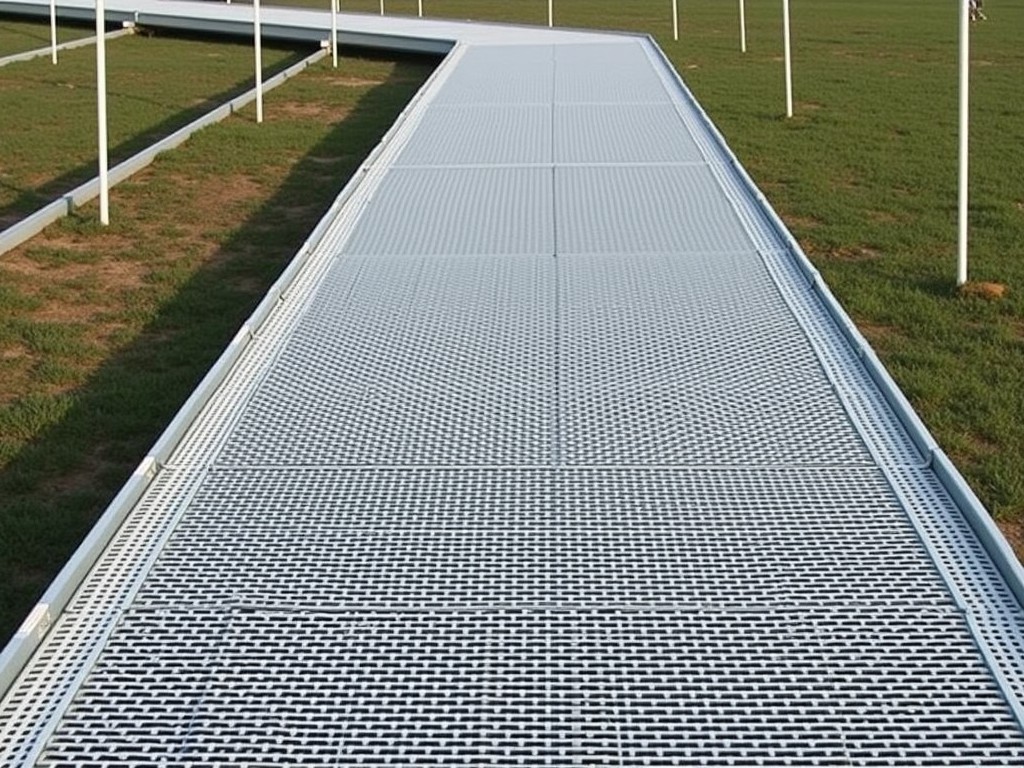
Increasing perforation reduces solid area, lowering wind load but also decreasing shadowing effect; typical perforation ratios range from 15 % to 40 %. Panel height is often limited to 3 m to avoid excessive deflection, while widths up to 2 m facilitate handling and installation.
Finite element analysis is routinely used to verify that stress concentrations at perforations remain below 60 % of the yield limit under gust conditions.
Manufacturing Process Overview
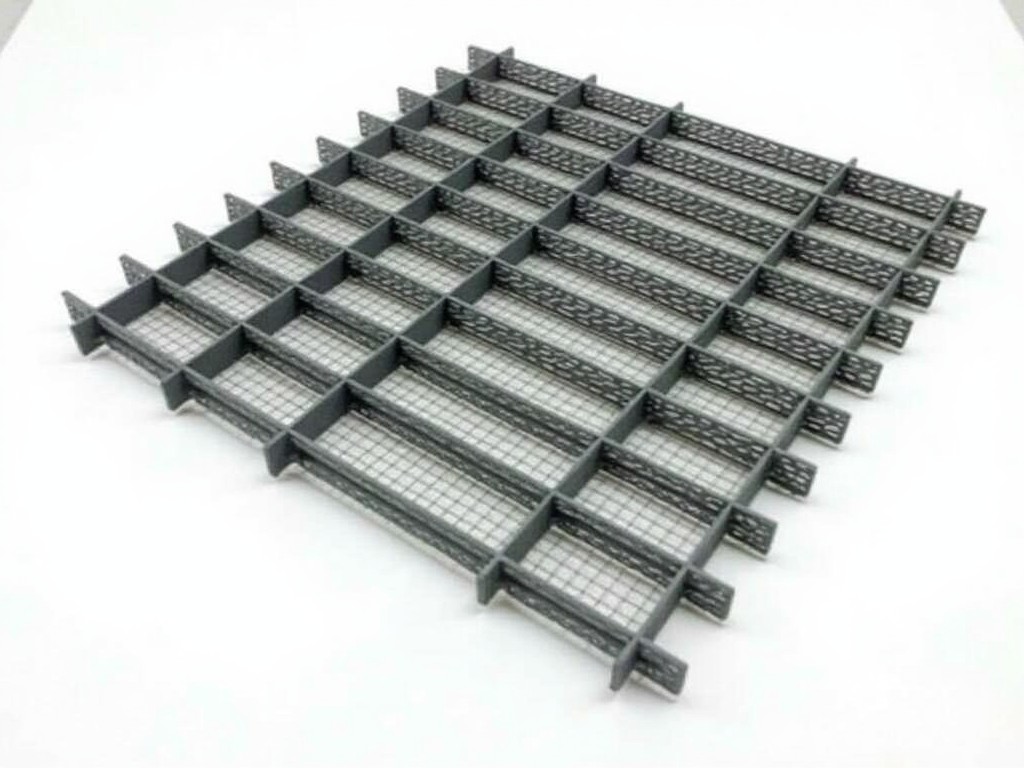
Production begins with coil slitting to the required width, followed by CNC punching or laser cutting to create the perforation pattern. Subsequent steps include roll forming or press braking to achieve the desired profile, such as flat, corrugated, or louvered sections.
Welded or mechanically fastened joints are inspected for penetration and continuity. Surface treatments—hot‑dip galvanizing, powder coating, or anodizing—are applied after forming to ensure uniform coverage.
All operations are performed on ISO‑9001 certified equipment, with traceability from raw material coil to finished panel.
Quality Control and Testing
Dimensional inspection verifies length, width, thickness, and hole diameter within tolerances of ±0.5 mm for length and ±0.2 mm for hole size. Coating thickness is measured by magnetic induction, targeting a minimum of 55 µm for galvanized layers.
Mechanical properties are confirmed via tensile tests on coupons taken from each batch, ensuring yield strength meets the specified grade (e.g., 250 MPa for S355GD).
Optional wind tunnel testing can be performed on full‑scale prototypes to validate pressure coefficients and deflection limits under simulated gusts up to 20 m/s.
Typical Applications in Industrial Settings
Windbreak panels are installed where uncontrolled wind can compromise safety, product integrity, or operational efficiency.
- Protecting bulk material stockpiles from wind‑borne dust and erosion.
- Shielding outdoor electrical transformers and switchgear from gust‑induced vibration.
- Creating sheltered zones for personnel walkways and loading docks.
- Reducing wind load on temporary scaffolding and formwork during construction.
- Mitigating vortex shedding around cylindrical storage tanks.
Customization Options
Panels are manufactured to order, allowing adjustments to suit site‑specific conditions.
- Overall dimensions: length 500 mm–6000 mm, height 500 mm–3000 mm, width 500 mm–2000 mm.
- Perforation shapes: round, square, slotted, or custom logos.
- Open area ratio: 10 %–50 % in 5 % increments.
- Surface finish: galvanized, powder coated (RAL colors), anodized, or bare steel.
- Mounting provisions: pre‑drilled brackets, slip‑on channels, or welded studs.
Technical Specifications
| Parameter | Typical Value / Customizable |
|---|---|
| Material | Hot‑dip galvanized steel (S355GD), Aluminum 5052, Stainless 304 |
| Thickness | 1.5 mm – 6 mm (custom) |
| Panel Height | Up to 3000 mm (standard); higher upon request |
| Panel Width | Up to 2000 mm (standard); wider sections spliced |
| Perforation Ratio | 15 % – 40 % (custom steps of 5 %) |
| Wind Load Resistance (design pressure) | Up to 1500 Pa (depends on geometry) |
| Coating Thickness (Zn) | ≥55 µm (galvanized); powder coat 60‑80 µm |
| Tolerance (length) | ±0.5 mm |
| Surface Finish Options | Galvanized, Powder coated (RAL), Anodized, Bare |
Procurement and Lead Time
Minimum order quantity for wholesale is typically 10 m², with price breaks at 50 m² and 200 m². Samples measuring 300 mm × 300 mm can be dispatched within 5 working days upon receipt of artwork or specification sheet.
Standard production lead time ranges from 10 to 18 working days, depending on material availability and complexity of perforation pattern. Panels are packed in corrugated cardboard with edge protectors and stretch‑film wrapped for export; palletized shipments comply with ISPM‑15 standards.
Frequently Asked Questions
Can dimensions be customized?
Yes. Length, height, width, and perforation layout are all tailored to the project drawing or site constraints.
What information is required before quotation?
We need the desired material, thickness, overall dimensions, perforation ratio or pattern, coating preference, and quantity. A simple sketch or CAD file accelerates the quote.
What materials are available?
Hot‑dip galvanized steel, aluminum alloy 5052, and stainless steel 304 are standard; other grades such as Corten or pre‑painted steel are available on request.
How is quality inspected?
Each lot undergoes dimensional verification, coating thickness measurement, tensile testing on coupons, and visual inspection for surface defects. Test reports are supplied with shipment.
What packaging methods are available?
Panels are stacked with interleaving cardboard, edge‑protected, and stretch‑wrapped. Palletized loads are secured with PET straps and labeled for handling.
Request a Quote
To obtain a detailed quotation, please provide your project specifications via the contact form. Our technical team will respond with pricing, lead time, and optional value‑added services such as CAD layout assistance or on‑site installation guidance.
Request Quote