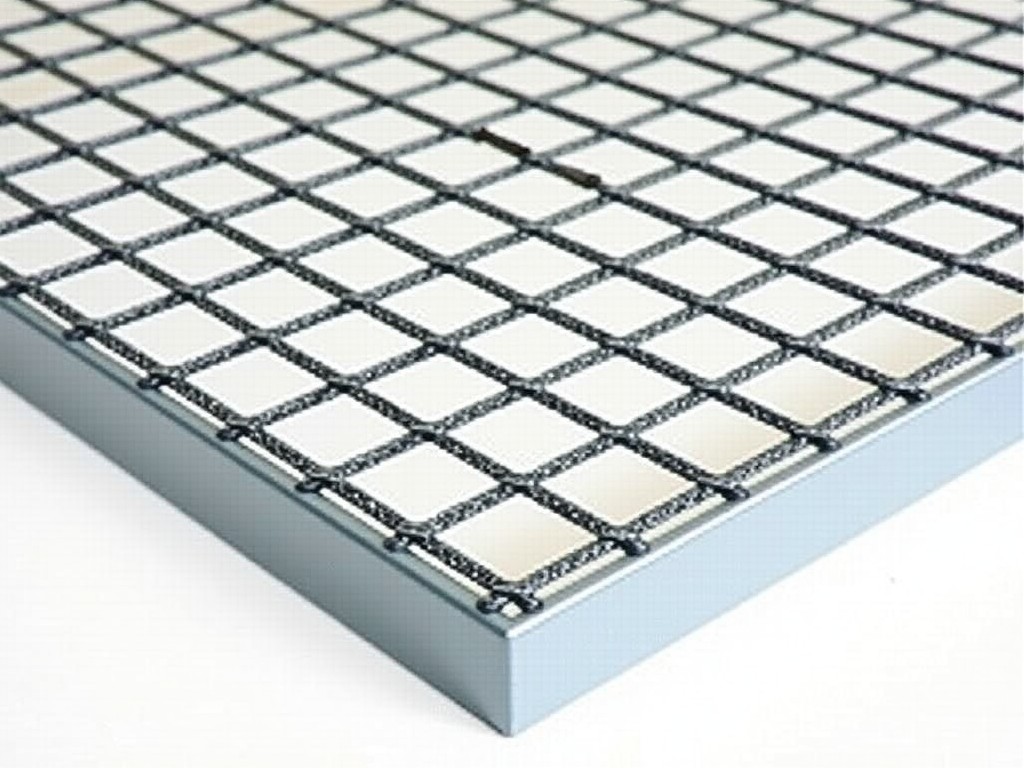
Custom Industrial Metal Floor Grating Supplier
Industrial floor grating serves as a functional walking surface that provides slip resistance, drainage, and ventilation while supporting expected loads. It is assembled from bearing bars and cross
Request a QuoteCustom Industrial Metal Floor Grating
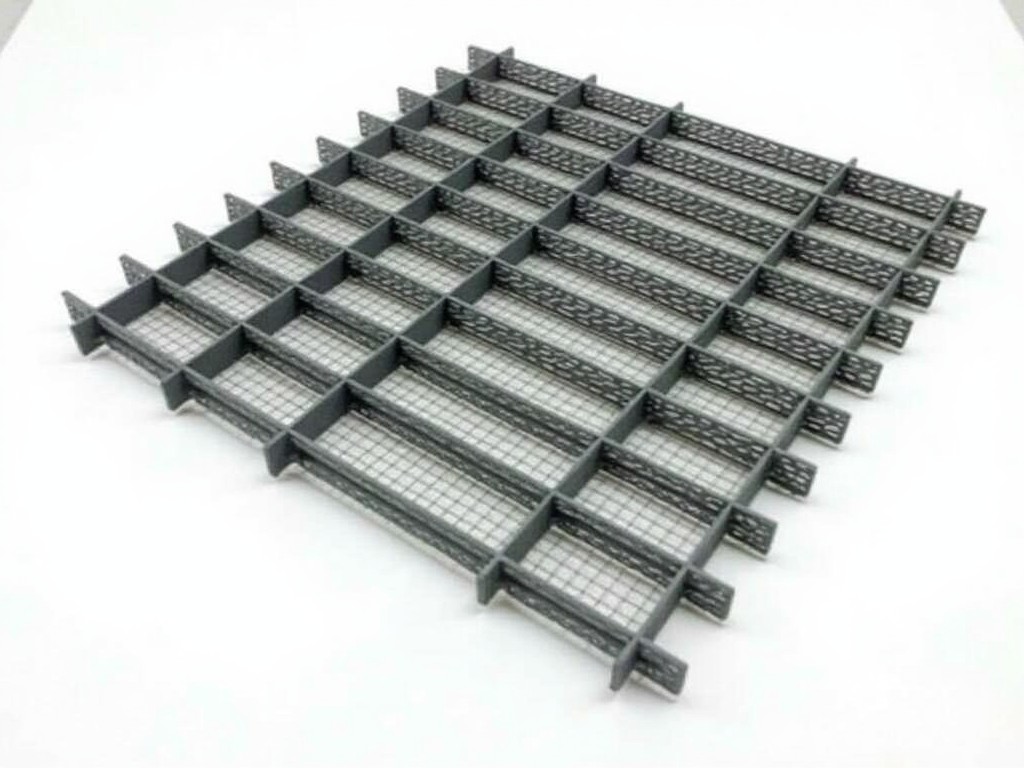
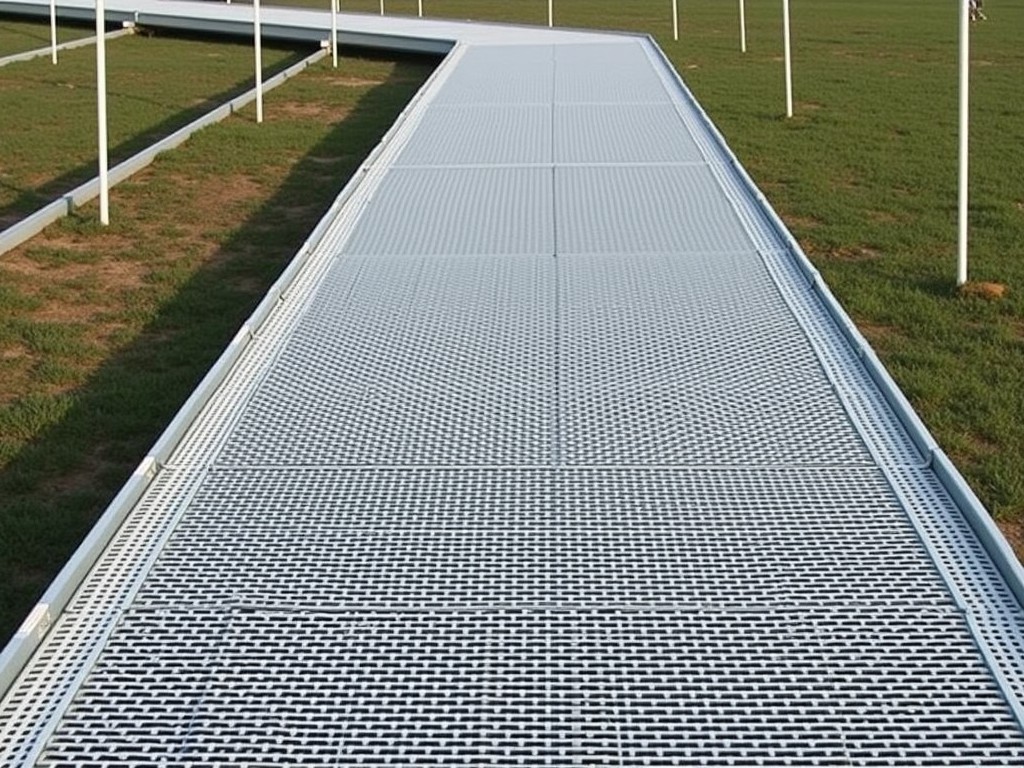
Industrial floor grating serves as a functional walking surface that provides slip resistance, drainage, and ventilation while supporting expected loads. It is assembled from bearing bars and cross rods arranged in a regular grid, allowing liquids, debris, and light to pass through the openings.
Material Options
Material selection directly influences corrosion resistance, weight, and cost. Carbon steel is commonly chosen for its strength and affordability when a protective coating is applied. Stainless steel grades such as 304 or 316 offer enhanced resistance to chemical exposure and moisture, making them suitable for food processing or marine environments. Aluminum provides a lightweight alternative with natural oxide layer protection, reducing the need for additional coatings in low‑load applications.
- Carbon steel with hot‑dip galvanizing or paint finish
- Stainless steel 304 for general corrosion resistance
- Stainless steel 316 for chloride‑rich environments
- Aluminum alloy 6061‑T6 for lightweight panels
Load Bearing and Structural Performance
Load capacity depends on the geometry of the bearing bars and cross rods. Increasing bar thickness or reducing spacing raises the moment of inertia, thereby supporting higher uniformly distributed loads. The orientation of the load relative to the bar direction also affects capacity; loads applied perpendicular to the bars engage the full bending strength of each bar.
Typical configurations range from light‑duty panels for pedestrian walkways to heavy‑duty designs capable of supporting equipment loads. Exact ratings are determined by bar size, spacing, material grade, and support conditions, and are provided upon request after reviewing the project specifications.
Customization Capabilities
Customization begins with defining the overall panel dimensions required for the installation. From there, engineers specify bar thickness, height, spacing, and cross rod size to meet load and deflection criteria. Surface treatments, openings, and edge finishes are then selected based on environmental and safety considerations.
- Panel length and width (cut to exact site dimensions)
- Bearing bar profiles: flat, I‑bar, or T‑bar
- Bar spacing: typically 20 mm to 100 mm adjustable
- Cross rod options: twisted, square, or round
- Surface finish: smooth, serrated, or abrasive‑coated for slip resistance
- Edge treatment: banded, welded, or with toe‑boards
- Coating: galvanization, powder paint, or epoxy
Typical Applications
In petrochemical plants, grating is often installed in areas where spillage and wash‑down are frequent, allowing fluids to drain while providing a safe walkway for personnel. Power generation facilities use grating in turbine halls and condenser pits where resistance to heat and mechanical vibration is essential. Food processing environments benefit from stainless steel grating that withstands frequent cleaning agents and prevents bacterial buildup.
Additionally, wastewater treatment plants employ grating in clarifier tanks and channels, where corrosion resistance and load support for maintenance equipment are critical. The open design facilitates inspection and reduces the accumulation of solids.
Quality Assurance and Testing
Quality assurance starts with raw material verification and continues through dimensional inspection of each bar and cross rod. Tolerances on bar height, thickness, and spacing are checked against the approved drawing using calibrated calipers and coordinate measuring machines. Welded joints are examined for penetration and uniformity, and surface coatings are tested for adhesion and thickness.
Final panel inspections include load verification on a sample basis, where a known weight is applied and deflection measured to confirm compliance with design specifications. Documentation of inspection results is provided with each shipment.
Typical Load Ratings
The following table shows typical load ratings for common bar configurations. Values are illustrative and vary according to exact bar size, spacing, material, and support conditions.
| Bar Size (Height × Thickness) | Spacing (mm) | Typical Uniform Load Capacity (kN/m²) |
|---|---|---|
| 25 mm × 5 mm | 30 | ≈ 2.5 |
| 30 mm × 5 mm | 30 | ≈ 3.5 |
| 30 mm × 6 mm | 30 | ≈ 4.8 |
| 40 mm × 6 mm | 40 | ≈ 6.2 |
| 40 mm × 8 mm | 40 | ≈ 8.0 |
| 50 mm × 8 mm | 50 | ≈ 10.5 |
Frequently Asked Questions
Prospective buyers frequently ask about the quotation process and lead times.
- Can dimensions be customized? Yes, panels are cut to the exact length and width required for the installation, with tolerances typically within ±2 mm.
- What information is needed before quotation? We require the intended load profile, panel dimensions, bar spacing, material preference, and any surface finish or coating specifications.
- What materials are available? Carbon steel, stainless steel grades 304/316, and aluminum alloy 6061‑T6 are standard options; other alloys can be sourced upon request.
- How is quality inspected? Dimensional checks, weld visual inspection, coating thickness measurement, and sample load testing are performed per project requirements.
- What packaging methods are available? Panels are bundled with protective edge guards, wrapped in water‑resistant film, and placed on pallets suitable for forklift handling.
- How are export shipments protected? Export packs include corrosion‑inhibiting vapor barriers, wooden crates or steel frames, and moisture‑absorbing desiccants as needed.
- What is the typical production lead time? Lead time depends on material availability and complexity, generally ranging from 3 to 6 weeks after drawing approval.
- How are samples arranged? Small sample sections can be provided for evaluation; shipping costs are typically borne by the requester.
Contact for Inquiry
To discuss your specific grating requirements, contact our engineering team.
Request a Quote