China Steel Driveway Grates For Sale
Driveway grates are load‑bearing covers placed over drainage channels to protect the underlying pipework while allowing surface water to pass. Selecting the correct grate involves evaluating material
Request a QuoteChina Steel Driveway Grates for Sale
Driveway grates are load‑bearing covers placed over drainage channels to protect the underlying pipework while allowing surface water to pass. Selecting the correct grate involves evaluating material strength, opening size, and load class to match the traffic conditions of the site. This page details the technical attributes of steel grates manufactured in China, focusing on measurable properties that influence performance and service life.
Material Composition and Mechanical Properties
The primary material is hot‑rolled carbon steel, commonly grades Q235 or Q345, with a typical carbon content of 0.12%–0.20% and manganese up to 1.6%. After forming, the grates are hot‑dip galvanized to a minimum zinc coating thickness of 85 µm, providing a predicted corrosion resistance of 15–25 years in a C3 environment. Mechanical testing shows a yield strength ranging from 235 MPa for Q235 to 345 MPa for Q345, with tensile strength typically 10–20 % higher.
| Material Option | Typical Yield Strength (MPa) | Zinc Coating (µm) | Estimated Service Life (years) |
|---|---|---|---|
| Q235 Carbon Steel | 235 | 85 | 15–20 |
| Q345 Carbon Steel | 345 | 85 | 20–25 |
| 304 Stainless Steel (optional) | 215 (annealed) | N/A (intrinsic) | >30 (mild) |
Design Configurations
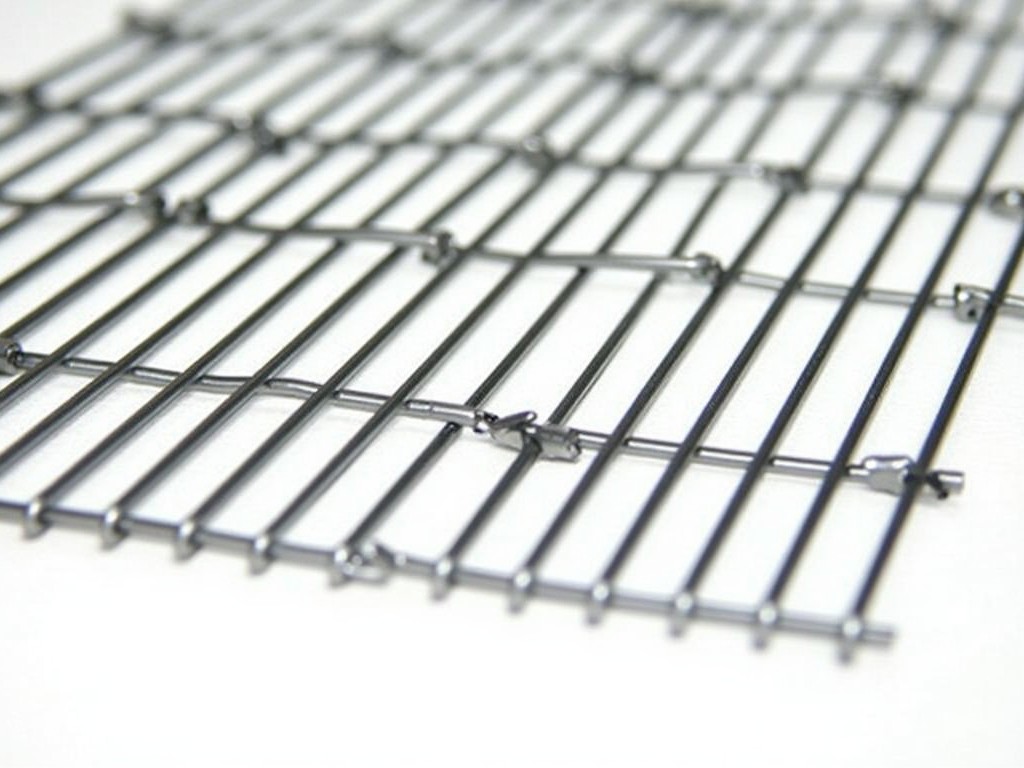
Grates are fabricated from flat bar or rectangular tube, assembled into a grid pattern that defines the clear opening. Common patterns include longitudinal slots, transverse slots, and mesh configurations, each influencing hydraulic capacity and debris retention. The overall thickness of the bearing bars typically ranges from 20 mm to 40 mm, while the spacing between bars is selected to meet the required load class and prevent intrusion of large objects.
- Slot width: 10 mm–30 mm (adjustable)
- Bar depth: 20 mm–40 mm
- Overall grate depth (including frame): 30 mm–50 mm
- Edge treatment: flared, straight, or with anchoring lugs
Load Rating and Structural Performance
Load capacity is defined by the EN 124 standard, which assigns classes based on the maximum axle load the grate can sustain without permanent deformation. The grate’s moment of inertia, derived from bar dimensions and spacing, determines its resistance to bending under point loads. Properly sized grates exhibit deflection limits under service load of less than L/300, where L is the clear span between supports.
| Load Class (EN 124) | Nominal Axle Load (kN) | Typical Use |
|---|---|---|
| A15 | 15 | Pedestrian areas, light bicycle traffic |
| B125 | 125 | Driveways, private parking lots |
| C250 | 250 | Light commercial vehicles, service roads |
| D400 | 400 | Heavy goods vehicles, public roads |
| E600 | 600 | Industrial yards, airport pavements |
| F900 | 900 | Dock areas, heavy‑duty industrial zones |
Typical Applications
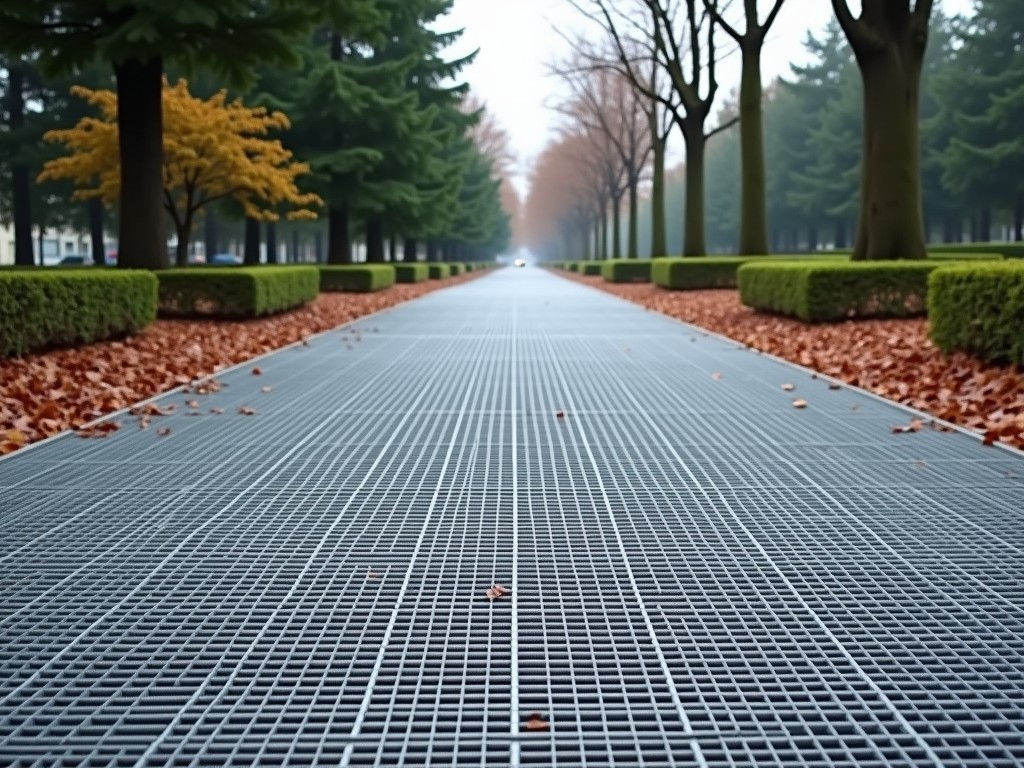
Steel driveway grates are selected where durability, high load capacity, and relatively low maintenance are required. Their performance in freeze‑thaw cycles and resistance to de‑icing salts make them suitable for both temperate and cold climates. The open area ratio, typically between 30 % and 50 %, provides sufficient hydraulic inflow while limiting the passage of debris larger than the slot width.
- Residential driveway drainage channels
- Commercial parking lot perimeter drains
- Municipal street curb inlets
- Industrial facility yard runoff systems
- Airport taxiway and apron drainage
Manufacturing Process and Quality Control
Production begins with cutting of steel bar to length, followed by punching or milling to create the slot pattern. The assembled grid is then welded at intersecting points using resistance or arc welding, ensuring a joint strength that matches the parent material. After welding, the entire grate undergoes hot‑dip galvanizing in accordance with EN ISO 1461, with coating thickness verified by magnetic induction gauges. Final inspection includes dimensional verification, load testing to the specified class, and visual inspection for weld continuity and coating uniformity.
Customization Options
Because site conditions vary, manufacturers offer adjustable parameters to align the grate with project specifications. Customization does not compromise structural integrity when changes are accompanied by recalculated load ratings. Customers typically provide the clear span, required load class, and hydraulic inflow rate to determine the optimal bar size, spacing, and opening pattern.
- Clear opening width: 100 mm–600 mm (modular)
- Bar thickness: 12 mm–50 mm
- Slot pattern: longitudinal, transverse, orthogonal, or custom mesh
- Load class: A15 through F900 per EN 124
- Coating: hot‑dip galvanizing, powder coating, or stainless steel passivation
- Edge details: anchoring lugs, flange frames, or recessed mounting
Installation Considerations
Proper installation ensures the grate performs at its rated load and prevents water infiltration around the frame. The grate should be seated on a level, compacted bed of concrete or polymer‑modified mortar, with bearing surfaces fully supported. Anchor bolts or lugs, when specified, must be torqued to the manufacturer’s recommended value to avoid lateral movement under load. Joint seals between adjacent grates, if required, are typically composed of compressible rubber strips that accommodate thermal expansion while maintaining watertightness.
FAQ
Below are common questions from engineers and procurement managers when specifying steel driveway grates. Answers are based on typical industry practice; project‑specific values should be confirmed during quotation.
Can dimensions be customized?
Yes. Clear opening, bar depth, and overall length can be adjusted to match the drainage channel size. Custom dimensions are accompanied by a revised load‑rating calculation.
What information is required before quotation?
Required inputs include: clear span, desired load class (EN 124), slot width preference, coating type, and any edge treatment (e.g., lugs, flange). If hydraulic capacity is a concern, the design rainfall intensity should also be provided.
What materials are available?
Standard options are hot‑rolled Q235 or Q345 carbon steel with hot‑dip galvanizing. Optional materials include 304 or 316 stainless steel for environments with higher chloride exposure, and corten steel for applications where a protective patina is desired.
How is quality inspected?
Inspection comprises dimensional checks (±2 mm tolerance), coating thickness measurement (minimum 85 µm zinc), weld visual inspection per EN ISO 5817, and load verification to the specified class using a calibrated hydraulic press.
Request a Quote
To obtain a formal quotation, please provide the project details listed above. Our technical team will review the requirements, confirm load capacity, and return a detailed proposal including lead time, packaging, and export terms.
Send Inquiry