Oem Gauge Wire For Gabion Stone Cages Supplier
Gabion stone cages rely on tensile wire to maintain structural integrity under lateral earth pressure and dynamic loads. The gauge, tensile strength, and corrosion protection of the wire directly
Request a QuoteOEM Gauge Wire for Gabion Stone Cages
Gabion stone cages rely on tensile wire to maintain structural integrity under lateral earth pressure and dynamic loads. The gauge, tensile strength, and corrosion protection of the wire directly influence cage deformation resistance and service life.
Technical Specifications
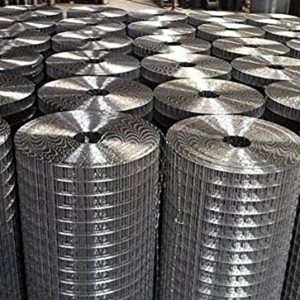
Typical OEM gauge wire for gabion applications is supplied as cold‑drawn steel wire with a circular cross‑section. Diameter is expressed in American Wire Gauge (AWG) or metric mm, and the wire is often hot‑dip galvanized or coated with a polymer layer to achieve required corrosion resistance.
| Property | Typical Value | Unit | Notes |
|---|---|---|---|
| Diameter (AWG) | 8 – 12 | AWG | Corresponds to 2.0–2.6 mm |
| Tensile Strength | 450 – 550 | MPa | Cold‑drawn low‑carbon steel |
| Elongation at Break | 10 – 15 | % | Ensures ductility during installation |
| Galvanizing Coating | 55 – 85 | µm Zn | Hot‑dip, per ASTM A123 |
Material Options
Base steel grade, coating type, and auxiliary additives are selected according to site‑specific exposure conditions such as salinity, pH, and UV intensity. The following material combinations are commonly offered.
- Low‑carbon steel (SAE 1008/1010) with hot‑dip galvanizing (Zn 55–85 µm)
- Low‑carbon steel with Zn‑Al alloy coating (Zn‑5Al‑MM) for enhanced corrosion resistance
- Stainless steel grade 304 or 316 wire for aggressive marine or industrial environments
- Polymer‑coated (PE or PP) over galvanized core for abrasion protection
Applications in Gabion Structures
The wire forms the mesh that confines stone fill, transferring loads from the retained soil to the gabion body. Adequate wire gauge prevents local buckling of the mesh under stress concentrations at panel corners and ensures uniform stress distribution across the cage.
In retaining walls, the wire must resist corrosion from groundwater and soil chemicals while maintaining enough flexibility to accommodate settlement without cracking the galvanized layer. In channel linings, abrasion resistance from flowing debris is a key selection criterion.
Customization Capabilities
OEM suppliers adjust wire diameter, tensile strength, coating thickness, and coil length to match project specifications. Custom lengths reduce field splicing, while tailored tensile grades optimize material cost versus safety factor.
- Diameter: 1.8 mm to 3.2 mm (AWG 13 to 7)
- Tensile strength: 350 MPa to 620 MPa
- Galvanizing thickness: 30 µm to 120 µm
- Coil weight: 15 kg to 50 kg (standard) or custom spools
- Pre‑cut lengths with end‑loop or hook terminals
Quality Assurance and Testing
Quality control follows a documented procedure that verifies dimensional tolerance, mechanical properties, and coating adherence before shipment. Each batch undergoes sampling according to ISO 9001‑based sampling plans.
- Diameter measurement with laser micrometer (±0.01 mm)
- Tensile test on universal testing machine (strain rate 10 mm/min)
- Elongation and yield point determination
- Coating thickness via magnetic‑induction gauge (ASTM A90)
- Adhesion test (knife‑test or bend test) for polymer overcoat
- Visual inspection for surface defects, splines, or weld irregularities
Packaging and Logistics
Wire is supplied on steel or wooden reels, wrapped in stretch film, and placed in corrugated cartons or wooden crates to protect against moisture and mechanical damage during transit. Export shipments include desiccant packs and corrosion‑inhibiting vapor barriers where required.
Standard pallet dimensions accommodate forklift handling, and each package is labeled with part number, heat trace code, and quantity for easy inventory management.
Frequently Asked Questions
- Can dimensions be customized? Yes, diameter, tensile strength, coating thickness, and length are adjusted per customer drawings or specifications.
- What information is required before quotation? Required data include wire gauge (AWG or mm), desired tensile strength, coating type, total length or weight, and any special end‑finish.
- What materials are available? Low‑carbon steel with hot‑dip galvanizing, Zn‑Al alloy coating, stainless steel 304/316, and polymer‑overcoated options.
- How is quality inspected? Each lot undergoes dimensional checks, tensile testing, coating thickness measurement, and visual inspection per ISO‑based sampling.
- What packaging methods are available? Standard reels with stretch film, cartons, wooden crates, and custom palletized packs with moisture barriers.
- How are export shipments protected? Vapor‑corrosion inhibitors, desiccant packs, and waterproof outer wrapping are applied as needed.
- What is the typical production lead time? Lead time ranges from 2 to 4 weeks depending on order volume and customization; exact schedule is confirmed at quote.
- How are samples arranged? Samples of up to 5 m length can be shipped via express courier upon request; sample fees are creditable against a subsequent order.